














Women are much more than their vaginas but today we are going to focus on “down there” and what is right vs what is wrong.
The vagina is an organ designed for three distinct, high-pressure roles: copulation, menstruation, and childbirth. Let’s look at copulation and childbirth and the relationship to the reproductive system.
The vagina is a muscular, elastic canal lined with a mucous membrane. Its role in copulation involves several physiological changes:
- Tumescence and Lubrication: Arousal triggers “vasocongestion,” increasing blood flow to the walls and causing fluid to seep through the membrane (lubrication).
- The “Tent” Effect: During high arousal, the inner two-thirds of the vagina expands and the uterus lifts upward.
- Microbiome Defense: It maintains a highly acidic pH (around 3.8 to 4.5) thanks to Lactobacillus bacteria. This environment is hostile to most pathogens, protecting the internal reproductive organs.
The evolution of the human vagina is tied to Bipedalism (walking on two legs) and Encephalization (growing big brains).
- As humans started walking upright, our pelvises became narrower for efficient movement. However, our brains grew larger. The vagina had to become incredibly distensible to allow a large-headed infant to pass through a narrow pelvic opening.
- Evolution favored vaginas that could heal quickly and resist infection. Because human birth is “difficult” compared to other mammals, the resilience of this tissue was vital for the survival of the mother (and thus the species).
Co-evolution – The Perfect Fit for the Male
The compatibility isn’t accidental; it’s driven by the biological need for internal fertilization, which protects the gametes (sperm and egg) from drying out or being destroyed by the environment.
- Elasticity and Friction: The vagina is a potential space, meaning it is usually collapsed. Its walls are lined with rugae (transverse ridges). These ridges allow the vagina to expand to accommodate various sizes while maintaining the friction necessary to trigger ejaculation in the male.
- The Seminal Pool: The back of the vagina (the posterior fornix) is shaped like a small pouch. During copulation, the cervix often dips into this area, which acts as a “basin” to collect semen, ensuring the sperm are placed as close to the “doorway” of the uterus as possible.
- The Neutralization Act: Since the vagina is naturally acidic, it is also lethal to sperm. To complement this, semen is alkaline. When semen enters the vagina, it temporarily neutralizes the acidity, creating a safe “chemical corridor” for the sperm to survive long enough to swim upward.
Why Men are attracted to Vaginas
From a biological and neurological perspective, the attraction to female anatomy isn’t just about “preference”—it’s a sophisticated, multi-sensory drive hardwired into the brain to ensure the continuation of the species.
When a man is attracted to a woman, the brain’s ventral tegmental area (VTA) and the nucleus accumbens—the “pleasure centers”—light up.
- Dopamine Surge: This is the primary driver. It creates a “craving” state, focusing attention entirely on the object of desire.
- The Hypothalamus: This region regulates the endocrine system. When triggered by visual or physical stimuli, it signals the release of testosterone, which heightens libido, and oxytocin, which facilitates bonding and physical closeness.
- The Amygdala: This part of the brain processes emotional significance. In men, it is often more highly activated by visual sexual stimuli, prioritizing those cues as high-importance survival data.
Body Shape: The “Health” Proxy
Evolutionary psychology suggests that men aren’t necessarily looking for “beauty” in the modern, abstract sense, but rather for markers of reproductive fitness.
- Waist-to-Hip Ratio (WHR): Cross-culturally, a WHR of approximately 0.7 (an hourglass shape) is consistently rated as highly attractive.
- The Survival Logic: Biologically, this specific ratio is an honest signal of high estrogen levels, good cardiovascular health, and—most importantly—optimal pelvic structure for childbirth. It tells the primitive brain, “This individual is healthy and capable of carrying offspring.”
The Power of Scent: Pheromones and HLA
The “smell” of attraction is often subconscious but incredibly powerful.
- Major Histocompatibility Complex (MHC): Humans are often drawn to the scent of partners whose immune system genes (HLA) are different from their own.
- The Survival Logic: If two parents with different immune strengths reproduce, their child will have a broader, more robust immune system.
- Ovulation Cues: Studies have shown that men find the scent of women more attractive—and experience a spike in testosterone—when those women are in the fertile window of their menstrual cycle. This is a direct evolutionary mechanism to time mating with peak fertility.
The irresistible draw toward female genitalia specifically is a combination of conditioning and biological imperative.
- Tactile and Visual Goal-Orientation: In evolutionary terms, the genitalia are the “endpoint” of the reproductive act. The brain categorizes these areas as high-reward zones to ensure that the physical act of procreation is completed.
- The “Coolidge Effect”: This is a biological phenomenon where the brain remains highly sensitive to sexual novelty to ensure genetic diversity, which further intensifies the focus on primary sexual characteristics.
How This Served Species Survival
If humans were indifferent to these cues, our ancestors likely wouldn’t have survived the harsh conditions of the Pleistocene era. These “irresistible” draws served three main functions:
- Efficiency: Identifying the most fertile partners quickly.
- Offspring Viability: Choosing partners with physical traits that suggested they could survive the rigors of pregnancy and nursing.
- Genetic Strength: Using scent and physical markers to ensure the next generation had the best possible “genetic kit” to fight off disease.
What feels like a simple “attraction” is actually a complex, evolutionary process, running in the background, designed to keep the human race from going extinct.
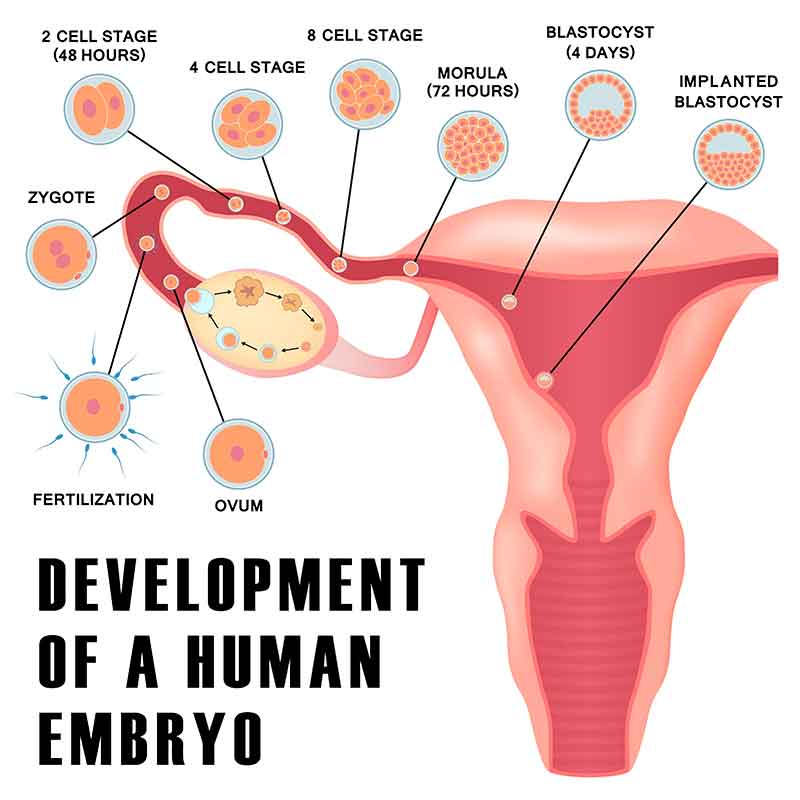
How Sperm and Egg Meet
For a pregnancy to occur, sperm must complete an arduous journey that is essentially a biological obstacle course.
Step 1: The Cervical Gate
Most of the time, the cervix is blocked by a thick, sticky mucus plug. However, around ovulation, estrogen makes this mucus “watery” and stretchy (like raw egg whites). This creates microscopic “channels” that act like a ladder, helping sperm swim up into the uterus.
Step 2: Uterine Contractions
Sperm are swimmers, but they get a major assist from the woman’s body. During and after copulation, the hormone oxytocin causes the uterus to pulse. These mini-contractions create a “vacuum effect,” sucking the sperm toward the fallopian tubes.
Step 3: Capacitation
Sperm cannot fertilize an egg immediately upon ejaculation. They must spend about 5–7 hours inside the female reproductive tract undergoing capacitation. The vaginal and uterine fluids strip away certain proteins from the head of the sperm, “activating” them so they can eventually drill into the egg.
Step 4: Chemotaxis (The Chemical Beacon)
The egg is not just sitting passively; it sends out a chemical “perfume.” Sperm have receptors that allow them to “smell” this chemical signal, guiding them toward the specific fallopian tube that contains the egg.
Step 5: The Acrosome Reaction
When the first few sperm reach the egg, they encounter a thick protective shell called the zona pellucida. The sperm release enzymes from a cap on their head (the acrosome) to dissolve this shell. Once a single sperm penetrates the egg’s membrane, the egg instantly undergoes a chemical change that “locks” the shell, preventing any other sperm from entering.
From a survival standpoint, this “perfect fit” and the complex journey ensure that only the most motile and healthy sperm reach the egg. It is a high-intensity screening process designed to favor the most robust genetic material, ensuring the continued health of the human species.
After all that, how did the Digestive System become a part of mating in humans?
The Dangers: Using the Digestive System for Mating.
Let’s start with a clarification on a bit of anatomy: the digestive system is a “one-way street” designed for nutrient absorption and waste removal, while the reproductive system is specialized for the complex task of creating life.
Combining or confusing the two carries significant biological risks. It is extremely dangerous to use the digestive system for sex as the digestive tract (specifically the lower end) is not built for the physical or reproductive demands of mating that evolved in humans.
Bacterial Cross-Contamination
The digestive system is home to massive colonies of bacteria (like E. coli) that are helpful for digestion but dangerous if introduced to the reproductive or urinary tracts, where they can cause severe infections.
Tissue Vulnerability
The lining of the rectum is much thinner and more fragile than the vaginal wall. It lacks the natural elasticity and lubrication required for mating, making it highly susceptible to tearing and the transmission of blood-borne pathogens.
The “Dead End” Problem
From an evolutionary perspective, the digestive system has no path to the ovaries or uterus. Therefore, it cannot result in reproduction, making it a “biological dead end” for the survival of the species.
The Evolution of the Human Reproductive System
Human fertilization is deeply connected to aquatic life. Many of the “tools” our bodies use for reproduction—from the way sperm swim to the specific proteins that lock the sperm and egg together—are evolutionary hand-me-downs from our ancient fish ancestors.
The similarities aren’t just coincidental; they are the result of a direct lineage from lobe-finned fish that lived over 375 million years ago.
The Ancient “Lock and Key” (Zona Pellucida)
The most striking similarity is at the molecular level. Human eggs are surrounded by a protective layer called the zona pellucida (ZP). This layer acts as a gatekeeper, ensuring that only human sperm can fertilize the egg.
- The Connection: Bony fish (like zebrafish) have a nearly identical structure called the chorion.
- The Evidence: Scientists have found that the proteins making up our egg’s protective coating (ZP2 and ZP3) are homologous to the proteins in fish eggs. In laboratory settings, human-like sperm have even been shown to recognize and attempt to navigate the “entry funnels” (micropyles) of fish eggs because the chemical signaling is so ancient and conserved.
Sperm Architecture: The Flagellum
The “outboard motor” of human sperm—the flagellum—is an ancient piece of biological machinery.
- The Shared Ancestry: This 9+2 microtubule structure (nine pairs of microtubules surrounding two central ones) is virtually unchanged from the sperm of early aquatic vertebrates.
- Hyperactivation: Both human and fish sperm undergo “hyperactivation”—a sudden change to a more powerful, erratic swimming stroke—once they get close to the egg. This shared behavior is triggered by calcium channels (like CatSper) that have been part of the vertebrate “blueprint” for hundreds of millions of years.
The Shift to Internal Fertilization
While most people think of fish as “spawners” (releasing eggs and sperm into open water), the internal fertilization humans use was actually “invented” by ancient fish called Placoderms (specifically the Microbrachius) about 385 million years ago.
- The “First Sex”: These armored fish were the first vertebrates to move away from spawning and develop specialized bony structures (claspers) to transfer sperm directly into the female.
- Why it Matters: This shift was a prerequisite for life on land. Without the ability to fertilize eggs internally, our ancestors’ gametes would have dried up in the air. We essentially carry a “portable pond” inside the female body to keep the ancient aquatic process of fertilization alive on dry land.
Similarities
| Feature | Human Fertilization | Aquatic Relative (Fish) |
|---|---|---|
| Egg Barrier | Zona Pellucida (ZP proteins) | Chorion (ZP homologs) |
| Sperm Movement | Flagellum (9+2 structure) | Flagellum (9+2 structure) |
| Molecular Trigger | Calcium-channel (CatSper) | Calcium-channel (CatSper) |
| Development | Internal (Viviparity) | Some sharks/placoderms (Viviparity) |
The “Ghost” of the Sea in the Womb
Even after fertilization, the similarity continues. During the first few weeks of development, human embryos develop pharyngeal arches. In fish, these become gills; in humans, they were repurposed into jaws, inner ear bones, and parts of our throat. We don’t just “come from” the sea; in a biological sense, we’ve never really left its most basic reproductive mechanics behind.
As life moved out of the ocean, animals could no longer just release eggs and sperm into the water. We evolved internal fertilization to keep the “environment” moist and protected from the harsh, dry outside world.

Protection and Nurturing
The uterus, placenta, and specialized hormones – is to provide a highly regulated “incubation chamber.” This allows the fetus to develop a complex brain and nervous system away from the dangers of the external
Wrapping up:
The separation of these systems is a masterpiece of “zoning.” By keeping waste removal (digestion/excretion) and life-creation (reproduction) separate, the body minimizes infection risks and optimizes the environment for a developing embryo.
Buggery Laws
While there are real biological risks to using the digestive system for mating, the reason countries have “buggery laws” is almost entirely religious, and political, rather than a response to these specific biological dangers. This article is pointing to a scientific reason for keeping them.
An important reason for laws and government is to save some people from themselves and keep our environment and communities safe. Let’s put the focus there.
These laws should now focus on the scientific (biological) reasons as a logical explanation for keeping them. Logic and science is usually more acceptable, as they stick to the fundamentals of what we can call truth..

Other Articles

If God was a woman would you still worship her?
Survive, Mate, Reproduce, Die – Life is that simple