


An extremely serious topic today.
We are going to look at democracy with the intersection of geopolitics, cultural anthropology, and political philosophy. The USA’s “export” of democracy is never a smooth process, as history keeps repeating itself. We are going to look at how the messenger (the US) matters as much as the message.
The Dangers of “Imposed” Democracy
Democracy is not a plug-and-play software; it is a “living” system that grew out of specific European historical contexts (like the Enlightenment). When forced onto Middle Eastern cultures, several dangers emerge:
Destabilization and Power Vacuums: In many Middle Eastern states, “stability” is maintained by centralized (often authoritarian) power. Removing that power without a robust, locally-accepted alternative often leads to civil war or the rise of extremist groups (e.g., the post-2003 Iraq scenario).
Ignoring Tribal and Religious Structures: Many Middle Eastern societies operate on deep-rooted tribal, kin-based, or religious hierarchies. Western-style “majoritarian” democracy can accidentally hand total power to one sect, leading to the oppression or “cleansing” of minorities who feel the system no longer protects them.
The “One Man, One Vote, One Time” Risk: Without a culture of constitutionalism (the “rules of the game”), the first democratic election can lead to the rise of a party that immediately dismantles the democratic system once they win.
The Hypocrisy of the “Messianic” Democracy
The “Do as I Say, Not as I Do” Problem: When a country claiming to “liberate” others is simultaneously cracking down on its own protestors, limiting its citizens’ voting rights, or using mass surveillance, the “democracy” they are selling looks less like a gift and more like a tool for imperialism.
Selective Intervention: The West pushes for democracy in countries with oil or strategic enemies (like Iraq or Libya) but remains silent or even supportive of absolute monarchies that are “friendly” allies (like Saudi Arabia). This makes the push for democracy look like geopolitical theater rather than a genuine concern for human rights.
Erosion of Civil Rights at Home: If the invading country has a “questionable” practice of democracy—such as police brutality, systemic inequality, or the marginalization of its own minorities—it signals to the world that “democracy” is just a buzzword used to justify intervention while the reality is just another form of control.
Culture vs. System
The “Orientalist” danger: the assumption that Middle Eastern cultures are “unfit” for democracy. This is a common misconception. The region has its own traditions of consultation (Shura) and communal consensus.
The danger isn’t that the culture can’t handle democracy; it’s that a foreign-branded version of democracy is being used as a Trojan horse for foreign interests.
Crucial Distinction: There is a difference between Liberalism (protecting individual rights/minorities) and Democracy (majority rule). Many imposed systems focus on the “voting” part (Democracy) while completely failing at the “rights” part (Liberalism).
Did we learn anything from history?
The 2003 invasion of Iraq and the 2011 Arab Spring are the two clearest case studies of what happens when democracy is either “imported” by force or “supported” by inconsistent outside powers.
The Iraq Case: “Democracy by Fire”
The U.S.-led invasion of Iraq is the ultimate example of the dangers of imposed democracy.
Destruction of the State: The “De-Ba’athification” policy (removing anyone associated with Saddam’s party from government) didn’t just remove a dictator; it dismantled the entire civil service, police, and military. This created a power vacuum that was immediately filled by sectarian militias.
The “Muhasasa” Trap: To make democracy “work” in a divided society, a system called Al-Muhasasa was created, where government jobs were divided by sect (Sunni, Shia, Kurd) rather than merit. Instead of a unified democracy, this created a systematized corruption where parties treat ministries like ATMs for their own groups.
Result: A “Sectarian Democracy” that is often paralyzed by gridlock, leading many young Iraqis to feel that the “democracy” brought by the West only replaced one dictator with a hundred smaller ones.
The Arab Spring: “Selective Support”
The Arab Spring showed how Western hypocrisy in “supporting” democracy can actually lead to its failure.
Egypt: The West initially supported the protests that ousted Mubarak. However, when the democratically elected Muslim Brotherhood took power, Western support wavered because the “wrong” people won. When a military coup later ousted the elected government, the West largely accepted the return to autocracy to maintain “stability.”
Libya: NATO intervened to “protect civilians” but effectively facilitated regime change. Without a plan for what came after Gaddafi, the country collapsed into a failed state with two rival governments and dozens of warring tribes.
The Hypocrisy Gap: During these events, the West continued to support absolute monarchies in the Gulf (like Saudi Arabia or Bahrain) because they were “stable” allies. This created a clear message: “We want you to have democracy, unless you’re our friend or have something we need.”
Why the Hypocrisy is “Lethal” to the Cause
When a country like the U.S. or a European power promotes democracy while simultaneously violating rights at home (e.g., crackdowns on protests, systemic inequality), it has three major effects:
- Discredits the Concept: People in the Middle East will begin to see “democracy” not as a set of rights, but as a code word for Western interests.
- Empowers Dictators: Local autocrats use Western hypocrisy as a shield. They tell their people: “Look at the chaos in Iraq, or the police violence in the West. You don’t want their version of ‘freedom’—you want my version of ‘security.'”
- The Neoliberal Trap: Often, the “democracy” pushed by foreign powers comes bundled with economic policies (privatization, austerity) that hurt the poor and benefit foreign corporations, making the democratic transition feel like an economic invasion.
When democracy is used as a geopolitical brand rather than a genuine commitment to human dignity, it becomes a hollow shell. Even an organic democracy (eg. Tunisia) can’t survive if it’s surrounded by a global system that prioritizes strategic interests (like border control or oil) over the actual civil rights it claims to champion.
Many in the Middle East argue that the West doesn’t actually want “Democracy” in the region—it wants “Pro-Western Governments.” If a democracy produces an anti-Western government, the West often stops supporting the democracy.
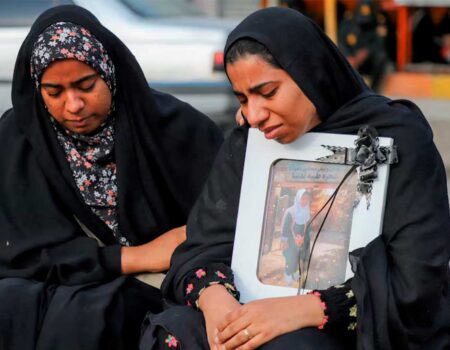
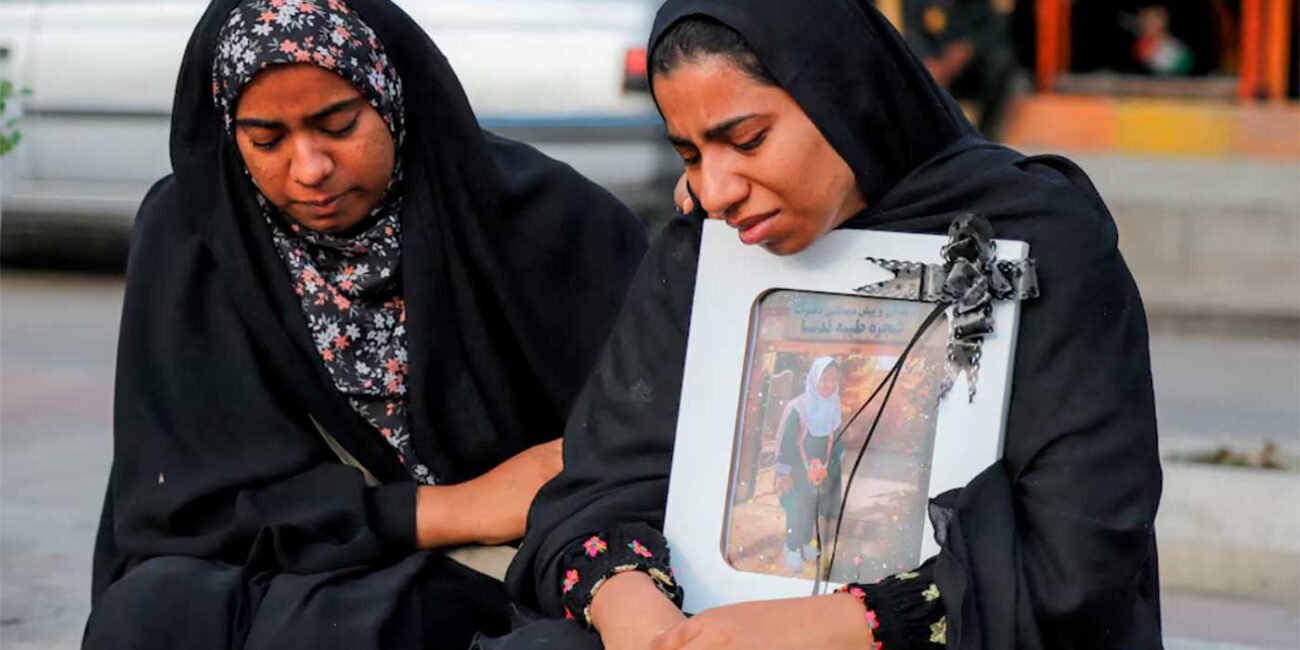
For the protestors in Iran: be careful what you wish for. Already a school full of children was hit by US bombs. It is already not worth it – the persons that supposedly are being freed are the same ones being bombed. A lot of protestors, calling for freedom, will also be killed by Israeli and US bombs. It will not be worth it in the long-run. Your country is on the radar of the west because you have what they need, OIL – not because they give a fuck about you.

Other Articles

How God lost her vagina and got a penis
Danger: Using the Digestive System for Mating