













The concept of karma is one of the most successful “travelers” in the history of ideas. It began as a specific ritual term and evolved into a global shorthand for moral equilibrium.
The word Karma (or Karman) is derived from the Sanskrit root kṛ, meaning “to do” or “to make.” Its evolution followed a distinct path:
- The Ritual Seed: In the ancient Vedic period (c. 1500–1000 BCE), karma referred strictly to ritual action. It was the technical execution of a sacrifice; if the ritual was performed correctly, the result was guaranteed.
- The Moral Shift: Between 800 and 300 BCE, during the era of the Upanishads, the concept shifted from the “altar” to “intent.” It became an ethical law of causality: Action + Intent = Result.
- The Great Traditions: Hinduism, Buddhism, and Jainism each refined the idea. While they differ on the mechanics—for instance, Jainism views karma as a physical substance that sticks to the soul, while Buddhism emphasizes Caitana (volition)—all agree that the universe keeps a balanced ledger.
In modern English, “Karma” has undergone semantic bleaching—a process where a word loses its specific, complex meaning and becomes a vague catch-all. Today we use it without much thought.
- Western Appropriation: In the late 19th century, groups like the Theosophical Society brought the term to the West. Over time, it was stripped of its original requirements (like reincarnation or specific metaphysical frameworks).
- Instant Karma: Today, we use it to describe “instant” consequences (like someone getting a speeding ticket right after cutting you off). This is actually a departure from traditional views, where karma was a “slow-ripening fruit” that might not manifest for lifetimes.
When we use the word Karma today, it usually refer to a supernatural bookkeeping system—the idea that the universe “rewards” good deeds and “punishes” bad ones to maintain a moral equilibrium. There is, however, no evidence of a mystical force auditing our behavior.
The “Magic” of Just-World Hypothesis
The belief in Karma is a psychological comfort known as the Just-World Hypothesis. Humans have a deep-seated cognitive bias to believe that “people get what they deserve.”
- Sense of Control: If we believe the world is fair, we feel safer. If I am “good,” nothing “bad” will happen to me.
- Pattern Recognition: Our brains are wired to find patterns. If a dishonest person eventually goes bankrupt, we call it “Karma.” If they remain wealthy and happy until they die, we simply ignore that data point or assume they will be punished in a “next life.”
The Scientific Reality: Probability and Chaos
In the physical world, events are governed by probability, cause and effect, and entropy, not morality.
What people call “Karma” is often just a simple chain of consequences. If you are mean to everyone, you will likely end up lonely. This isn’t the universe punishing you; it is a predictable social outcome of your behavior.
In a world of 8 billion people, trillions of events happen every day.
- Coincidence: Statistically, “bad things” will happen to “good people” and vice versa.
- Regression to the Mean: If someone has a streak of incredible luck (which people might call “good karma”), probability dictates that they will eventually experience a streak of bad luck. It isn’t the universe balancing the scales; it’s just the math of randomness returning to the average.
Why Karma Seems Real
There is a social feedback loop that helps with understanding this. While there is no “mystical” Karma, there is “Social Karma.” Humans are a cooperative species. We use reciprocal altruism to survive.
- If you help others, you increase the probability that they will help you in the future.
- If you cheat, you increase the probability of social ostracization.
This isn’t a supernatural force; it’s a statistical survival strategy. Being “good” doesn’t guarantee a good life, but it tilts the odds in your favor within a social structure.
The Dangers of Believing in Karma
While it sounds like a positive concept, believing in the “magic” of Karma can have dark side effects:
- Victim Blaming: If you believe the world is inherently fair, you are forced to conclude that people who suffer (from poverty, illness, injury or natural disasters) must have “earned” it in some way.
- Passivity: Waiting for “the universe” to punish an evildoer prevents people from seeking actual justice or systemic change.
Becoming Masters of Our Own Destiny
The universe is amoral. It does not care about our intentions. A tsunami does not check your moral record before hitting a coastline, and a lottery win isn’t a reward for being a nice neighbor.
When we strip away the supernatural, we are left with a clear-eyed view of our reality:
- Radical Accountability: If there is no “cosmic justice,” then human justice becomes our sole responsibility. We cannot wait for a mystical force to correct the wrongs of the world; we have to be the ones to build systems of fairness.
- Scientific Stewardship: Acknowledging that we are the masters of the planet means accepting that its future—and our survival—rests entirely on our collective intelligence and actions, not on “fate” or “divine intervention.”
- The Power of Agency: Realizing that success or failure is often a mix of effort and probability (luck) allows for more self-compassion. If something goes wrong, it’s not a “karmic debt”; it’s just a data point to learn from as you calculate your next move.
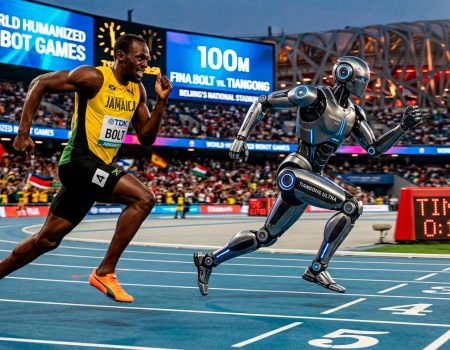
An athlete’s success is an example of what we might call Secular or Natural Karma.
- The Input: Thousands of hours of training, diet, sleep, and mental focus.
- The Output: An Olympic win or a world record.
In this context, karma isn’t a mystical force “giving” him/her a win; it is the logical culmination of accumulated actions. The “pride of the country” is the social ripple effect of those actions. When we look at it this way, karma stops being about “luck” and starts being about agency. It empowers the individual because it suggests that your current state is the result of your previous choices.
Another Example: Relief from the “magic” of Karma means we can’t blame “destiny” for the state of the oceans or atmosphere. It’s a heavy and empowering realization that if we are the ones who broke the balance, we are the only ones with the agency to fix it. We aren’t waiting for a miracle; we’re waiting for ourselves.

Understanding that life is a mix of personal choices (cause and effect) and random chance (probability) is actually more empowering than believing in magic. It allows us to stop looking for signs and start taking responsibility for the variables we can control.
Let’s shifts the narrative from being a pawn in a cosmic game to being the architect of a life. While some find that scary because it removes the “safety net” of a predetermined plan, it can be incredibly liberating.
The realization we aren’t being cosmically punished for things outside our control, removes the paralyzing fear of a “hidden auditor” and replaces it with the autonomy of a master of our own destiny.

Other Articles

Why is there Abuse of Children In Churches?
What is Love?