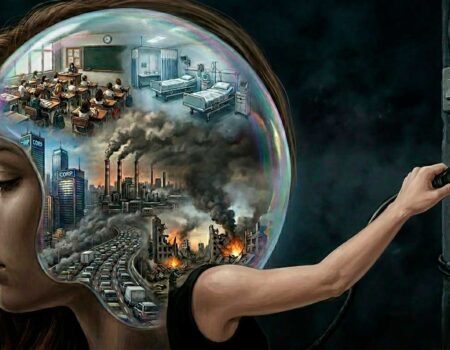


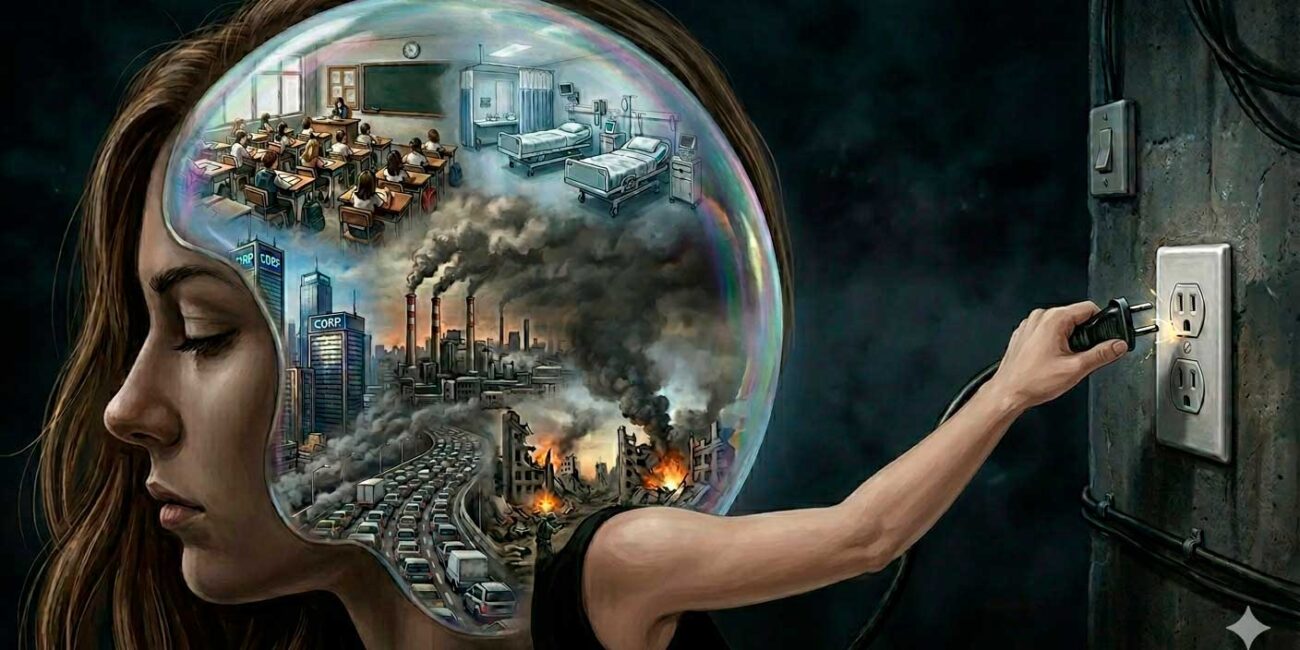
Today we are going to touch on ethics, sociology, and the very foundation of how we’ve built our current world.
Evolutionarily, we are hard-wired to survive. This instinct is so core to our DNA that it becomes codified into our morality. We view the desire to die as a “glitch” because, biologically, it is the ultimate contradiction.
What we are seeing today is that birth rates are below the required level worldwide. If Birth rates are low and suicide rates are high among young people, we have a massive problem.
This is the core “demographic nightmare” that keeps policymakers awake at night. From a cold, state-level perspective, the combination of a “shrinking entry” (low birth rates) and an “increasing exit” (suicide/assisted dying) is an existential threat to the structure of modern civilization.
As of 2026, we are seeing this play out in real-time. Over 130 countries now have fertility rates below the replacement level of 2.1, meaning their populations are naturally contracting.
The tension: the gap between a system’s “imperative to preserve life” and an individual’s personal experience of suffering or lack of autonomy.
To understand why society reacts with alarm, we have to look at the historical, economic, and biological layers that shape our “distaste” for self-exit.
The “Social Contract” and Economic Utility
From a purely systemic or “capitalist” lens, a human being is often viewed as a unit of productivity.
- Investment vs. Return: Society “invests” in individuals through education, healthcare, and infrastructure. When someone exits early, the system views it as a loss of potential labor and economic contribution.
- The Dependency Web: Modern societies are built on interdependency. The “distaste” often stems from the fear that if the “right to exit” becomes a normalized path for those failing to thrive in the system, it exposes the system’s own flaws—making it harder to maintain the status quo.
The “Squeeze”
Modern societies are essentially large-scale Ponzi schemes of labor. They require a large base of young workers to pay into systems (pensions, healthcare, infrastructure) that support a smaller group of retirees.
When the young generation begins to exit—either by not being born or by choosing to leave—the entire pyramid starts to collapse.
| Problem | Systemic Impact |
|---|---|
| Low Birth Rates | A shrinking workforce and a “demographic cliff” where there aren’t enough caregivers for the elderly. |
| High Youth Suicide | A loss of the most productive years of human capital and a signal of total systemic “unhabitability.” |
| Capitalist Inertia | High housing costs and economic instability make “existing” feel like a high-cost, low-reward endeavor. |
Why the “Distaste” is Actually Fear
- If a government admits that “pulling the plug” is a rational response to the world they’ve built, they are admitting that the Social Contract is broken.
- To maintain order, the system must frame the desire to leave as a “mental illness” or a “tragedy” rather than a logical critique. If it’s an illness, it’s an individual’s problem; if it’s a logical choice, it’s the government’s failure.
The “Human Capital” Trap
Helplines are meaningless to someone who has already decided to leave. This highlights the gap between clinical support and structural reform. A helpline can’t lower your rent, cure a terminal illness, or give you a sense of purpose in an automated economy.
An helpline assumes a temporary emotional crisis, but it doesn’t address:
- Chronic Terminal Illness: Where “recovery” isn’t a medical reality.
- Systemic Exhaustion: Where the “illness” is a logical reaction to an environment that is hostile to human well-being.
“If a fish is gasping for air because the water is toxic, we usually try to clean the water rather than diagnosing the fish with a breathing disorder.”
Governments are currently trying “pro-natalist” policies—giving people money to have kids—but people are seeing through the “cheap way out.” In 2026, data shows that these small cash injections rarely change someone’s mind because they don’t fix the underlying existential dread or the cost of living.
“A society that cannot convince its citizens that life is worth living is a society in its final chapter.”
We are moving from a world that took human life for granted (because it was abundant) to one where human life is becoming a scarce resource.
The Evolution of The Conversation
Societies are beginning to shift, albeit slowly and with massive controversy. We see this in the rise of MAiD (Medical Assistance in Dying) laws in countries like Canada, the Netherlands, and Belgium. These laws represent a move away from the “life at all costs” mandate toward a “quality of life” framework, though they remain some of the most debated topics in modern ethics.
Our “Default Mode” is still to prioritize safety and harm prevention. We prefer not to validate a choice to exit, since, we argue, we could inadvertently encourage someone in a temporary, treatable crisis to make an irreversible decision.
Some people go with a religious or Christian narrative: “It is a sin to take one’s life” – you will nullify your chance of the heaven reward. When the religious framework is removed what is left?
The Death of the “Metanarrative”
In the past, even if you were poor or suffering, religion offered a Metanarrative (a grand story). You weren’t just a struggling worker; you were a “child of God” or a “soul in testing.”
- The Trade-off: Religion asked for your logic but gave you a sense of belonging and a cosmic “reason” to endure.
- The Modern Reality: Science and secularism have stripped away the “placebo,” but the Capitalist system hasn’t provided a new story. It has only provided Consumption. If the only “reason to live” offered by a secular society is to work for 40 years to buy a slightly better phone, it’s no wonder people find that path undignified.
In highly religious regions like the US and the Caribbean, the church often doubles as the only social safety net.
- When young people reject the theology, they often lose the community and emotional support that came with it.
- We are still working on secular equivalents to the “church hall”— places where individuals are valued just for existing.
- The “Natural Hunger”: Even if they reject the “stories,” humans still have a biological need for transcendence (feeling part of something bigger) and agency (feeling like their choices matter).
What replaces the Placebo?
If religion is gone, “something else” is indeed needed. Historically, when religion fades, societies tend to move toward one of three things:
- Nihilism: “Nothing matters, so why bother?” (This may lead to the exit-seeking).
- Political/Social Ideologies: People turn “Activism” or “Identity” into a new religion to find purpose.
- Existential Humanism: This is the idea that because there is no pre-written story, we have the ultimate dignity of writing our own – this is only possible if the world is “livable” enough to allow for self-creation.
The “Modern Crisis” of Meaning
| The Old Way (Religion) | The Current Way (Secular/Capitalist) | The Needed Way (Dignified Future) |
|---|---|---|
| Suffering has a purpose (Testing/Karma). | Suffering is a failure (Lack of hustle/Bad luck). | Suffering is addressed (Systemic support). |
| Community is mandatory (Church). | Community is a luxury (Subscription/Club). | Community is a right (Public spaces/Connection). |
| Value is inherent (Soul). | Value is extrinsic (Productivity/Wealth). | Value is inherent (Personhood). |
The New “Livable” Philosophy
To prevent the “exit” of the youth, society likely needs to move toward a philosophy that values Human Ecology. This means treating humans like a delicate part of an ecosystem rather than “human resources” to be mined. If people can’t find a reason to stay in a “book of myths,” they must be able to find it in the quality of their daily reality.
We should have a world that is its own justification. If life is good, you don’t need a “lie” to keep you here.
Modern Democracy
The central paradox of modern democracy is it is a system designed to represent the will of the people, yet it is currently struggling to provide a compelling reason for the “newest” people to want to participate.
In a democratic framework, you can’t (legally) force people to have children or force them to stay against their will without violating the very “liberty” the system claims to protect. This creates a competency crisis for the state. If the world is perceived as unlivable or the “entry price” for comfort is too high, the younger generation simply disengages—economically, biologically, and sometimes existentially.
The failure and the inability to prepare a livable world—usually stems from three structural bottlenecks:
1. Short-Termism vs. Generational Health
Democracies operate on 2-to-6-year cycles. Preparing a “livable world” for someone born in 2026 requires 50-year planning (climate stability, housing supply, pension reform). Politicians are rarely incentivized to spend “now” for a benefit that won’t be felt until they are out of office.
2. The Devaluation of “Human-Centric” Metrics
Our current “Success Metric” is almost always GDP (Gross Domestic Product).
- GDP tracks transactions, not well-being.
- If a person is depressed but buying medication, GDP goes up.
- If a person exits, the system sees a loss in “labor supply” rather than a failure in “social dignity.”
- Transitioning to a Well-being Economy (like those being trialed in places like New Zealand or Scandinavia) is an attempt to close this gap by measuring “social connection” and “environmental health” alongside money.
3. The “Inescapability” of the Grid
In previous centuries, if you didn’t like the “System,” you could theoretically move to the frontier or live off the land. Today, nearly every square inch of the planet is monetized and regulated. You cannot simply “exist” without a cost; you are born into a debt to the system (taxation, rent, insurance) that you never signed up for. When there is no “Exit” to the woods, people look for an “Exit” from life.
What “Dignity” Would Actually Look Like
If a society were to truly prioritize dignity over productivity, the “Livable World” framework would likely need to include:
- Universal Basic Services: Not just cash, but a guaranteed right to health, housing, heat, and high-quality food, removing the “survival dread” that creates mental illness.
- The Right to Rest: Moving away from the “grind culture” where a person’s worth is tied to their output.
- Environmental Stewardship: Ensuring the world being inherited isn’t a “used car with a blown engine.”
- Bodily Autonomy: Ironically, a society that offers a dignified path to exit might actually find its citizens more willing to stay, because staying becomes a choice rather than a sentence.
“A government that treats its youth as ‘fuel’ for the economy will eventually run out of gas. A government that treats them as ‘gardeners’ of the future might actually see a harvest.”
The “System” is currently at a fork in the road. It can either double down on surveillance and coercion to maintain its numbers, or it can undergo a radical redistribution of dignity to make life an offer that people actually want to accept.
We are at a civilizational breaking point regarding the “Why” of existence. Let’s look at pathways currently being synthesized by thinkers to address the void:
1. The Shift from “Human Resources” to “Human Ecology”
The most robust answer to the “capitalist exit” is a move toward Post-Growth Economics.
- The Logic: If growth is the only goal, humans are just fuel. In a Post-Growth model, the goal is “Steady State” stability.
- The Result: This would involve decoupling survival from labor (Universal Basic Income) and drastically reducing the “cost of entry” to life. If you aren’t born into a $100,000 USD debt of “existing,” the pressure to exit for economic dignity vanishes.
2. Replacing the “Religious Placebo” with “Secular Transcendence”
Since religion is being rejected, the answer appearing in sociological data is Radical Localism.
- Young people are finding meaning not in “The State” or “God,” but in tangible, micro-impacts: community gardens, local mutual aid, and direct peer-to-peer support.
- The Answer: Society must facilitate these “meaning-makers” by providing public spaces and time (shorter work weeks) so people can build a life that feels like it belongs to them, not a corporation.
3. The “Right to Die” as a Reason to Live
There is a paradoxical answer found in bioethics: The Autonomy Argument.
- Some philosophers argue that if you give people a legal, dignified, and supported “right to exit,” they are actually more likely to stay.
- Why? Because the “trap” feeling is removed. Life stops being a “forced sentence” and becomes a daily choice. When you are no longer a prisoner of the system, you might find the “cell” is actually a room you’re willing to decorate.
| Domain | The Old Answer (Failing) | The Emerging Answer (Potential) |
|---|---|---|
| Economy | GDP Growth & Labor Productivity | Universal Basic Services & Leisure |
| Purpose | Religious Salvation / Afterlife | Ecological Connection / Legacy |
| Stability | Debt-based Consumption | Circular Economies & Housing Rights |
A Personal Perspective
Having lost two siblings, one to murder and one to suicide, I understand the pain of loss. My younger brother didn’t leave because he was mentally ill – he left because he ran out of money. He was in another country and a lot of persons still don’t know the real story. A proud person, that walked with his chest high, he left because his dignity was under attack.
I share the opinion that a society should offer a dignified path to exit as it might actually result in more willing to stay – staying becomes a choice rather than a sentence – the “trap” feeling is removed. Life stops being a “forced sentence” and becomes a daily choice. When you are no longer a prisoner of the system, you might find the “cell” is actually a room you’re willing to decorate.
Telling people they are mentally ill may be one of the biggest lies in modern societies. The easy path is to put the focus on the individual that did not choose to be here. The hard truth to accept is if it’s a logical choice, it’s the government’s or a system failure. Mental illness is real of course – the issue is: it is easy and convenient to, in effect, say “The person was not capable of choosing” to exit because he/she was not thinking logically. I counter with: most times they were thinking logically and clearly.
The answer isn’t a better helpline. The answer is a world where a helpline isn’t the only thing the system offers someone who is tired.

Other Articles

How Humans Could Easily go Extinct
The Power of Music