










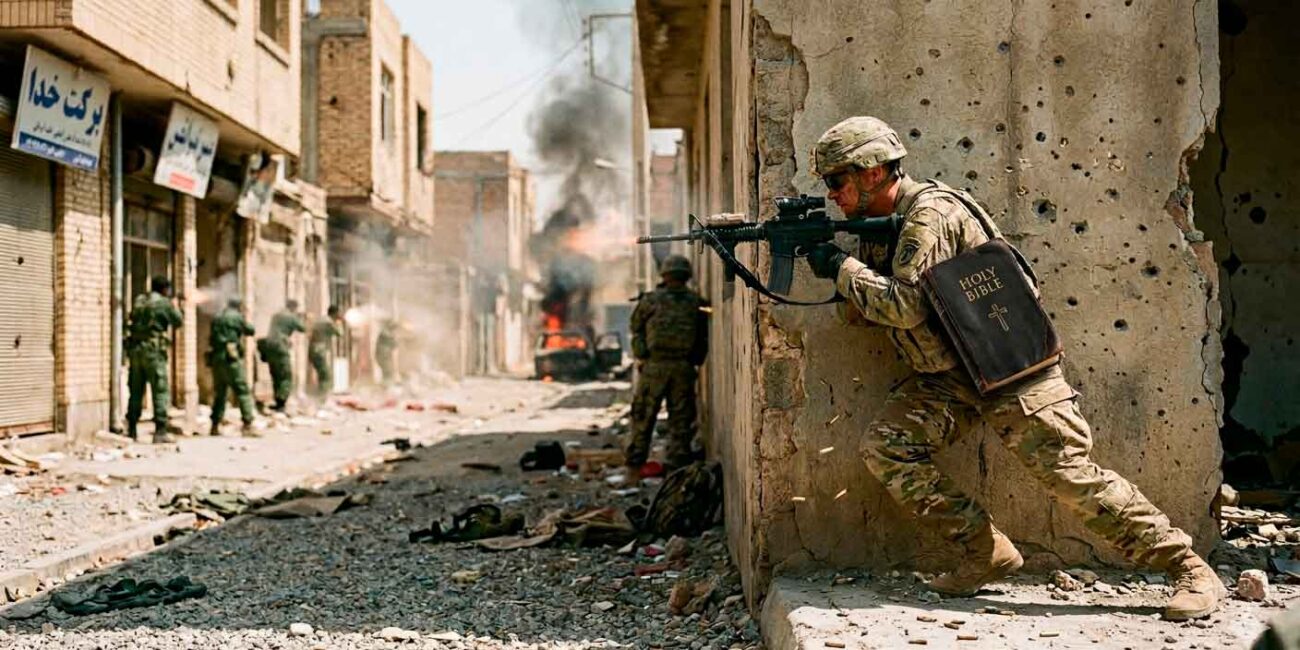
US Secretary of Defense Pete Hegseth has used biblical scripture and prayer to frame and justify military actions, particularly during the current U.S.-Iran conflict that started in early 2026. Hegseth has incorporated his evangelical faith into his leadership at the Pentagon, often invoking divine sanction for American military operations
Psalm 144: During a Pentagon briefing in March 2026, amid operations against Iran, Hegseth quoted Psalm 144, saying, “Blessed be the Lord, my rock, who trains my hands for war and my fingers for battle”.
- “Overwhelming Violence” Prayer: In a Pentagon Christian worship service, Hegseth read a prayer that called for “overwhelming violence of action against those who deserve no mercy,” invoking “enemies of righteousness” and asking God to allow “every round [to] find its mark”.
- Religious Context: Hegseth has argued that U.S. troops, when facing enemies he describes as “religious fanatics” (referring to Iran), need a direct connection with God for strength.
- Isn’t this one fanatic calling out another fanatic?
- “Deus Vult”: Hegseth has a “Deus vult” (“God wills it”) tattoo, a phrase historically associated with the Crusades, which he has argued were justified to protect Western civilization.
Children are dying
Based on early reports from March 2026, the intensifying conflict involving the U.S., Israel, and Iran has resulted in over 300 children killed, primarily in Iran and Lebanon.
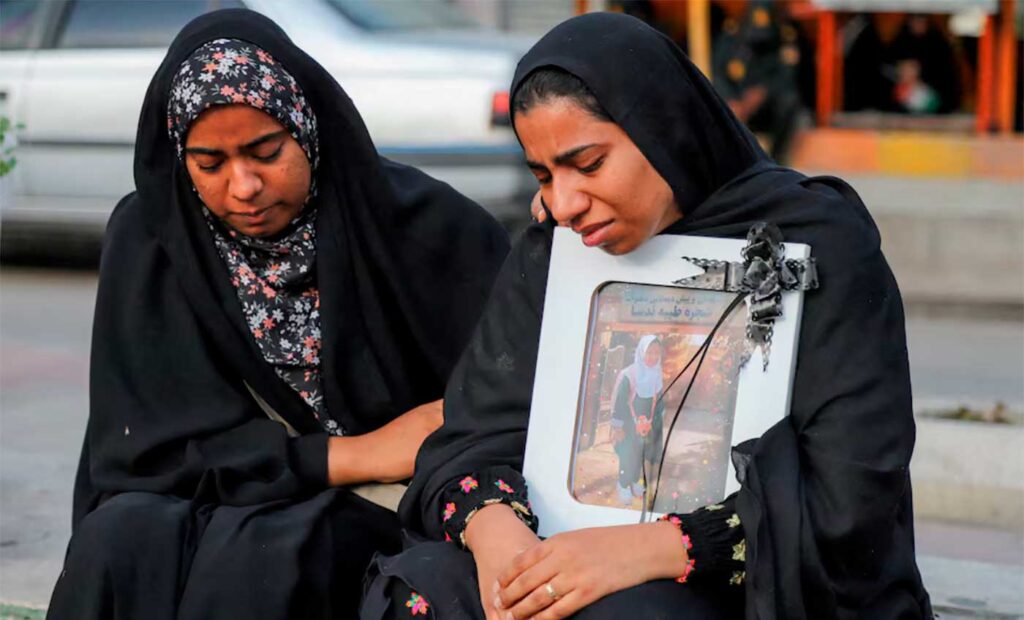
UNICEF reported over 1,100 children were killed or injured within the first ten days, with hundreds of thousands displaced and vital infrastructure destroyed.
- Children Killed in Iran/Lebanon: Reports indicate at least 206 children were killed in Iran and 118 in Lebanon, according to figures released as of late March 2026.
- Other Casualties: Reports also indicate four children were killed in Israel and one in Kuwait.
- Total Impact: UNICEF stated over 2,100 children in total have been killed or injured in the regional conflict.
- School Attack: A single strike on an Iranian school resulted in over 100 children killed.
- Context: These casualties occurred following the start of the conflict on February 28, 2026, which involved intense aerial campaigns.
The USA continues to threaten more violence (Can you guess the movie?):
Is it actually “Justified”?
The perpetrators will argue yes while most people would argue no.
- Modern weapons are inherently indiscriminate, no war can ever meet the criteria of “proportionality.”
- Under the Geneva Conventions, the deliberate targeting of children and civilians is never justifiable. When the “majority killed” are innocent, it usually points to a failure of international law or the commission of war crimes, regardless of the original “cause” of the war.
The gap between the theory of a just war and the reality of a grieving parent is where the most profound moral failures occur. History tends to judge wars not by the speeches given at the start, but by the ruins left at the end.
Why Use the Bible?
The use of the Bible to justify war—including the current conflict involving the U.S., Israel, and Iran—is a practice rooted in both ancient theology and modern political ideology. When leaders or groups invoke scripture, they are usually drawing from three specific frameworks:
1. Biblical Prophecy and the “End Times”
The most prominent justification, in the current context, involves Eschatology, or the study of the end of the world.
- The Armageddon Narrative: Some interpreters point to passages in Ezekiel (Gog and Magog) or Jeremiah 49 (the “breaking of the bow of Elam,” which is modern-day Iran) to suggest that a war in the Middle East is a divinely ordained precursor to the Second Coming of Christ.
- “God’s Divine Plan”: Reports from groups like the Military Religious Freedom Foundation have noted that some military commanders frame the conflict to their troops as a “holy war” or a necessary step in a “divine plan” to usher in a new age.
2. Christian Zionism and the “Land Covenant”
Many justifications stem from a specific reading of the Old Testament regarding the land of Israel.
- Genesis 12:3: “I will bless those who bless you, and whoever curses you I will curse.” This verse is frequently cited by political and religious leaders to argue that unconditional military and political support for Israel is a religious duty that brings divine favor upon a nation.
- The Promised Land: Citing Genesis 15, some argue that the borders of Israel are biblically mandated, using this to justify territorial expansion or preemptive strikes against neighbors viewed as “enemies of Zion.”
3. Romans 13 and “The Sword”
When addressing the ethics of killing, many turn to the New Testament’s description of government authority.
- Authorization of Force: Romans 13:4 states that the governing authority “does not bear the sword for no reason” and is “God’s servant, an agent of wrath to bring punishment on the wrongdoer.”
- Just War Application: This is often used to tell soldiers that their participation in war is not a sin, but a service to God’s order, effectively shifting the moral responsibility from the individual to the state.
The Counter-Perspective
It is important to note that many other Christians and religious leaders—including Pope Leo XIV in his recent Palm Sunday address—strongly reject these justifications. They argue:
- The “Prince of Peace”: They point to Jesus’ commands to “love your enemies” and “turn the other cheek” as the definitive Christian stance, rendering any “holy war” a contradiction of the faith.
- Descriptive vs. Prescriptive: Scholars argue that when Jesus spoke of “wars and rumors of wars” (Matthew 24), he was describing a broken world, not commanding believers to start those wars.
The Bible is used because it provides a “transcendent” authority. If a war is seen as a political choice, it can be questioned; if it is framed as a “divine mandate,” it becomes, for some, a matter of absolute obedience.
Why is the US in the Middle East Again?
The reason for the U.S. involvement in the current conflict is constantly shifting.
While the “official” mission has a set list of targets, the rhetoric from US leadership often fluctuates between limited military strikes and hints at a total overhaul of the region.
Military Goals
According to the Department of War and Secretary Pete Hegseth, the U.S. has three primary, non-negotiable objectives:
- Neutralizing the Missile Threat: Dismantling Iran’s ballistic missile and drone production facilities to prevent them from hitting U.S. bases and allies.
- Annihilating the Iranian Navy: Ensuring the Strait of Hormuz remains open. Iran’s ability to block this chokepoint (which carries 20% of global oil) is seen as an unacceptable “gun to the head” of the global economy.
- Ending the Nuclear Program: Moving beyond “containment” to the physical destruction of nuclear infrastructure to ensure Iran never develops a weapon.
Why the Shifting Goals?
The confusion stems from the different “endgames” being discussed by officials:
- Regime Change vs. Behavior Change: President Trump initially urged the Iranian people to “take over your government,” suggesting a goal of toppling the leadership. However, more recently, he has signaled openness to an “off-ramp” where the current regime stays but is forced into a state of total cooperation—similar to the 2025 “Venezuela Model.”
- The “No More 5-Year Cycles” Argument: The White House has stated they want a “permanent” solution so they don’t have to return every few years. This has led to talk of “unconditional surrender” or “breaking the bones” of the regime, which sounds much more like a total war than a limited strike.
- “Taking the Oil”: In recent days, the US administration has floated the idea of seizing Kharg Island (Iran’s main oil terminal) to pay for the war or to use as ultimate leverage. This shifted the narrative from a “defensive strike” to a potential resource seizure.
The Israel Factor
The U.S. and Israel are operating in “unprecedented coordination,” but their goals aren’t perfectly aligned. Israel views the Iranian regime as an “existential threat” that must be dismantled entirely. The U.S. is currently trying to balance that “total victory” mindset with the reality of soaring global energy prices and the risk of a prolonged ground war that the public is wary of.
The Perceived Goal
As of today, the U.S. has sent a 15-point proposal to Tehran to end the war, but simultaneously, President Trump has threatened to “obliterate” Iran’s power plants and water desalination facilities if the Strait of Hormuz isn’t fully opened immediately.
We have to guess that the goal is use overwhelming air and naval power to make the cost of continuing so high that the Iranian leadership accepts U.S. terms, or collapses under the pressure of its own people.
Isn’t It Always About the Oil and not Democracy?
The “Do as I Say, Not as I Do” Problem: When a country claiming to “liberate” others is simultaneously cracking down on its own protestors, limiting its citizens’ voting rights, or using mass surveillance, the “democracy” they are selling looks less like a gift and more like a tool for imperialism. The US is urging Iranians to overthrow their government while overtly showing a dog-like interest in their oil (the bone).
Selective Intervention: The West pushes for democracy in countries with oil or strategic enemies (like Iraq or Libya) but remains silent or even supportive of absolute monarchies that are “friendly” allies (like Saudi Arabia and Bahrain). This makes the push for democracy look like geopolitical theater rather than a genuine concern for human rights. A foreign-branded version of democracy is being used as a Trojan horse for foreign interests.
If the invading country has a “questionable” practice of democracy—such as police brutality, systemic inequality, or the marginalization of its own minorities—it signals to the world that “democracy” is just a buzzword used to justify intervention while the reality is just another form of control and resource (oil) grabbing.

Other Articles

In the Beginning, Plants Grew without Sunlight
A man in the sky sent his only son to die for us. WHY?