












The mid-morning heat was already shimmering off the asphalt as the line of traffic crawled along the narrow road huggin’ the banks of the Rio Cobre. Sunlight glinted off the water, a brilliant ribbon of green cutting through the dense, overhanging canopy. It was beautiful, peaceful—until it wasn’t.
Two cars ahead, a metallic gray sedan slowed slightly. A rear window rolled down. A hand emerged, carelessly swinging a bloated, white plastic t-shirt bag before letting it fly toward the riverbank.
Time seemed to slow down. Mid-air, the cheap plastic caught on a stray breeze and tore completely open. The contents erupted in an ugly shower: empty plastic soda bottles, grease-stained fast-food wrappers, and half-eaten styrofoam containers exploded across the pristine grass and into the foliage, some splashing directly into the rushing water.
A surge of pure, hot adrenaline hit the motorist behind the wheel. The complete, casual disregard for the earth—for a river that had sustained the valley for generations—was infuriating.
The traffic crept forward, agonizingly slow, until the bottleneck cleared just before the bridge. Up ahead, the gray sedan was forced to stop at a red light. Seizing the opportunity, the motorist swung into the adjacent lane, tires crunching slightly on the gravel shoulder, and pulled up exactly parallel to the offender’s vehicle.
The motorist rolled down the window and leaned over, eyes locked onto the driver and the passenger who had thrown the bag. The passenger looked back with a blank, bored expression that only fueled the fire.
“Hey! You think the river is your personal garbage dump?” the motorist yelled, voice trembling with rage. “Look at what you just did back there!”
The passenger smirked, rolling their eyes and starting to wind the window back up.
“Yeah, close it!” the motorist shouted, unleashing a string of choice words that cut straight through the humid air. “You absolute wastes of space! Look at the world we’re dealing with—global warming, pollution, everything dying. We are doing nothing but harm, and it’s because of selfish, thoughtless parasites like you!”
The passenger stopped rolling the window, the smirk vanishing under the sheer force of the motorist’s fury.
The motorist leaned out further, delivering one final, blistering truth. “The environment would be better off with you dead! At least your atoms could rot and actually do something useful for the soil, instead of you just poisoning the planet while you’re alive!”
Before they could respond, the light turned green. The motorist slammed on the gas, leaving the offenders sitting in the exhaust, the echo of the words hanging heavy in the humid air.
Did you noticed that both motorists are damaging our environment and atmosphere, even though we understand the frustration of one?
You are going to die – one day
This is the topic we are exploring today. You will see a connection to the story above as well.
Please read to the end to get advice on death anxiety and how we can use the knowledge of the inevitability of death to live a life of value and positivity.
Whether you want to die or you think you are going to live forever, the simple truth is that you are going to die one day. If you are a teenager reading this or a 90 year old, you are going to die one day. If you are an egomaniac, narcissistic jerk, that may have caused the death and hurt to others, or a philanthropic angel, you are still going to die one day.
A lot of us will not even have a choice in our deaths – we will just cease to exist, sometimes not even knowing death was coming.
When a human dies, the “biological glue” that holds our trillions of cells together dissolves. The energy that was used to maintain the “Self” is released, and the atoms are liberated.
- Autolysis (Self-Digestion): Shortly after death, cells lose their integrity. Enzymes that once helped you digest food begin to digest the cells themselves.
- The Microbial Feast: The trillions of bacteria that lived in your gut—which were kept in check by your immune system—suddenly begin to break down tissues from the inside out, converting proteins and lipids into simpler gases and liquids.
Memories of the dead
For the average person, personal memory lasts about three generations—roughly 75 to 100 years.
Think about your own family tree. You likely know your parents and grandparents well. You might know a few facts or names of your great-grandparents. But your great-great-grandparents? For most people, they have already faded into obscurity. Once the last person who had direct eye contact with you passes away, your living memory transitions into historical data (or vanishes entirely).
Psychologists look at memory through two lenses: individual biology and cultural preservation.
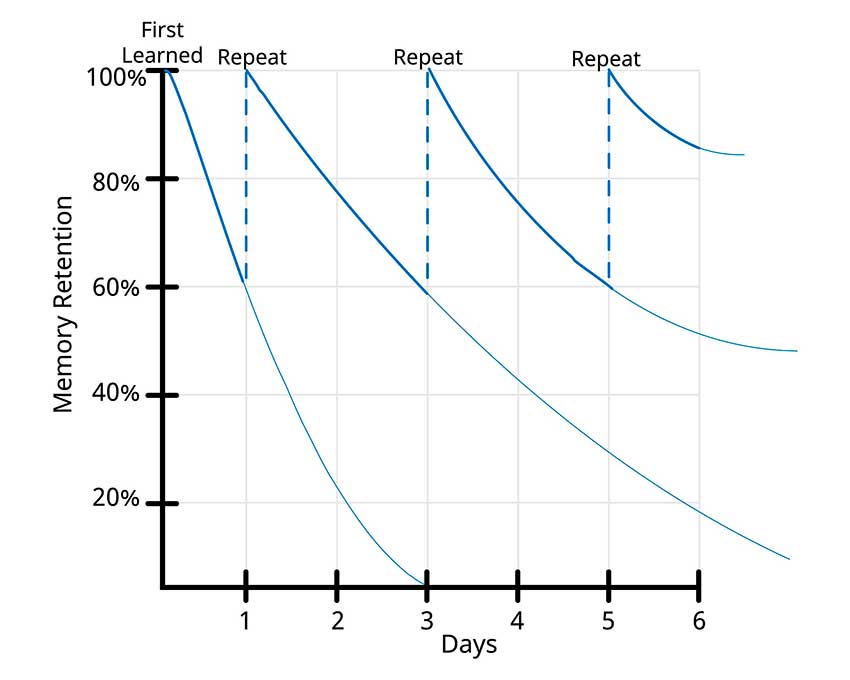
On an individual level, memory is highly inefficient. Hermann Ebbinghaus’s famous Forgetting Curve shows that without active review, human memory drops drastically within days of an event. Over years, our brains naturally prune away details—the exact sound of a voice, the way someone walked—to make room for daily survival data.
Sociologically, communities only preserve memories that serve a current purpose. If a memory no longer teaches a lesson, protects the tribe, or binds the family together, the culture stops investing the energy required to pass it down.
Loved Ones vs. Historical Figures
It can feel deeply unfair that the world remembers dictators, villains, and distant leaders vividly, while the grandmother who loved you unconditionally is forgotten by the public. How long do you think your memory will fade away from the people you leave behind? People forget due to three core mechanisms:
- The Scale of Impact: Figures like Martin Luther King Jr., Hitler, or Nelson Mandela altered the structural framework of human history. They changed borders, laws, and the social fabric of civilizations. We don’t just remember them; we remember the modern world they forced into existence.
- Externalized Memory Systems: You remember your loved ones (and they you) using a biological brain. The world remembers historical figures through cultural scaffolding—textbooks, national holidays, statues, roads (Nelson Mandela Highway), documentaries, and literature. Their memories are stored on hard drives and paper, exempt from biological decay.
- The Emotional Extreme: Our brains are wired to remember threats and massive shifts. Figures associated with immense trauma (like Hitler or Bin Laden) or immense triumph (like Mandela) are reinforced continuously by society as cautionary tales or moral compasses. They become symbols rather than people.
Ultimately, while the public memory of an individual almost always fades, the consequences of their love and choices ripple forward forever. Your great-grandmother’s kindness shaped your grandparent, who shaped your parent, who shaped you. You are, in a very real structural sense, the living memory of everyone who came before you—even the ones whose names you no longer know.
Comedic Coping
The divide between those who joke about death and those who treat it as a taboo usually comes down to how our brains manage Mortality Salience—the psychological state of being aware that you will die.
For some, that awareness is a heavy weight that needs to be “locked away” to function; for others, like Nikki Glaser, talking and joking about it is the only way to make the weight feel lighter because death is the ultimate “unknown,” and the human brain is wired to fear what it cannot predict or control.
Modern cultures have sanitized death. It happens in hospitals and funeral homes, hidden from daily view. When something is hidden, it becomes “scary” and “other” making it a taboo subject. Humans create “buffer” systems—like religion, nationalism, or strict social norms—to protect themselves from the paralyzing fear of death. For someone relying on these buffers, a joke about death can feel like an attack on their psychological safety.
Comedy is often the most sophisticated defense mechanism we have. In psychology, this is known as Gallows Humor or Existential Humor.
- Reclaiming Agency: Death is something that happens to you. By making a joke about it, you become the active observer rather than the passive victim. Comedians like Nikki Glaser (especially in her 2024 special Someday You’ll Die) use “dark humor” to strip death of its power. If you can laugh at it, it can’t be purely terrifying.
- Cognitive Reframing: Comedy forces the brain to look at a grim situation from a weird, unexpected angle. This shift in perspective releases tension (literally, through laughter) and signals to the nervous system that you are safe for the moment.
- Social Bonding: Death is the most isolating thought—no one can go with you. But when a comedian tells a joke about death and a whole room laughs, that isolation vanishes. It’s a shared acknowledgement that “we’re all in this together.”
Brutal Honesty
Nikki Glaser’s comfort with the subject often stems from a “DIY” philosophy toward life’s grimmest realities. By being “brutally honest” about everything from aging to suicidal ideation, she removes the shame associated with those thoughts.
- When she talks about her “brow lift” money being her “death fund” or jokes about her own funeral, she is normalizing the inevitable.
- Comedians often view the absurdity of our daily stresses against the backdrop of eternity. If we’re all going to be “building materials for new life” anyway, why be so stressed about a bad date or a career setback?
| Personality Type | View of Death | Primary Defense Mechanism |
| Avoidant / Taboo | An external threat to be feared. | Denial / Social Norms. “If we don’t talk about it, it’s not real right now.” |
| Confrontational / Comedic | An internal reality to be managed. | Humor / Introspection. “If I can make it funny, I can live with it.” |
Making comedy out of death doesn’t mean you don’t care about life; it usually means you care so much that you need a way to process the fact that it ends.
The Usual Death Anxiety
Death anxiety, or thanatophobia, is a foundational human experience. It is the price we pay for being the only known species that is both highly self-aware and capable of abstract time-travel—we can project ourselves into a future where we no longer exist.
Evolutionarily, death anxiety is a “feature,” not a bug. It is the ultimate survival mechanism.
- The Biological Imperative: Your brain is hardwired to keep you alive. Death anxiety is the psychological manifestation of the fight-or-flight response. Without a healthy fear of cessation, our ancestors wouldn’t have avoided predators or sought medicine.
- Terror Management Theory (TMT): Social psychologists argue that much of human culture—religion, art, nationalism, strict social norms and even political leanings—is a defense mechanism against the paralyzing fear of death. We create “symbolic immortality” by belonging to groups or causes that will outlive us.
- The Conflict of “Self”: Once the brain builds a “database” of a self, it becomes logically impossible for that self to imagine its own non-existence. The “system” (our consciousness) cannot process its own “off” switch.
Shifting the Perspective
Coping isn’t about making the fear disappear; it’s about integrating it.
- Existential Psychotherapy (Yalom’s Approach): Irvin Yalom, a pioneer in this field, suggests that “the physicality of death destroys us, but the idea of death saves us.” By facing the reality of death, we strip away the trivialities of life.
- Cognitive Reframing: Epictetus, the Stoic philosopher, famously noted that death is not terrifying, but our judgment of it is. We weren’t bothered by the billions of years of non-existence before we were born; logically, the non-existence after death is simply a return to that state.
- Legacy Building: Coping often involves shifting focus from “the end” to “the trace.” This is what researchers call Generativity—the concern for establishing and guiding the next generation.
Returning to the “Building Blocks”
We are made of the “Big Six” elements: Oxygen, Carbon, Hydrogen, Nitrogen, Calcium, and Phosphorus. These don’t disappear; they simply change their “address.”
- Carbon: As the body decomposes (or is cremated), carbon is released as CO2 into the atmosphere or into the soil. Plants breathe in this carbon to build glucose and cellulose. That oak tree in the cemetery is literally built from the carbon atoms of those beneath it.
- Nitrogen & Phosphorus: These are the “limiters” of life. Soil is often starved of them. A decomposing body provides a concentrated burst of these nutrients, allowing a massive surge in fungal and microbial growth, which in turn supports insects, birds, and small mammals.
- The Ocean Link: Atoms from terrestrial decomposition eventually wash into river systems and the sea. Your phosphorus might one day build the shell of a crustacean or the skeletal structure of deep-sea coral.
The “Necessary Reset” and Environmental Impact
A living body causes more environmental damage, from a strictly thermodynamic perspective. If more of us “disappeared”, fewer resources would be locked up in human infrastructure and bodies, allowing those vital atoms to be more rapidly recycled back into the broader ecosystem and atmosphere to sustain other forms of life.
Fewer humans directly translates to a decrease in industrial activity, less greenhouse gas emissions, and a reduced demand for fossil fuels. This would give the atmosphere and oceans a chance to stabilize and regulate temperatures more effectively.
A smaller human population reduces the pressure on land for agriculture, urban development, and deforestation. This gives natural ecosystems—like forests, wetlands, and rivers—the space to regenerate, which in turn halts habitat fragmentation and allows struggling wildlife populations to recover.
- The Living Footprint: To keep a human “Self” aware and functioning in modern societies, we must maintain a high state of entropy reversal. We take ordered energy from the environment (food, fuel) and turn it into disordered waste (heat, pollution, trash).
- The Death Dividend: Death stops the “consumption machine.” In a natural burial, the body ceases to be a carbon source (polluter) and becomes a carbon sink (nutrient provider).
- Atmospheric Rebalancing: Over deep time, the “reset” of death ensures that the atmosphere isn’t permanently depleted of CO2 and nitrogen. If nothing ever died and decayed, the Earth’s surface would eventually become a “boneyard” of locked-up nutrients, and new life would starve for lack of materials.
A famous Physicist noted that “Every atom in your body came from a star that exploded.” When you die, those atoms don’t lose that history; they just enter a new chapter.
| Stage | Form of “Self” | Destination |
| Living | Integrated biological entity | Consumer of energy/resources |
| Immediate Post-Death | Molecular resource | Food for microbes and fungi |
| Long-Term | Elemental building blocks | Re-integrated into plants, soil, and atmosphere |
In a way, our “fragility” is what makes us a perfect part of the Earth’s machinery. Accepting that, and living in the present, is the best way to cope.
Living in The Present
Living in the “present” sounds like a simple cliché, but it is actually a complex biological and psychological feat. Our brains are evolved to do the exact opposite: to dwell on the past (to learn) and obsess over the future (to survive).
Accomplishing “presence” requires a deliberate override of your brain’s default settings. Here is how to achieve that state while your hardware is still functioning at its peak.
The Default Mode Network (DMN) is a collection of brain regions that becomes active when you aren’t focused on the outside world. It’s the “daydreaming” center where your brain ruminates on social status, past mistakes, and future anxieties. We need to hack this network.
- The Strategy: Transition to the Task-Positive Network (TPN). When you focus intensely on a sensory task (like the physical sensation of breath or the taste of food), the DMN “quiets down.” You cannot be fully “in your head” and “in your body” at the exact same time.
- The Tool: Use Micro-Mindfulness. Instead of 20 minutes of silent meditation, try 30 seconds of “Extreme Noticing.” Describe three things you see, two you feel, and one you smell. This forces your prefrontal cortex to ground itself in current sensory data.
Leverage “Flow States”
Flow is a state where “the self” disappears because you are so focused on a challenge.
- How to achieve it: Engage in activities where your skill level exactly matches a high level of challenge (e.g., rock climbing, playing a complex musical piece, or coding).
- The Result: In a flow state, your sense of time distorts, and the “death anxiety” vanishes completely. You aren’t “living in the moment”—you are the moment.
Practice “Negative Visualization” (Stoic Hedonism)
Paradoxically, thinking about your “parts” failing is the best way to enjoy them while they work. This is the Stoic practice of Premortatio Malorum.
- The Exercise: Spend one minute imagining that you have lost the use of your hands, or your ability to see. Then, “return” to reality.
- The Effect: The contrast creates a surge of gratitude. Suddenly, the “boring” act of walking or typing feels like a miracle. It shifts your perspective from “I have to do this” to “I get to do this.”
Curate Your “Attentional Real Estate”
Your presence is literally defined by what you pay attention to. If your attention is scattered across 50 browser tabs and a social media feed, you aren’t living in the present; you are living in a fragmented digital ghost-world.
| Method | Why it Works |
| Monotasking | Doing one thing at a time prevents “attention residue” from previous tasks. |
| Nature Exposure | “Attention Restoration Theory” shows that natural environments lower cortisol and pull us into the physical present. |
| Active Listening | Instead of waiting for your turn to speak, focus entirely on the other person’s tone and micro-expressions. |
Accept the “Transience”
The reason we struggle to live in the moment is that we try to clutch the moment. We take photos of our food instead of eating it because we want to “keep” the moment forever.
- The Shift: Realize that a moment’s value comes from the fact that it is dying. Like the “necessary reset” of death, the transience of a sunset is what makes it beautiful.
- The Practice: Try to experience something beautiful without documenting it. Keep the memory purely biological. This reinforces the idea that your life is an experience, not a collection.
Living in the present isn’t about being “happy” all the time; it’s about being available for your life. While your biological and digital “parts” are intact, your greatest asset is your attention.
Turning Inevitability into Positivity
The “Memento Mori” (Remember you must die) philosophy argues that death is actually the source of value in life.
In economics, scarcity creates value. If air were limited, it would be the most expensive thing on Earth. If life were infinite, moments would have no “price.”
- Urgency: Death provides a deadline. It forces us to choose what matters.
- Presence: Knowing the “now” is fleeting makes the sensory experience of a meal, a sunset, or a conversation more intense.
To turn the inevitability into positivity, we can adopt these frameworks:
- The Regret Minimization Framework: When making a decision, project yourself to the end of your life and look back. Which choice would your “expiring self” be glad you made?
- Contribution over Consumption: Shifting the goal from accumulating (which death renders moot) to contributing (which death cannot touch) creates a sense of lasting worth.
- Awe and Connection: Realizing we are part of a biological and cosmic cycle. We are a way for the universe to witness itself. Even when the “AI and human parts” eventually fail, the energy and impact we leave behind remain in the system.
Think of a book. The fact that a book has a final chapter is what gives the story a “plot.” Without an ending, the story is just a series of random events. Death is the spine that holds the pages of your life together.
“What counts in life is not the mere fact that we have lived. It is what difference we have made to the lives of others that will determine the significance of the life we lead.” – Nelson Mandela

Other Articles

Fake Morality
Why is there Abuse of Children In Churches?