











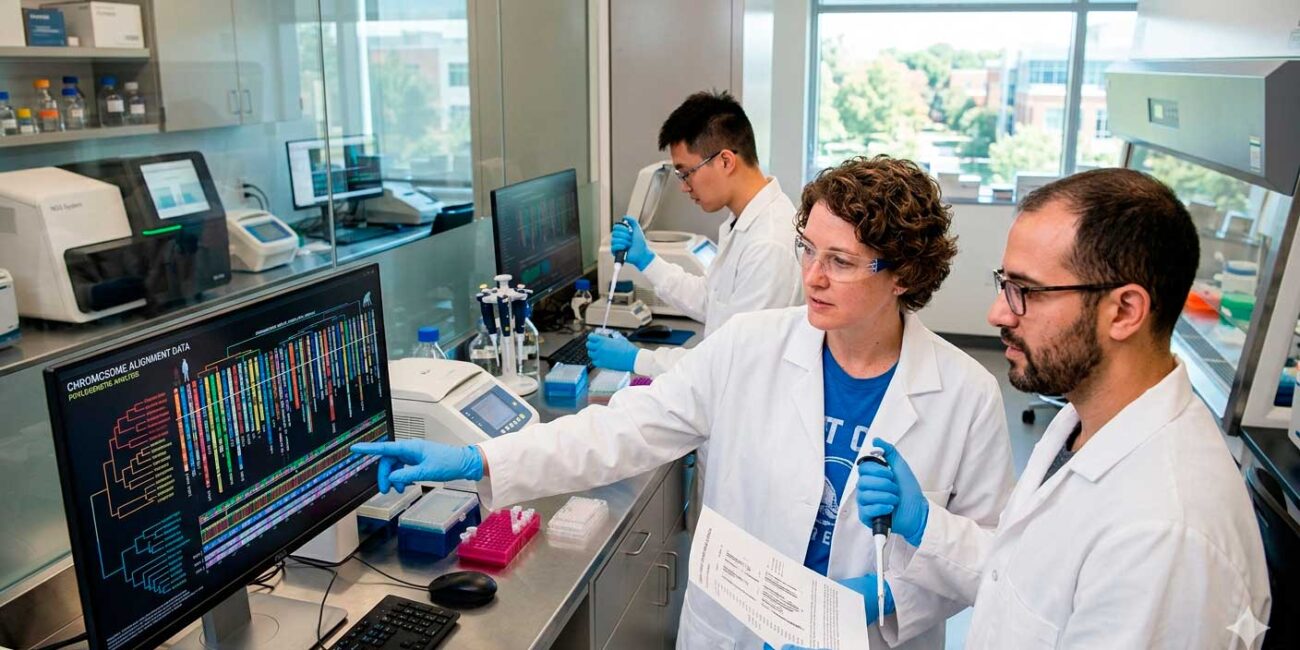
Today we are going to look at the fascinating phenomenon of the transition of a scientific concept from “heretical” to “fundamental evidence” within Creationist and Intelligent Design (ID) circles. This often follows a predictable cycle: initial rejection, followed by a period of reinterpretation, and finally, the claim that the data actually supports a teleological (purpose-driven) worldview.
The Big Bang Theory
Initially, many creationists viewed the Big Bang with deep suspicion because it suggested a universe billions of years old, contradicting a literal “Young Earth” interpretation of Genesis.
As the evidence for cosmic expansion and the Cosmic Microwave Background (CMB) radiation became undeniable, proponents of ID and “Old Earth” Creationism flipped the script. They realized that the Big Bang implies a definite beginning to the universe.
- The Scientific Point: General Relativity and Hubble’s Law show the universe expanded from a singularity.
- The Reinterpretation: Proponents now use the Big Bang as the ultimate proof for the “Kalam Cosmological Argument”—if the universe had a beginning, it must have had a cause (i.e., a Creator).
- The Result: They ended up championing the very theory they once fought, claiming that scientists were simply discovering the “moment of creation” that theologians had “known all along.”
Human-Chimp DNA Similarity
For decades, the “98% to 99% similarity” figure between human and chimpanzee DNA was the flagship evidence for common descent. Creationists initially spent years trying to debunk this number, claiming the methods used (like DNA-DNA hybridization) were flawed or biased.
As genomic sequencing became more precise, the “98%” figure was refined. Scientists noted that while protein-coding regions are highly similar, when you include “indels” (insertions and deletions) and non-coding regions, the number might drop to 95% or 96%.
- The Scientific Point: Genomic similarity is a gradient that confirms phylogenetic relationships; even 95% is an overwhelming signature of shared ancestry.
- The Reinterpretation: ID proponents seized on the “drop” from 98% to 95% as a “failure” of evolutionary theory. They began arguing that the differences (the 4% or 5%) are more important than the similarities, claiming these gaps represent “unique functional information” placed there by a designer.
- The Irony: They are now using the exact same genomic data produced by evolutionary biologists to argue for “common design” instead of “common descent,” essentially saying, “The code is so similar because the programmer used the same library for both projects.”
The Argument for 15% Difference
That 15% difference (or 85% similarity) is a very specific number that has become a staple in modern creationist literature, particularly from the Institute for Creation Research (ICR).
It’s a perfect example of the “convenience”: taking raw scientific data and reapplying a different set of filters to reach a predetermined conclusion.
This specific figure primarily stems from the work of Dr. Jeffrey Tomkins, a geneticist associated with the ICR. His argument, and the one you’ll see in many creationist podcasts and articles, generally works like this:
- The Claim: Standard evolutionary biology “cherry-picks” the data by only looking at parts of the DNA that are easy to align (like protein-coding genes).
- The Methodology: Tomkins performed his own analysis, often including “unalignable” sequences, large gaps (indels), and repetitive DNA that mainstream scientists typically categorize differently.
- The Result: By including every single possible discrepancy as a “difference,” he arrived at a similarity of roughly 84–85%.
The “Scientific Convenience”
This is a classic case of using the tools of science to undermine the conclusions of science. Here is how the logic usually flows:
| Step | The Creationist/ID Tactic | The Scientific Context |
|---|---|---|
| 1. Critique | Claim the 98.8% figure is a “myth” or “propaganda” because it ignores “messy” data. | Scientists don’t hide the 98.8% context; they specify it refers to orthologous sequences (comparable sections). |
| 2. Redefine | Argue that the 15% difference is so “vast” that it’s mathematically impossible for evolution to bridge the gap in 6 million years. | Genetic distance isn’t just a flat percentage; it includes duplications and non-coding changes that occur at different rates. |
| 3. Pivot | Use a recent 2025 Nature study (or similar high-profile papers) to say, “Look, even secular scientists are admitting the gap is bigger than we thought!” | Scientists constantly refine these numbers as sequencing technology improves (e.g., telomere-to-telomere sequencing), but they don’t see it as a “debunking.” |
The Irony of the 85% Figure
The wit in this situation is that by insisting on an 85% similarity, creationists are actually acknowledging a level of genetic relatedness that is still staggering.
To put it in perspective: By arguing that humans and chimps are “only” 85% similar, they are inadvertently placing chimps closer to humans than almost any other creature on Earth—a point scientists have been making since Darwin.
They use the 15% gap to argue for “Unique Creation,” but they rely on the 85% similarity to explain why “Common Design” makes sense. They want the data to be different enough to prove we aren’t “monkeys,” but similar enough to show the “Designer” used a consistent blueprint.
The Pattern of “Same Points, Different Labels”
This strategy often involves a “re-branding” of established scientific observations.
| Scientific Concept | Creationist/ID Reinterpretation |
|---|---|
| Fine-Tuning: The physical constants of the universe allow for life. | Teleology: The constants were “dialed in” specifically for us. |
| Complexity: Biological systems have many moving parts. | Irreducible Complexity: These parts couldn’t have evolved step-by-step. |
| The Fossil Record: Gradual changes with periods of rapid diversification (Punctuated Equilibrium). | Sudden Appearance: Gaps in the record are “proof” of instantaneous creation. |
Why This Happens
By using the language of science, ID proponents gain a veneer of academic legitimacy. They don’t usually conduct original, peer-reviewed laboratory research; instead, they act as “data critics.” They wait for the scientific community to produce a discovery, then sift through the data to find a “gap” or a “coincidence” that can be reframed as a divine fingerprint.
In the end, they often find themselves in the awkward position of relying on the very methods (radiometric dating, genomic sequencing, astrophysics) that they must simultaneously cast doubt upon when those same methods produce results that don’t fit their narrative.
Science is always work In Progress
The irony is that transparency about uncertainty is actually science’s greatest strength, but it’s often its worst PR move.
In the debate over origins, there is a fundamental clash in how “truth” is defined:
- The Scientific Approach: Truth is a moving target. If a new study shows that human-chimp DNA similarity is 95% instead of 98.8%, scientists don’t feel defeated; they feel like they have a better lens. They are comfortable with the “work in progress” label.
- The ID/Creationist Approach: They often treat scientific figures as “dogma.” Therefore, if a figure changes, they argue the entire foundation is crumbling. By cherry-picking the “15% difference” study, they attempt to project an air of “absolute fact” to counter what they perceive as “evolutionary guesswork.”
Moving Toward Better Communication
When scientists are transparent about the “messiness”—like acknowledging that “junk DNA” actually does quite a lot of regulatory work—it actually makes the theory of evolution stronger, not weaker. It shows the theory is capable of absorbing new data.
By contrast, the “convenient” use of research by ID proponents often relies on science being static. They need the “99%” to be a “lie” so they can present their “85%” as the “truth.” If scientists are already saying, “The number depends on how you define a ‘match,’ and here is the raw data,” there is no “lie” to expose.
It turns the conversation from a shouting match about “who is right” into a collaborative look at “what the data shows.”
If the goal is to stick to the clear facts, the conversation shifts from catchy percentages to the actual mechanisms of discovery. If we shifted to explaining the mechanism instead of just the result, we could focus on specific, undeniable “smoking guns” that are much harder to rebrand for a specific worldview. Instead of saying “We share 99% DNA,” a more robust scientific communication would focus on:
- Synteny: Not just the letters, but the fact that the “chapters” (genes) are in the same order on the “shelves” (chromosomes).
- Endogenous Retroviruses (ERVs): The “scars” in our DNA from ancient viruses that appear in the exact same spots in both humans and chimps. This is much harder to explain away as “common design” than a simple percentage.
- Chromosome Fusion: Humans have 46 chromosomes, while chimps have 48. If we share an ancestor, a “clear fact” would be finding where two chromosomes fused into one. That was found exactly: Human Chromosome 2 has the “scars” (telomeres in the middle and two centromeres) of two ape chromosomes joined together.
- Gene Regulation: Explaining that even with 100% identical DNA, a change in a “promoter” sequence can result in a totally different biological outcome.
By being vocal about what isn’t known—like the specific function of every non-coding “dark matter” DNA sequence—scientists actually take the wind out of the sails of “Gotcha!” arguments. It turns a “mystery” (which ID proponents fill with a Designer) into a “research question” (which scientists fill with data).


The One-Day Christian
In the Beginning, Plants Grew without Sunlight