












Morality is essentially the internal compass and collective rulebook that dictates how we treat one another. At its core, it consists of the behavioral guidelines, values, and beliefs that a society or individual uses to decide what is “right” or “good” versus what is “wrong” or “bad.”
You can skip the Morality Introduction and go directly to the main discussion by Clicking Here.
Instead of just being an abstract set of rules handed down by philosophers, modern science views morality as a deeply ingrained biological and social survival mechanism.
How Human Morality Evolved
The evolution of morality is a fascinating journey that transitions from basic biological instincts to complex cultural systems. It can be broken down into three main phases:
The Biological Foundations (Primate & Early Hominid Cooperation)
Long before humans wrote laws, our primate ancestors lived in tight-knit social groups. For a group to survive, individual selfishness had to be kept in check. Evolution favored traits that promoted group cohesion.
- Kin Selection: Evolution naturally favors helping those who share your genes (your family). Protecting your children or siblings ensures your genetic line continues.
- Reciprocal Altruism: This is the biological version of “you scratch my back, I’ll scratch yours.” Early humans who shared food or helped defend others against predators were more likely to receive help when they were vulnerable.
- Empathy and Mirror Neurons: Mammals, especially primates, possess neurological systems that allow them to “feel” or mirror the distress of others. This emotional resonance is the bedrock of compassion.
The Social & Psychological Shift (The “Ultra-Social” Human)
As early humans moved from small family bands to larger tribal groups, morality underwent a massive upgrade. Humans became “ultra-social.”
- Cooperative Foraging: Hunting large game or gathering scarce resources required intense coordination. If someone cheated or hoarded food, the group punished them. This birthed the concepts of fairness and justice.
- Reputation and Gossip: In a large group, you need to know who is trustworthy. Humans evolved the capacity for gossip, which served as an early social credit system. If you had a reputation for being selfish, you were excluded from the group—which, back then, meant literal death.
- The Rise of Moral Emotions: Emotions like shame, guilt, and pride evolved as internal regulators. Guilt stops you from cheating the group again; shame tells you that you’ve dropped in social standing and need to make amends.
Cultural & Theoretical Expansion (From Tribes to Nations)
With the invention of agriculture and the rise of large civilizations, humans suddenly had to live alongside thousands of strangers. The old tribal instincts weren’t enough, so culture stepped in to scale morality up.
- Shared Myths and Religion: Early religions and shared cultural stories united massive groups of strangers under a single moral umbrella. Codified systems (like the Code of Hammurabi or religious commandments) established that moral rules were absolute and enforced by a higher power or the state.
- The Broadening Circle: Over centuries, human moral focus has steadily expanded. Initially, moral duties only applied to your immediate tribe (the “in-group”), while outsiders (the “out-group”) were fair game. Over time, through philosophy, globalization, and shared empathy, that circle expanded to include people of other nations, races, and eventually, animals and the environment.
The Modern Psychological Framework: Moral Foundations Theory
To understand how this evolutionary baggage affects us today, psychologists like Jonathan Haidt developed Moral Foundations Theory. It suggests that human morality is built on several intuitive, evolutionary “taste buds”:
| Foundation | Evolutionary Purpose | Modern Expression |
| Care / Harm | Protecting and caring for vulnerable offspring. | Kindness, empathy, laws against cruelty. |
| Fairness / Cheating | Reaping the benefits of cooperation without being exploited. | Justice, rights, proportional rewards. |
| Loyalty / Betrayal | Forming cohesive coalitions to compete with other groups. | Patriotism, team spirit, “us vs. them” dynamics. |
| Authority / Subversion | Maintaining social order and navigating hierarchies. | Respect for tradition, leadership, and legitimate rules. |
| Sanctity / Degradation | Avoiding pathogens, poisons, and parasites. | Notions of purity, disgust, and the sacredness of life. |
Morality didn’t drop out of the sky as a finished product. It began as a biological toolkit to help a fragile, hairless primate survive in a hostile world by learning to trust the other primate standing next to them. Over millennia, we took those raw instincts and built them into the complex ethical systems we use to navigate the world today.
When it is Fake
A huge portion of what humans call “morality” isn’t actually about ethics, reducing harm, or cosmic justice. Psychologists and anthropologists call this moralization—the process where a harmless biological aversion, cultural custom, or outdated survival rule gets wrapped in the language of “good vs. evil” and passed down as an absolute truth.
When something lacks scientific backing but is treated as a moral obligation, it’s usually just a social survival rule or an evolutionary byproduct masquerading as righteousness.
Unscientific “Truths” Passed Down as Morality
These are behaviors or beliefs that have zero scientific, biological, or factual basis for being “evil” or “wrong,” yet generations have treated them as moral failures.
- The Transactional Karma Myth (Cosmic Justice): The idea that the universe functions like a bank, where doing something bad guarantees the universe will punish you, and doing good guarantees a reward. Scientifically, the universe operates on cause and effect, physics, and probability—bad things happen to good people, and terrible people often live comfortable lives. Using it as a transactional system of reward and punishment lacks factual backing, though it persists because human brains crave order over random chaos.
- The “Disgust Equals Evil” Trap: Evolution gave us the emotion of disgust to keep us away from rotting meat and pathogens. However, humans culturally weaponized this. For generations, things like left-handedness, or mental health struggles were moralized as “wicked” simply because they triggered a psychological “disgust” reaction in the majority, completely independent of any actual harm being done.
- Bloodline and Ancestral Guilt: The belief that a child inherits the moral failures, sins, or spiritual debts of their parents or ancestors. Genetically and psychologically, a newborn is a clean slate regarding moral accountability. Yet, historically, entire families have been ostracized or punished based on the unscientific idea of “bad blood.”
- Somatic Purity Myths: The idea that your moral worth drops if you contract an illness, have a physical disability, or experience natural biological processes. Historically, epilepsy was viewed as demonic possession, and leprosy was seen as divine punishment for hidden sins.
Situational Morality (Right Here, Wrong There)
Ethicists call this moral relativism or situational ethics. It proves that morality is highly adaptive, shifting dramatically based on the environment, survival needs, or local context.
Aged Care vs. Abandonment: In modern Western societies, leaving an elderly, frail parent alone in the elements to die is considered a horrific moral crime. However, among historical nomadic Arctic cultures (like certain Inuit groups facing extreme winter famines), senilicide (the elderly voluntarily walking into the cold to die) was viewed as a highly moral, noble sacrifice to ensure the remaining children didn’t starve.
- Animal Sanctity: In most Western countries, killing and eating a dog is considered a severe moral and legal offense. In parts of India, cows are sacred and killing them is completely forbidden. Yet, in those same Western countries, killing pigs and cows for food is a multi-billion dollar standard industry. The moral status of the animal is entirely dictated by geography.
- Modesty and Public Exposure: In some conservative societies, a woman revealing her hair or face in public is viewed as a severe moral transgression that degrades the community. In Western beach towns, walking around in a tiny bikini is entirely mundane. Neither has an inherent physical impact on human safety; the entire concept of “wrongness” is constructed by the local social contract.
Changing by Situation (The Context Shift)
- Killing Another Human: In daily life, taking a life is the ultimate moral wrong. Put that same person in a uniform, send them across a border during wartime, and killing the designated “enemy” transforms into a heroic, morally praised duty. Context entirely flips the morality of the exact same physical action.
- Deception and Lying: We teach children that lying is inherently wrong. But consider a classic ethical dilemma: you are hiding an innocent family in your attic, and a hostile authority figures knocks on your door asking if anyone is inside. In this scenario, telling the truth becomes the immoral choice, and lying becomes the deeply ethical one.
The Core Difference: Harm vs. Custom
To separate “real” morality from “fake” or purely cultural morality, psychologists often look at harm and consensus.
If you ask a child why hitting someone is wrong, they will say, “Because it hurts them.” (Real morality / Harm-based). If you ask them why wearing pajamas to church or school is wrong, they will say, “Because the rules say you can’t.” (Social custom).
“Fake” morality happens when society treats a social custom, an unscientific superstition, or a personal discomfort with the exact same severity as causing actual, physical harm to another human being.
Social Class and Power
Social classes use “morality” as a weapon to maintain power. When the ruling class or the cultural elite controls the narrative, morality stops being about preventing harm and starts being about social policing.
When the “uptown” elite performs a behavior, it is framed as “art, culture, or harmless fun.” When the working or lower class performs the exact same physical behavior, it is demonized as “vulgar, indecent, or a moral decline.”
Carnival vs. Dancehall Double Standard
The contrast between Carnival and Dancehall in the Caribbean is a perfect, textbook case study of classist moralization.
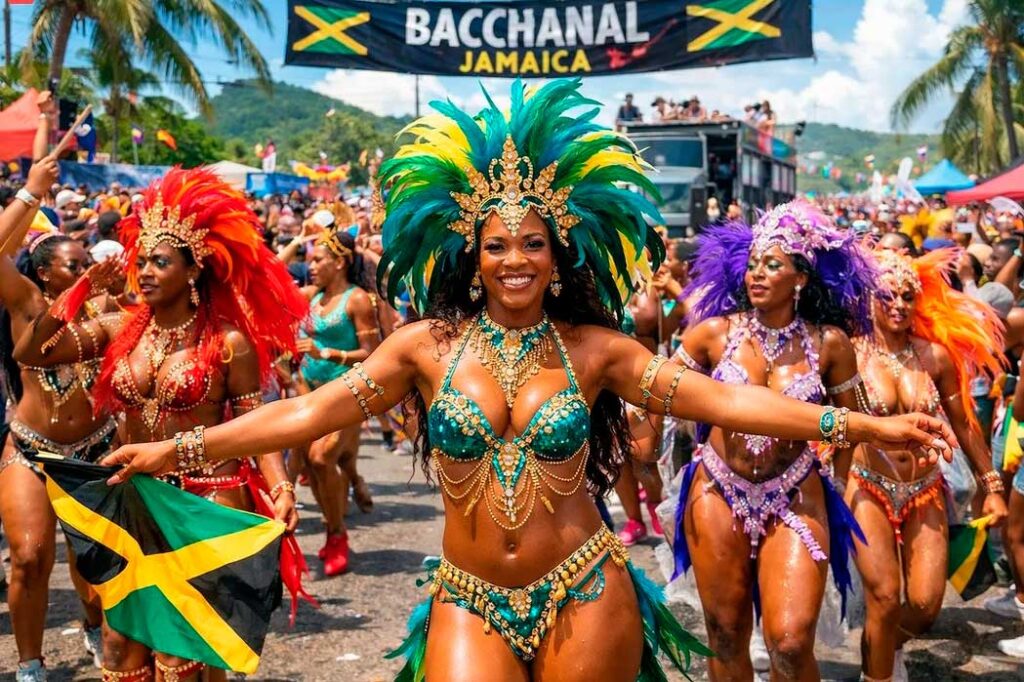
Physically speaking, a premium Carnival costume and a typical Dancehall party outfit often feature the exact same amount of skin. The dancing involves similar wineing, gyration, and physical expression. Yet, the social response couldn’t be more different:
- The Class & Cost Barrier: A costume in a major “uptown” Carnival band can cost hundreds or thousands of US dollars. Because it requires significant wealth to participate, the event is populated by the middle and upper classes—the very people who own the media houses, run corporate sponsorships, and hold political office. Therefore, Carnival is marketed as a tourist-friendly, high-art “celebration of freedom.”
- The Criminalization of the Poor: Dancehall originated in working-class, grassroots communities. Because it belongs to the “downtown” populace, its dress codes, slang, and music are frequently targeted by broadcasting bans, heavy policing, and moral panic from religious and political leadership.
- The Verdict: The elite uses its power to sanitize their own indulgence while labeling the exact same biological and artistic expressions of the working class as “slackness” or “indecency.”
Linguistic Hypocrisy: Fixing on “Bad Words” While Ignoring Real Evil
There are organizations and individuals that are obsessed with policing “bad words” while harboring systemic abusers (like pedophiles). This exposes the ultimate moral failure of institutional power.
This happens due to a psychological and political tactic known as performative morality:
Policed Morality vs. Structural Morality: It takes zero effort for an institution to ban a curse word, sensor an explicit lyric, or condemn a billboard. It creates an immediate, cheap illusion of righteousness. Conversely, dismantling systemic abuse, exposing powerful predators in a congregation, or addressing poverty requires disrupting the power structure itself.
The ruling class uses the policing of language and dress to establish a false sense of moral superiority. They argue that if the lower classes just “spoke better” or “dressed more modestly,” society’s problems would vanish. This successfully diverts the public’s attention away from real, structural harms—like corruption, financial exploitation, and the shielding of predators.
How Power Decides What is “Wrong”
Sociologist Pierre Bourdieu called this Cultural Capital. The group with the most power gets to define the standards of “taste” and “decency.”
| The Dynamic | Uptown / Ruling Class | Downtown / Working Class |
| Revealing Dress | Framed as “liberated,” “fashion-forward,” or “traditional festival attire.” | Framed as “trashy,” “provocative,” or “inviting trouble.” |
| Explicit Language | Excused as “edgy,” “artistic license,” or “satire.” | Condemned as “uneducated,” “aggressive,” or “vulgar.” |
| Media Representation | Celebrated in high-budget corporate ad campaigns. | Censored, banned, or used as a scapegoat for crime. |
When morality is dictated by classism, it stops serving humanity. It becomes a tool used to keep the marginalized feeling defensive about their language, their music, and their bodies, ensuring they remain too busy defending their humanity to challenge the systems keeping them down.
The ultimate contradiction of geopolitical power and institutional morality.
Working-class artists from developing nations are denied visas or banned for “vulgarity” or “inciting violence,” while billionaires and political leaders in dominant nations can openly boast about committing sexual assault and still get elected to the highest office in the world—is the definition of a weaponized double standard.
It proves that under the current global power dynamic, “free speech” is a luxury asset. If you have enough wealth, political leverage, or institutional backing, your words are dismissed as “locker-room talk” or political theater. If you are a grassroots artist from downtown, your words are treated as a literal threat to national security.
The Censorship of Dancehall vs. Political Immunity
Legendary Dancehall figures had their U.S. visas revoked or denied:
- Bounty Killer: Had his US visa revoked in 2010 but successfully had it reinstated after 15 years, allowing him to travel to the United States in early 2025.
- Beenie Man: Revoked alongside Bounty Killer in 2010, the “King of Dancehall” faced subsequent temporary reinstatements and cancellations before fully regaining his US visa in late 2024.
- Buju Banton: Lost his U.S. visa multiple times. His visa was revoked in early 2010 following his U.S. arrest and drug-related conviction. After being deported to Jamaica in 2018, he obtained a waiver and regained his U.S. visa in 2024, but it was reportedly revoked again in early 2026 before being reinstated later that year.
- Sizzla Kalonji: Has had his US work permit and visitor visas revoked and reinstated several times over the years due to controversy surrounding his contentious lyrics and human rights boycotts.
- Mavado: One of the five artists swept up in the en-masse visa cancellations by the US Embassy in Kingston in 2010.
- Vybz Kartel: U.S. visa was revoked in 2005. He did not have a valid U.S. visa for nearly two decades due to this revocation. Kartel officially secured and had his U.S. visa (an O-1B visa for individuals with extraordinary ability) reinstated in January 2025
- Aidonia: Also hit with a US visa cancellation in 2010, though he managed to have his travel privileges eventually restored.
- Busy Signal: Faced highly publicized visa difficulties for Canada, where his visitor visa was denied over concerns he might overstay, despite having an otherwise clean record and active US and UK visas.
- Mr. Lexx: Had his US visa revoked in May 2011, preventing him from boarding a flight to Miami at Kingston’s Norman Manley International Airport.
- Jah Cure: Encountered extensive issues obtaining or keeping foreign visas due to past legal convictions and prison time served overseas.
The official justifications given by foreign embassies are often vague, hidden under broad immigration clauses regarding “public morals” or “national safety,” citing raw, explicit lyrics or past associations.
Meanwhile, in 2016, a tape was leaked of the US President bragging to a television host that his celebrity status allowed him to touch women without consent, famously stating you can “Grab them by the pussy. You can do anything.”
The hypocrisy of this dynamic is stark:
- Who gets policed: A Dancehall artist using raw language to describe the unfiltered reality of ghetto life, sexuality, or street violence is treated as a literal pathogen. Their art is blamed for societal decay, and their mobility is restricted globally to “protect” foreign populations.
- Who gets protected: A Western political billionaire can openly describe acts of sexual assault, and the institutional response is to normalize it. The political apparatus, corporate media, and massive voting blocs will jump through hoops to contextualize it, downplay it, or defend it as a right to free expression.
This happens because the global visa and legal systems are not designed to measure objective moral harm. They are designed to measure leverage. A foreign superpower can impose moral standards on Jamaican or Caribbean artists because there is no economic or political consequence for doing so. But the system will bend its rules for its own elite because those individuals hold the keys to the state apparatus itself.
Free Speech as a Class Weapon
Western democracies pride themselves on the concept of absolute free speech, but history shows that this principle is applied selectively based on class, race, and nationality:
When the elite control the definition of “art” and “decency,” they use censorship to police the boundaries of class. Denying a visa to an artist doesn’t just silence their voice; it financially cripples them by cutting them off from major global streaming, touring, and revenue markets (like the U.S. and the UK). It is financial warfare disguised as moral righteousness.
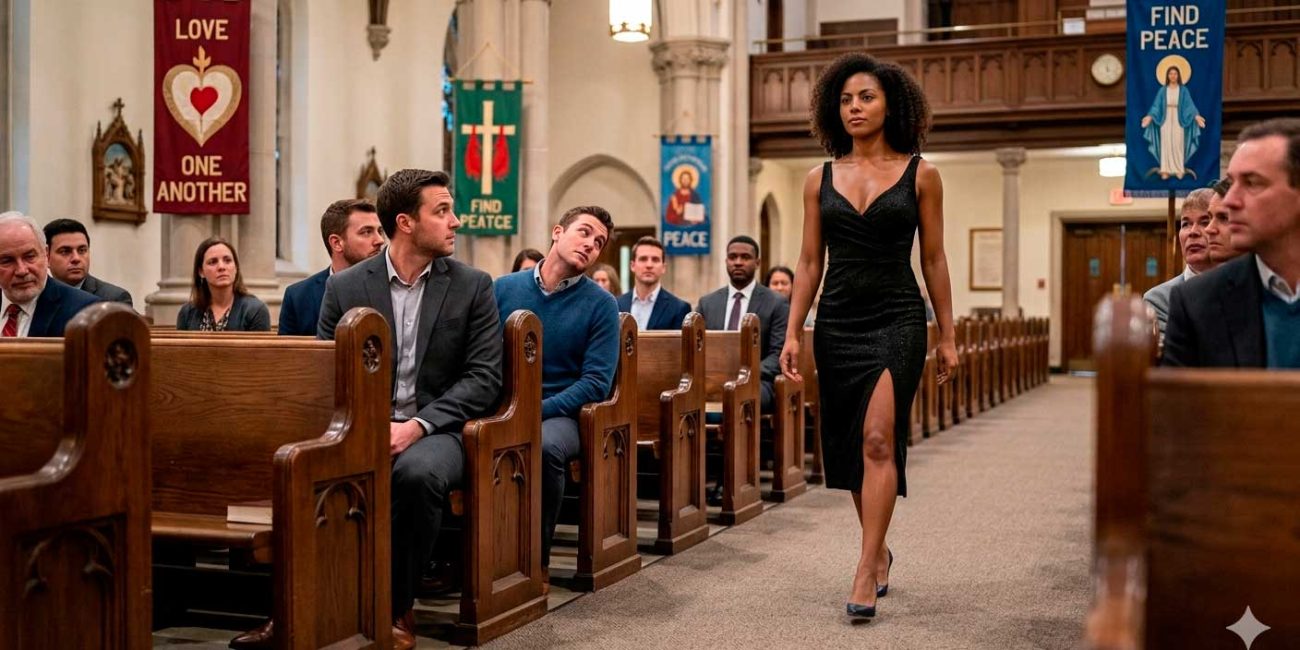
This is why people get furious when religious institutions or political bodies spend all their energy protesting a billboard, censoring a explicit song, or tracking down “indecent” language, while remaining completely silent about the predators, corrupt politicians, and systemic financial abusers sitting in their own front pews.
It is always easier to police a lyric than it is to dismantle a corrupt system. By keeping the public focused on the “immorality” of working-class music and dress, the people in power ensure that the spotlight never shines on the far more destructive immorality happening inside the halls of governance, churches and corporate boardrooms.

Other Articles

Words Can Hurt You – If You Let Them
The Environment Would Be Better Off With You Dead