












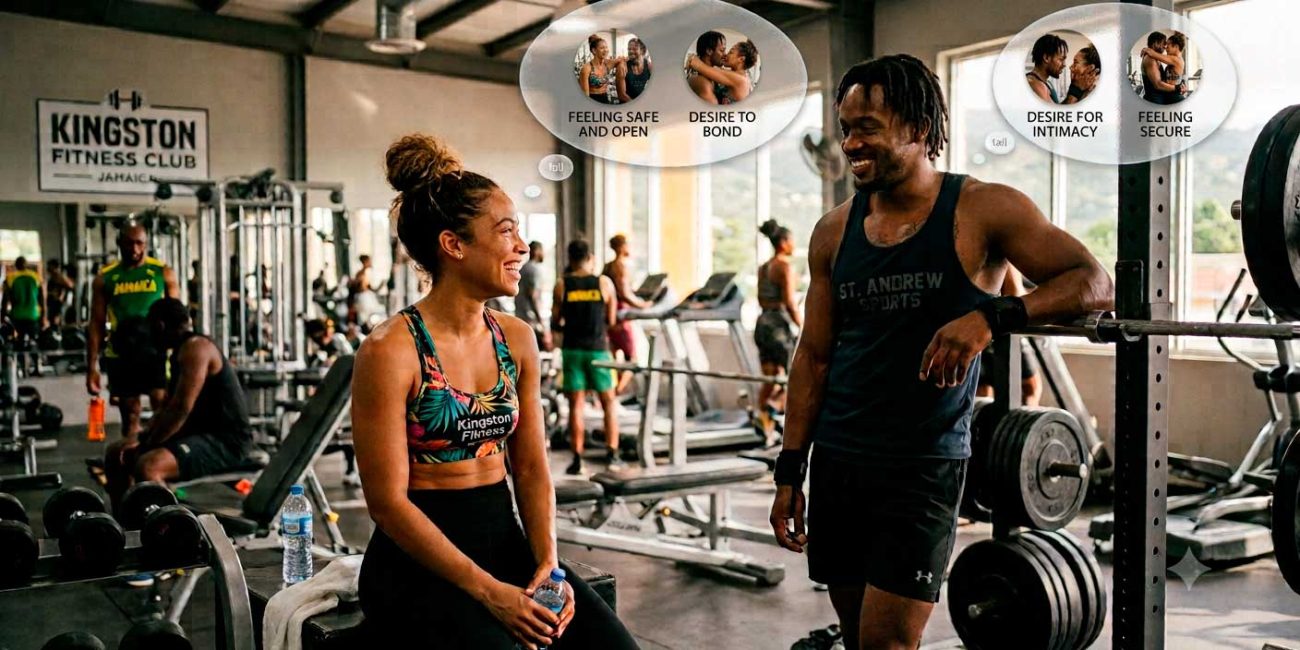
Let’s talk about sex.
At its core, intimacy between a man and a woman is a beautiful intersection of deep emotional connection and a breathtaking, billions-of-years-old biological masterpiece. It is the literal mechanism through which life perpetuates itself, driven by an evolutionary design that required bridging the gap between two separate bodies.
The intense emotional gravity of intimacy isn’t an accident; it is the psychological runway evolution built to ensure the physical act takes place.
Before the physical “jump” of the sperm can even happen, a complex cocktail of neurochemicals has to choreograph the emotional closeness that brings two people together in the first place.
From Lust to Long-Term Bond
Evolutionary biology views human intimacy through three distinct hormonal phases, each designed to transition a man and a woman from initial attraction to a deep, protective partnership.
| The Fuse | The Spark | The Anchor |
| Testosterone & Estrogen | Dopamine & Norepinephrine | Oxytocin & Vasopressin |
The Fuse (Drive)
The initial physical pull is driven primarily by testosterone and estrogen. These ancient hormones create the baseline biological urge. But raw drive isn’t enough to create the profound beauty of human intimacy; it’s just the fuel.
The Spark (Attraction)
When a man and a woman focus their attention on each other, the brain releases a flood of dopamine and norepinephrine.
- Dopamine creates a sense of euphoria and focused attention. It makes the presence of the other person feel intensely rewarding.
- Norepinephrine gets the heart racing and focuses energy, creating that “electric” feeling of anticipation.
This phase narrows the world down to just two persons, setting the stage for the physical act.
The Anchor (Attachment and Intimacy)
This is where the true emotional beauty is cemented. During and immediately after physical intimacy, the brain releases massive waves of oxytocin and vasopressin.
- Oxytocin (The “Cuddle Hormone”): Released in high amounts during physical touch and climax, oxytocin deepens feelings of trust, security, and profound psychological oneness. It actively lowers stress and dissolves the emotional walls between two individuals.
- Vasopressin: This hormone is closely linked to long-term commitment and the instinct to protect and care for one’s partner.
Through these hormones, evolution ensures that the physical act leaves a lasting emotional echo, transforming a brief physical encounter into a meaningful bond.
Why the Emotional Bond Evolved First
Why did nature go to such lengths to wire our brains for this deep emotional connection? Why not keep it purely mechanical, like many other animals?
The answer lies in the unique vulnerability of human life:
- The Challenge of Land Reproduction: Moving from water to land required enclosing the reproductive process inside our bodies to keep cells alive. This meant reproduction became a highly deliberate, face-to-face internal act, rather than something left to chance in the open ocean.
- The Vulnerability of Offspring: Because humans evolved large brains, our babies are born incredibly helpless compared to other mammals. A newborn horse can walk within hours; a human baby requires years of constant care.
- The Evolutionary Strategy: If a man and a woman coupled purely for a fleeting physical moment and walked away, the resulting offspring would have a very low chance of survival on dry land.
Evolution used the neurochemical reward system to create emotional glue. By making the act of sex feel profoundly beautiful, safe, and bonding, nature binds the parents together. The emotional depth ensures a stable partnership, creating a cooperative environment where both parents are invested in protecting each other and raising their vulnerable offspring.
Merging Emotion and Science
When you fuse the hormonal psychology with the physical mechanics, the full picture becomes clear:
- The Hormonal Invitation: Our brains release dopamine and oxytocin, dissolving individual boundaries and drawing the lovers into an intense, trusted emotional alignment.
- The Physical Solution: Once that bond is established, the physical act provides the safe, sealed conduit required on dry land. The sperm “jumps over” from the male body directly into the protected, internalized environment of the female body, bypassing the harsh external world.
- The Unbroken Chain: The emotional bond ensures that after this biological transfer is complete, the connection remains, keeping the partners together to sustain the life they may have just created.
Who Wants it More
Research consistently shows that on average, men report a higher, more frequent, and more visually stimulated sexual drive than women.
The “why” comes down to an evolutionary principle known as Parental Investment Theory:
| Factor | Biological Investment (Men) | Biological Investment (Women) |
| Cell Production | Millions of sperm produced daily. | One egg released per month; limited lifetime supply. |
| Time & Energy | Minutes (the act of intercourse). | 9 months of gestation, childbirth, and years of lactation/care. |
| Reproductive Limit | Theoretically limitless potential offspring. | Strictly limited by time, biology, and maternal mortality risks. |
Because the biological “cost” of a single sexual encounter is incredibly high for a woman (potential pregnancy and the immense energy required to raise a child on land), evolution favored women who were highly selective, favoring quality, emotional bonding, and security over frequency.
Conversely, because the biological cost for a man is very low, evolutionary pressures favored men with a lower threshold for sexual arousal and a more persistent drive. This asymmetry is largely regulated by testosterone, which is the primary hormonal driver of libido in both sexes, but is present in men at roughly 10 to 20 times the level found in women.
Both men and women desire both the raw physical drive and the emotional bond, but they often experience the timing, the pathway, and the expression of them differently.
1. The Male Perspective: Bonding Through Sex
Because men are driven by higher levels of testosterone, their initial gateway to intimacy is often heavily visual and physical. This can easily look like a desire for “raw sex” from the outside. However, for many men, physical intimacy is the primary language through which they feel emotional safety and deep bonding.
- The Vulnerability Window: In everyday life, societal conditioning and evolutionary pressures often push men to mask vulnerability, maintain a stoic exterior, and keep their guard up.
- The Neurochemical Shift: During sex—and specifically at climax—the surge of oxytocin and the sudden drop in amygdala activity (the brain’s fear and stress center) creates a rare state of total psychological openness.
For a man, the physical act isn’t always a separate goal from the bond; it is often the very key that unlocks his ability to feel and express that “beautiful part.” It is where he feels most chosen, safe, and deeply connected to her.
2. The Female Perspective: Bonding Before Sex
For women, because the evolutionary “stakes” of sex were historically so much higher (pregnancy and child-rearing), the brain’s security system is naturally more vigilant.
Therefore, a woman’s gateway to the “beautiful part” usually requires emotional safety, trust, and connection prior to the physical act.
- Contextual Arousal: A woman’s sexual desire is deeply tied to context. If she feels stressed, unsupported, or emotionally disconnected from her partner, her brain signals that it is not a safe environment for reproduction, and her drive shuts down.
- The Bridge of Intimacy: When she feels emotionally secure, understood, and bonded first, it opens the door to experiencing the physical act fully. For women, the “raw,” passionate aspect of sex is absolutely there, but it is often unlocked and heightened by the emotional foundation.
The Co-Created Beauty
When it works properly, it is a beautifully synchronized loop:
| Women’s Path ──► | Emotional Safety ──► | Unlocks Deep Physical Passion |
| They Meet In the Middle | ▲ ▼ | |
| Men’s Path ──► | Physical Intimacy ──► | Unlocks Deep Emotional Vulnerability |
Men often use sex to get to the bond, while women often need the bond to get to the sex.
When a man and a woman understand this difference, the act becomes incredibly beautiful because it satisfies both needs. The physical raw desire and the emotional protective connection fuse together, allowing both partners to cross the bridge from their isolated individual worlds into a shared space of absolute trust.
Lack of Control – The Dark Side
Let’s explore this briefly before continuing with the “Jump”, since it is about human sexual behavior. We have to be grounded in the reality that the ideal “beautiful act” is not always there.
The brain uses the exact same neural circuitry to regulate survival (food, water) as it does to regulate reproduction. However, while they feel identical in the brain, they serve entirely different evolutionary purposes.
Why Sex Feels Like Water
Biologically, an individual will die without water in a few days, but no one dies from a lack of sex. Yet, the brain frequently treats them with the exact same level of panic and urgency. This happens because of how our mesolimbic dopamine pathway (the reward center) evolved.
- The Ultimate Directive: From evolution’s perspective, an organism’s survival is pointless if it fails to pass on its genes. Therefore, to ensure we prioritize reproduction, evolution anchored the sex drive into the hypothalamus—the same primitive part of the brain that monitors dehydration and starvation.
- The Dopamine Hijack: When the desire for sex is triggered, the brain cuts off the logical, forward-thinking prefrontal cortex and floods the system with anticipation-driving dopamine. This creates a state of intense, hyper-focused restlessness.
- The Relief Mechanism: Just as drinking water satisfies a deep biological desperation, sexual release satisfies a neurochemical craving. The brain rewards the behavior by shutting off the stress response and releasing endorphins.
Since the brain uses the same “emergency system” for both thirst and reproduction, a high sex drive can easily trick a person’s subjective experience into feeling like they need it to survive.
Why a Survival Drive Turns Deviant
If sex feels like a survival need, why does it lead to horrific, antisocial behaviors like rape? The answer lies in what happens when a primitive survival drive is decoupled from empathy, self-control, and social guardrails.
Sexual violence is rarely about a simple lack of water-like satisfaction; it is a complex intersection of biology, psychology, and power:
- The Failure of the “Brake” System: Healthy humans possess a prefrontal cortex—the brain’s executive control center—which acts as a brake on primitive impulses. When a person commits sexual assault, their cognitive “brakes” have completely failed, overridden by antisocial traits, a lack of empathy, or a pathological need for power, control, and dominance.
- The “Out-Group” and Predatory Mindset: Human evolutionary history carries a dark capacity to switch off empathy for others. In a perpetrator’s mind, the victim is dehumanized—reduced from a human being with rights into a mere object or a resource to be claimed by force.
- The Misapplication of Aggression: In nature, competitive aggression and reproduction were often linked (males competing for mates or resources). In deviant behavior, this ancient link becomes highly distorted, fusing the physical drive of sex with a malicious psychological desire to inflict harm, exert absolute control, or satisfy a sense of entitlement.
When the Predator is in the “In-Group”
If the “tribe” is supposed to protect its own, and if relationships are supposed to be about deep emotional bonding, why do both systems frequently fail so spectacularly in the real world?
Both of these phenomena happen when primitive biological drives and power dynamics completely hijack the systems that were meant to protect us.
If evolutionary guardrails were designed to protect the “in-group” from predators, how do predators operate so successfully within families and religious institutions?
The brutal reality is that predators do not ignore the rules of the tribe; they weaponize them.
- Proximity and Unquestioned Access: Predators instinctively seek out environments where vulnerable targets are naturally concentrated and conditioned to be obedient. Families and churches are built on absolute trust. A child is taught never to question their father, their uncle, or their priest. This provides a predator with a perfect, enclosed hunting ground.
- Hijacking the “Shield” of the Tribe: In prehistoric times, the threat of social retaliation kept men in check. But what happens when the predator is the person with all the social power? A patriarchal figure or a religious leader uses their immense authority to enforce silence. They manipulate the very fabric of the in-group—threatening that speaking out will “destroy the family,” “disgrace the church,” or “anger God.”
- Pathology, Not Evolution: It is important to note that assaulting children or family members is not an evolutionary survival strategy. It provides zero biological advantage and actively harms genetic viability. It is a profound psychological and neurological pathology. The predator’s drive is decoupled from normal reproductive logic, fueled instead by a dark need for absolute control and domination over someone who cannot fight back.
The in-group guardrails fail because the tribe’s instinct to protect its own reputation often overrides its instinct to protect the victim.
Paying for Sex
On the other end of the behavioral spectrum is transactional sex (prostitution or sex work). This behavior exists because it exploits the biological asymmetry of the human sex drive.
The male sex drive is consistently high and visually stimulated due to evolutionary pressures, the modern world created a commercial shortcut. Courtship, emotional bonding, and building mutual trust take immense time, energy, and social vulnerability. Paying for sex attempts to bypass the emotional runway entirely, offering direct satisfaction to the raw physical drive.
Consensual transactional sex (whether it is an explicit financial arrangement or a modern “sugar” dynamic) provides a legal, non-violent, and highly structured outlet. It allows an individual with a high drive or low social capacity to satisfy that biological urge without violating another person’s autonomy.
Modern dating frequently mimics a transaction. When a man knowingly stays with a toxic woman, “paying” for her presence through dinners, rent, or gifts just to secure sexual access, he is falling victim to an ancient biological blind spot.
The prefrontal cortex (the part of the brain responsible for logic, long-term planning, and recognizing a toxic partner) is easily overpowered by the hypothalamus and the dopamine system. When the primitive brain decides it is starved for sex and intimacy, it screams at the man to “secure the mate at all costs.” It actively suppresses his rational judgment, convincing him that the short-term biological relief is worth the long-term psychological misery.
When a relationship is explicitly or implicitly transactional but entirely consensual, it strips away the idealized romance, but it replaces it with clarity. For many adults, this trade-off works perfectly fine because it satisfies specific, calculated needs on both sides:
- Clear Expectations: Unlike traditional dating, which can be full of mixed signals, emotional games, and unaligned timelines, a transactional relationship outlines the terms clearly. The man secures the access and companionship he desires; the woman secures the resources, lifestyle, or stability she wants.
- Honoring Agency: As long as both parties are consenting adults with full agency, a transaction respects autonomy. The woman isn’t a passive victim; she is an active participant leveraging her value in a marketplace, just as the man is leveraging his.
While it lacks the profound, organic emotional fusion of a “beautiful bond”, it replaces it with a stable, mutual contract. It is a highly rational, terrestrial solution to a complex biological problem.
The fundamental conflict of being human is that we carry the neural software of ancient, survival-driven primates inside a modern, civilized world.
The Science and Need for the “Jump”
Back to “The Jump”.
To understand why the sperm needs to “jump over” to the female’s body, we have to look back at our aquatic ancestors.
In the early stages of evolutionary history, animal life lived entirely in the ocean. For these creatures, reproduction was simple and external:
- External Fertilization: Marine organisms (like many fish and amphibians) simply release their eggs and sperm directly into the open water. The surrounding water acts as the medium, keeping the cells hydrated and allowing the sperm to swim freely until it encounters an egg.
However, when life began to colonize dry land, a massive problem arose: air dries things out.
Sperm and egg cells are incredibly fragile, single-celled entities. If a land animal released sperm and eggs onto dry ground, the cells would dehydrate and die within seconds. Evolution had to find a way to bring the ocean inside the body.
Enclosing the “Ocean” Within Our Bodies
To survive and reproduce on land, evolution favored creatures that internalized the entire process. Humans, as mammals, inherited this brilliant adaptation:
- The Egg’s Sanctuary: Instead of shedding eggs into the environment, the female body retains them deep within a warm, fluid-filled, highly protected environment—the uterus and fallopian tubes.
- The Sperm’s Capsule: Similarly, the male body encapsulates sperm in a protective, fluid medium (semen) to keep them alive and motile.
By enclosing these cells inside our bodies, we effectively carry a microscopic pocket of the ancient ocean within us. But this created a new logistical challenge: If the eggs are locked deep inside the female body, and the sperm is locked inside the male body, how do they meet?
The external environment is hostile to bare reproductive cells, the sperm cannot be exposed to the outside air, not even for a moment. Therefore, the transfer must be direct, sealed, and internal.
This is where the anatomy of intercourse comes in. The physical act of sex is evolution’s elegant solution to this engineering problem.
During intimacy, the male reproductive organ acts as a precise delivery system, bypassing the dry, dangerous outside world. It allows the sperm to “jump over” directly into the female reproductive tract without ever leaving a safe, fluid environment.
Once inside, the sperm find themselves in a familiar, watery medium where they can use their flagella (tails) to swim toward the egg, mimicking the ancient journey their ancestors took in the open seas half a billion years ago.
Why All of this Make the Act so Beautiful
When we look at it through the lens of evolutionary biology, intimacy is not just a physical act; it is a profound cosmic dance.
- A Bridge Across Separation: Nature created us as distinct, isolated individuals. Sex is the literal physical bridging of that separation. For a moment, the boundary between two separate human beings dissolves to fulfill a biological directive older than the mountains.
- The Spark of Survival: Because this “jump” is so critical to the survival of the species, evolution didn’t make it a mundane chore. It wired our nervous systems to associate this act with profound pleasure, euphoria, and deep emotional bonding (driven by hormones like oxytocin and dopamine). The intense beauty and emotional depth we feel are nature’s way of rewarding us for successfully keeping the chain of life unbroken.
Every single human being alive today is the result of an unbroken chain of successful “jumps” stretching back to the dawn of terrestrial life. When a man and a woman share that intimacy, they are actively participating in the very core mechanism that brought humanity out of the primordial seas and into the modern world.
The beauty of intimacy lies in the fact that it isn’t just chemistry, and it isn’t just mechanics. It is the seamless integration of both—where the most profound emotions a human can feel are used as the driving force to keep the literal chain of life moving forward.

Other Articles
Money Makes us Happy – in a way