











You may be tempted to ignore this post because you know how hurtful the truth about some parts of human history is, but this post will be here as a teaching point. When a society chooses collective amnesia over uncomfortable truth, it doesn’t heal—it simply lowers its defenses.
The front door clicked shut, followed by the familiar thud-thud of a heavy red backpack hitting the hallway floor.
Marcus was six. Most days, his entrance was accompanied by a whirlwind of stories—about who won at kickball, who dropped their lunch tray, or what cool rock he’d found buried near the playground fence.
Today, there was no chatter. Just the soft sound of his velcro sneakers dragging across the hardwood as he walked into the kitchen.
His mother, Maya, was at the counter, slicing fresh oranges and pineapples into a large glass pitcher. She looked up, ready to greet him with a smile, but stopped. Marcus was staring at his shoes, his small shoulders drawn tight up to his ears, clutching a crinkled drawing from art class.
“Hey, baby,” Maya said gently, wiping her hands on a dishtowel. “How was school?”
Marcus didn’t look up right away. He swallowed hard, shifting his weight from one foot to the other, before finally lifting a pair of wide, confused brown eyes.
“Mom?” his voice was barely above a whisper. “Who is a nigger?”
The room fell completely still. The hum of the refrigerator suddenly sounded loud.
It was a word meant to wound, designed across centuries to shrink a person’s world down to nothing. Many parents would have gasped, dropped what they were doing, or burst into tears of anger and grief that a six-year-old had already been touched by it.
Instead, Maya took a slow, quiet breath. She didn’t look surprised. Deep down, in a world that still carried old scars, she had known this day would come eventually. She chose not to meet the word with panic, because she refused to give it power over her home.
She turned to the counter, poured a tall glass of the ice-cold fruit juice she had just squeezed, and handed it to him.
“Here you go, sweetheart. Take a sip.”
Marcus took the glass with both hands, drinking deeply. The sweet orange and pineapple brought a little bit of color back to his cheeks.
Maya took his hand, guided him away from the kitchen, and sat him down beside her on the living room sofa. She pulled him close, wrapping one arm around his small frame until his shoulder rested against hers.
“Marcus,” she began, her voice steady, warm, and soft. “Where did you hear that word today?”
“A boy on the bus,” Marcus mumbled, staring into his juice glass. “He was mad because I sat in the seat he wanted. He said it to me, and some older kids laughed. I didn’t know what it meant, but… it didn’t feel nice.”
Maya stroked his hair, nodding slowly.
“You’re right, Marcus. It wasn’t nice. It’s a very old, very mean word. A long time ago, some people created that word because they wanted Black people to feel small. They wanted us to think we weren’t smart, or brave, or special.”
She pointed to his little hand holding the glass. “You see your beautiful brown skin?”
Marcus looked down at his arm. “Yeah.”
“A long, long time ago,” Maya said, leaning in so he could see her smiling eyes, “our grandmothers and grandfathers lived in a land full of grand kingdoms, giant trees, and beautiful rivers called Africa. They were builders, astronomers who read the stars, artists, and kings and queens. But some people grew greedy and jealous. They brought our ancestors across the big ocean to work for them without paying them, and they tried to make them forget who they were.”
Marcus tilted his head. “Did they forget?”
“Not for a single second,” Maya said proudly. “When those greedy people called them mean names like the one you heard today to try and break their spirits, our ancestors held their heads high. They sang songs of freedom in the fields. They built secret schools to teach each other how to read. They escaped in the dark of night, guided by the stars, to help each other find safety.”
She shifted on the cushion so she was facing him directly.
“People with skin just like yours built cities, invented traffic lights, wrote beautiful music, and walked on the moon. Leaders like Dr. Martin Luther King Jr. and Rosa Parks looked right in the eyes of people using those mean words and said, ‘We are children of God, and we deserve respect.’“
Marcus listened intently, his fingers tracing the edge of his juice glass. The tension in his shoulders had completely melted away.
“So when someone uses that word, Marcus,” Maya said softly, cupping his cheek in her hand, “it doesn’t tell you who you are. It only shows you that they have a lot of learning to do. It’s a word used by people who are confused and don’t know the truth yet.”
“What’s the truth?” Marcus asked.
Maya smiled, kissing his forehead.
“The truth is that you come from royalty, builders, and fighters. You are smart, you are loved, and your brown skin carries the strength of a million grand stories. No mean word on a school bus can ever change that.”
Marcus looked at his mother, then down at his hands, and finally out the window at the bright afternoon sun. He took another sip of his juice, wiped his mouth with the back of his sleeve, and gave her a small, solid nod.
“Mom?”
“Yes, baby?”
“Can I go build a big castle with my blocks now? A king’s castle.”
Maya’s heart swelled. “Go right ahead, King Marcus.”
The warning that “those who cannot remember the past are condemned to repeat it” is not an abstract slogan; it is a law of human behavior and institutional power. Historical atrocities rarely begin with extreme violence—they begin with subtle shifts in culture, law, and rhetoric that people allow to happen because they have forgotten where those paths lead:
Forgotten Atrocities ──> Erasure of Guardrails ──> Re-normalization of Dehumanization ──> Repeat Horrors
Erasure of Moral Guardrails: History provides humanity with clear boundaries showing how fast legal systems can be twisted to strip away personhood, freedom, and dignity. When those lessons are forgotten, society loses the tools to spot warning signs early.
- Renormalization of Dehumanization: Every system of exploitation—whether chattel slavery, Jim Crow, colonial subjugation, or modern authoritarian abuses—relies on convincing the public that a specific group of people is “lesser,” “dangerous,” or “expendable.” Without historical memory to expose this tactic, people fall for the exact same propaganda under new names.
- Institutional Inertia: Systems designed to exploit do not dissolve automatically. If they are not actively dismantled with full knowledge of how they were built, they quietly adapt, mutate, and re-emerge in new forms.
Remembering Is Vigilance, Not Bitterness
Keeping historical memory alive is often mischaracterized by critics as “dwelling on the past” or “fostering division.” In reality, true historical memory serves the exact opposite purpose:
- It builds active immunity: Just as a vaccine exposes the body to a harmless version of a pathogen to build antibodies, unvarnished history exposes society to past evils so it can recognize and destroy them before they take root again.
- It honors the cost of modern freedoms: Every legal protection, civil right, and democratic check enjoyed today was bought with the blood, labor, and resistance of people who fought back against injustice. Forgetting their history takes their sacrifices for granted.
- It protects all of humanity: A society capable of dehumanizing one group because of skin color, origin, or belief is fundamentally capable of dehumanizing anyone. Remembering how slavery and colonialism functioned protects the universal dignity of the entire human family.
Confronting historical atrocities is rarely just an intellectual exercise; it forces individuals and societies to reckon with uncomfortable truths about their own identity, morality, and current privilege.
At an individual level, reckoning with a history of oppression triggers intense psychological friction:
- Cognitive Dissonance: Most people raised in modern democracies internalize a foundational narrative that their nation is inherently good, exceptional, and built on freedom and justice. Learning how that same nation systematically dehumanized entire groups creates profound cognitive dissonance. It is far easier to reject, deny, or sanitize the history than to rewrite one’s understanding of their home country.
- The “Just-World” Fallacy: Human psychology leans heavily toward the belief that the world is inherently fair—that good things happen to good people and bad things happen to bad people. Acknowledging that millions of innocent human beings suffered unspeakable violence for centuries without receiving justice shatters this comforting belief, exposing the world as fundamentally arbitrary and unjust unless active work is done to fix it.
- Guilt vs. Responsibility: Many individuals confuse historical responsibility with personal guilt. They hear demands to acknowledge historical atrocities as an accusation that they personally are bad people, leading to defensive reactions (“I didn’t own slaves,” or “That happened hundreds of years ago”).
The Threat to Existing Power and Wealth Structures
Beyond individual psychology, fear of history is heavily driven by institutional self-interest. History is not static; it carries material consequences today.
Unvarnished History ──> Reveals Unearned Advantage ──> Validates Claims for Justice ──> Threatens Status Quo
- Exposing the Origins of Wealth: Acknowledging the full reality of chattel slavery or colonial extraction forces societies to admit that much of their foundational infrastructure, financial systems, and generational wealth was built on stolen labor and stolen land.
- Undermining the “Meritocracy” Myth: If historical injustice explains why certain communities face modern economic disparities, it disproves the narrative that success in modern society is purely the result of individual effort and hard work.
- Fears of Redistribution: Governments and corporate entities often fear that fully acknowledging a historical crime leads directly to financial liability—whether through reparations, land redistribution, or structural policy shifts that alter the economic status quo.
Fear of Social Division and Loss of Control
Political and cultural leaders often argue that focusing on historical sins “divides” society, preferring instead a unified, homogenized national narrative.
- Sovereignty over the Narrative: Those who control the historical narrative control the political present. Dictatorships, authoritarian regimes, and dominant social classes historically sanitize textbooks because an informed population that understands how systems of control were built is far harder to manipulate.
- The Myth of “Colorblindness” as a Shield: Promoting a narrative that historical wrongs are fully in the past allows societies to preach “colorblindness” today. This allows institutions to ignore ongoing racial disparities without having to do the hard work of dismantling the structural causes.
History as a Shield, Not a Weapon
Ultimately, fear of the dark side of human history stems from viewing truth as a threat rather than a foundation.
Hiding from history does not make its consequences disappear; it simply leaves society blind to the root causes of modern conflict. Courageous engagement with historical truth—no matter how painful—is the only way to build a society grounded in genuine justice, empathy, and lasting unity.
Holding onto history—in all its brilliance and all its tragedy—is the ultimate act of self-defense for future generations. Memory is the lock on the door; forgetting is handing over the key.
Effect of The Transatlantic Slave Trade
The history of Black and brown peoples across the African Diaspora is defined by one of the greatest systemic disruptions in human history—the Transatlantic Slave Trade—and the subsequent centuries of survival, adaptation, and cultural resistance.
Understanding how European institutions systematically stripped away indigenous languages, social hierarchies, and spiritual practices—and how African-descended peoples navigated and refashioned those same systems—is central to understanding why Black identity remains a vital anchor today.
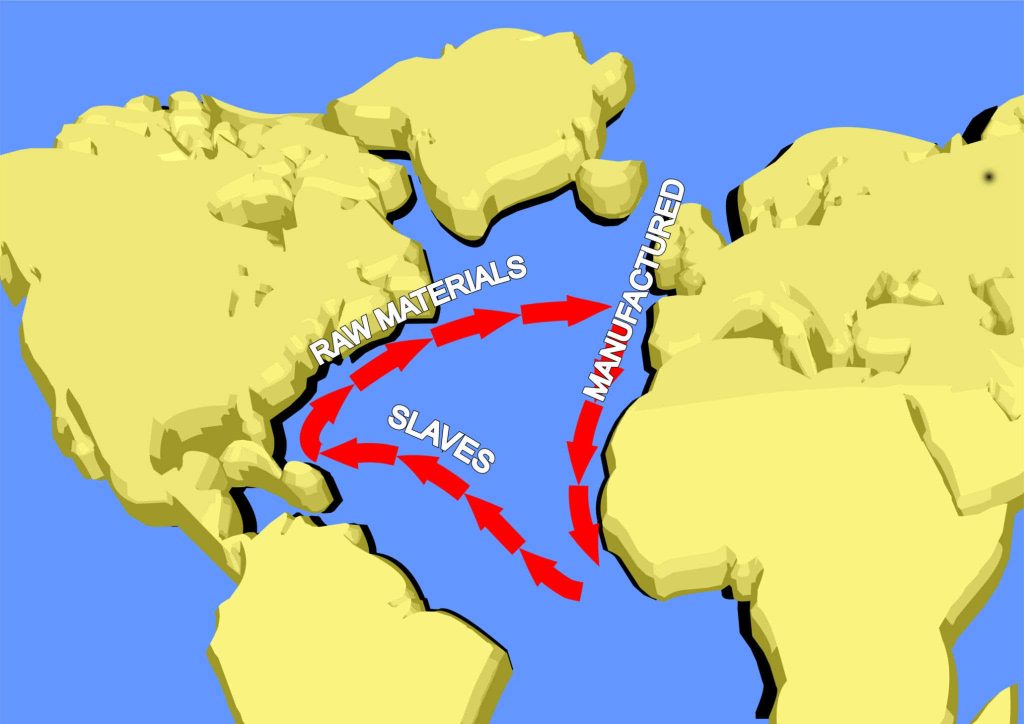
The Triangular Trade Route. Source: Arkela / Getty Images
Destruction, Coercion, and Refashioning
The Transatlantic Slave Trade was not merely an economic enterprise; it was a deliberate program of social and cultural erasure designed to render millions of kidnapped human beings as chattel property.
16th – 19th Century: Displacement & Separation
1500s – 1880s
Over 12 million Africans from diverse linguistic, ethnic, and political groups (including Yoruba, Igbo, Akan, Kongo, and Mandinka) were forcibly moved across the Atlantic. European traders deliberately mixed individuals who spoke different languages and held distinct customs on plantations to prevent unified resistance, severing immediate ties to ancestral lineage and oral histories.
17th – 19th Century: Systemic Forced Assimilation
1600s – 1800s
European colonial powers enforced mandatory adoption of their legal codes, languages (English, French, Spanish, Portuguese, Dutch), and religious doctrines. Indigenous African spiritual practices, drum languages, and traditional marriage structures were criminalized.
18th – 20th Century: Religious & Cultural Syncretism
1700s – 1900s
Rather than completely losing their heritage, enslaved and colonized communities adopted European forms while infusing them with African subtext. Christianity was reshaped: the Exodus narrative became a spiritual blueprint for liberation, while syncretic traditions like Vodou, Santería, Kumina, and Candomblé masked African deities beneath Catholic saints.
19th – 20th Century: Post-Emancipation & Global Diaspora
1830s – 1960s
Following legal abolition and formal colonization, European socio-cultural norms remained the dominant standard for political and economic upward mobility. However, global Black movements—from anti-colonialism to Civil Rights and Pan-Africanism—reclaimed Black identity as a political and cultural force.
How Assimilation Occurred: Coercion vs. Cultural Agency
The shift toward European culture and religion occurred through two distinct mechanics:
External Coercion
European colonial authorities maintained dominance by positioning European literacy, Christian theology, and Western attire as the sole hallmarks of “civilization.” Access to freedom, legal recognition, or minimal social protection often required outward conformity to colonial institutions.
Internal Subversion & Synthesis
Assimilation was rarely passive surrender; it was a strategy of survival and ideological warfare.
- Theology of Liberation: While enslavers introduced Christianity to preach obedience (e.g., the redacted “Slave Bible”), Black scholars, preachers, and revolutionaries used the Bible’s texts on freedom, justice, and divine judgment to organize uprisings and build independent community institutions.
- Linguistic Innovation: Creole languages, Patois, and African American Vernacular English (AAVE) emerged as sophisticated linguistic systems blending West African grammatical structures with European vocabularies.
The Slave Bible
The creation of the “Slave Bible” and the enduring acceptance of a Europeanized iconography of God and Jesus across the African Diaspora reveal how spiritual tools were weaponized for social control—and how enslaved communities countered that control through subtle re-interpretation.
The “Slave Bible” of 1807: Systematic Redaction
Published in London in 1807 by the Society for the Conversion of Negro Slaves, the official title of this volume was Select Parts of the Holy Bible, for the use of the Negro Slaves, in the West-India Islands.
Its purpose was straightforward: to instill Christian morality and obedience while removing any theological ideas that might spark rebellion or demands for emancipation.
What Was Removed vs. What Was Kept
A standard Protestant Bible contains 66 books (1,189 chapters). The Slave Bible was stripped down to parts of just 14 books, removing roughly 90% of the Old Testament and 50% of the New Testament.
| Category | What Was Removed / Censored | Why It Was Redacted |
| Liberation Narratives | Exodus (Entirely omitted, except for brief non-liberatory laws). | The story of God delivering the Israelites from Egyptian bondage was deemed a direct threat to plantation stability. |
| Anti-Slavery Commandments | Exodus 21:16: “He that stealeth a man, and selleth him… shall surely be put to death.” | Condemned human trafficking and kidnapping—the very basis of the transatlantic slave trade. |
| Social Equality | Galatians 3:28: “There is neither Jew nor Greek, there is neither bond nor free… for ye are all one in Christ Jesus.” | Promoted spiritual and social equality regardless of legal status or race. |
| Prophetic Justice | Jeremiah, Isaiah, Revelation (Massive portions omitted). | Contained prophecies warning of the downfall of oppressive empires and God’s judgment on oppressors. |
What Was Deliberately Retained
The editors kept passages enforcing submission to authority, such as:
- Ephesians 6:5: “Servants, be obedient to them that are your masters according to the flesh, with fear and trembling…”
- 1 Peter 2:18: “Servants, be subject to your masters with all fear; not only to the good and gentle, but also to the froward [harsh].”
Why the European Depiction of God & Jesus Persisted
Historically and geographically, historical Jesus was a Middle Eastern Semitic man living in the 1st-century Levant—meaning a fair-skinned, blue-eyed, blonde or chestnut-haired European figure (popularized by Renaissance artists like Cesare Borgia’s portraits or Warner Sallman’s 1940 Head of Christ) is historically inaccurate.
Yet, this depiction remains widely accepted across many African-descended communities in the Americas. Several factors explain this outcome:
1. Centuries of Monopolized Education & Imagery
For generations, colonial law prohibited enslaved people from learning to read or create their own religious imagery. The visual landscape—church stained glass, illustrated Bibles, Sunday school materials, and devotional prints—was entirely produced by European institutions. Over centuries, white imagery became implicitly synonymous with holiness, authority, and divine favor.
2. Psychological Conditioning and Survival Mechanics
In colonial plantation societies, whiteness was tied to freedom, legal power, and safety, while blackness was legally codified as chattel. Internalizing the oppressor’s image was partly a survival mechanism. To reject European religious symbols often meant facing charges of heresy, subversion, or paganism, which carried severe physical penalties.
3. Separation of the “Spiritual” from the “Physical”
In many Black Christian traditions (especially during and after Reconstruction), a theological shift occurred. Believers emphasized that God is Spirit and that physical attributes mattered less than the message of salvation, love, and personal redemption. The image of Jesus became secondary to the internal experience of faith, allowing people to worship despite the racialized imagery.
4. Intergenerational Transmission
Once an iconographic standard takes root over 300–400 years, it is passed down as sacred family tradition. Bibles featuring Western art, passed from grandparents to children, carry deep emotional and familial resonance that can override historical or logical critiques.
The Counter-Response: Reclamation of Sacred Imagery
The acceptance of Western iconography was never absolute. Throughout history, Black theologians, artists, and political leaders actively challenged white divine imagery:
- Ethiopianism & Pan-African Theology: Late 19th-century movements highlighted Psalm 68:31 (“Ethiopia shall soon stretch out her hands unto God”) to center Africa in biblical history.
- The Black Social Gospel & Black Liberation Theology: Spearheaded by thinkers like James Cone in the 1960s, this movement argued that if Jesus identifies with the oppressed, then in a racially oppressive society, “Jesus is Black” in His social reality and solidarity.
- Artistic Reclamation: Modern sacred art across the Caribbean, Latin America, and the US increasingly depicts the Holy Family and biblical figures as Afro-Semitic, Black, or indigenous, aligning with historical realities and local cultural identities.
Why Black Identity Remains Crucial
Because colonialism and chattel slavery were justified by pseudo-scientific theories of race designed to strip African peoples of their humanity, Black identity became an essential reclamation project.
- A Unifying Banner Against Fragmentation: Because colonial violence severed specific ancestral genealogical lines, “Blackness” evolved into a shared global identity connecting the Diaspora across the Americas, the Caribbean, Europe, and Africa.
- Restoration of Historical Agency: Preserving a distinct identity counters the false narrative that Black history began with slavery. It roots community memory in the rich civilizations, legal systems, and artistic traditions of pre-colonial Africa.
- A Framework for Equity: Systemic inequalities—in wealth distribution, land ownership, legal protection, and institutional representation—did not vanish with emancipation. Black identity provides the political and social cohesion needed to organize for structural justice.
The Imperative of Historical Memory
The imperative to remember this history is not about harboring perpetual bitterness; it is a fundamental guardrail for human rights and collective vigilance.
“History, despite its wrenching pain, cannot be unlived, but if faced with courage, need not be lived again.”
— Maya Angelou
Skin Color as an Unalterable Marker
Race remains a social reality with concrete material consequences. Because physical features cannot be hidden or changed, society’s racialized structures continue to impact real lives. Denying or ignoring race (“colorblindness”) without addressing the historical causes of inequality simply leaves existing disparities unchecked.
Preventing Re-enactment
Totalitarianism, systemic exploitation, and dehumanization do not return in identical packaging—they re-emerge whenever society forgets how easily human rights can be legally dismantled. Documenting and studying the mechanics of slavery, segregation, and colonial subjugation ensures that modern legal and political systems remain built to safeguard human dignity for everyone.
Preserving Hard-Won Progress
The civil rights, labor protections, and constitutional guarantees enjoyed today were secured through the sacrifice of generations who resisted oppression. Remembering history honors that legacy and ensures those protections are actively defended, rather than taken for granted.
The Struggle Continues
The end of chattel slavery did not instantly dismantle the systems of control designed to maintain racial hierarchies. Instead, those holding political and economic power restructured state apparatuses—from legal codes and land policies to law enforcement—to keep Black and brown populations disenfranchised.
Whenever leaders emerged to challenge these modern “chains,” state and institutional forces frequently moved to silence them through character assassination, political imprisonment, or extrajudicial killing.
Freedom Fighters and the Machinery of Silencing
Across the US and the Caribbean, leaders who demanded total liberation—rather than mere cosmetic reform—faced intense state surveillance and violence.
In the United States
- Martin Luther King Jr.: Before his assassination in 1968, King was targeted by the FBI’s COINTELPRO (Counterintelligence Program), which explicitly aimed to “neutralize” Black nationalist and civil rights leaders through blackmail, wiretaps, and psychological warfare.
- Malcolm X & The Black Panther Party: Leaders like Malcolm X, Fred Hampton, and Huey P. Newton highlighted how economic deprivation and police violence were modern forms of bondage. Fred Hampton, a 21-year-old Panther leader who was building a multicultural Coalition was assassinated in 1969 in a coordinated raid by Chicago police and the FBI.
In the Caribbean
- Paul Bogle & George William Gordon (Jamaica, 1865): Decades after emancipation, Black Jamaicans faced extreme poverty, lack of land rights, and disenfranchisement. When Deacon Paul Bogle led the Morant Bay Rebellion to demand justice, colonial Governor Edward Eyre responded with brutal martial law, hanging Bogle and Gordon (a mixed-race legislator who advocated for the poor) and burning over 500 Black homes.
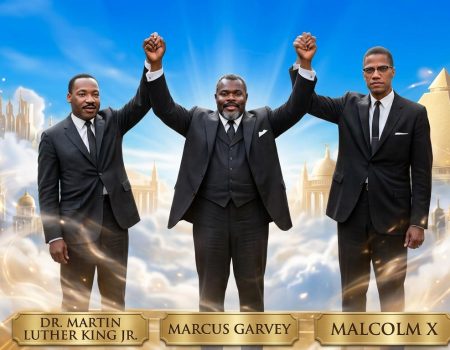
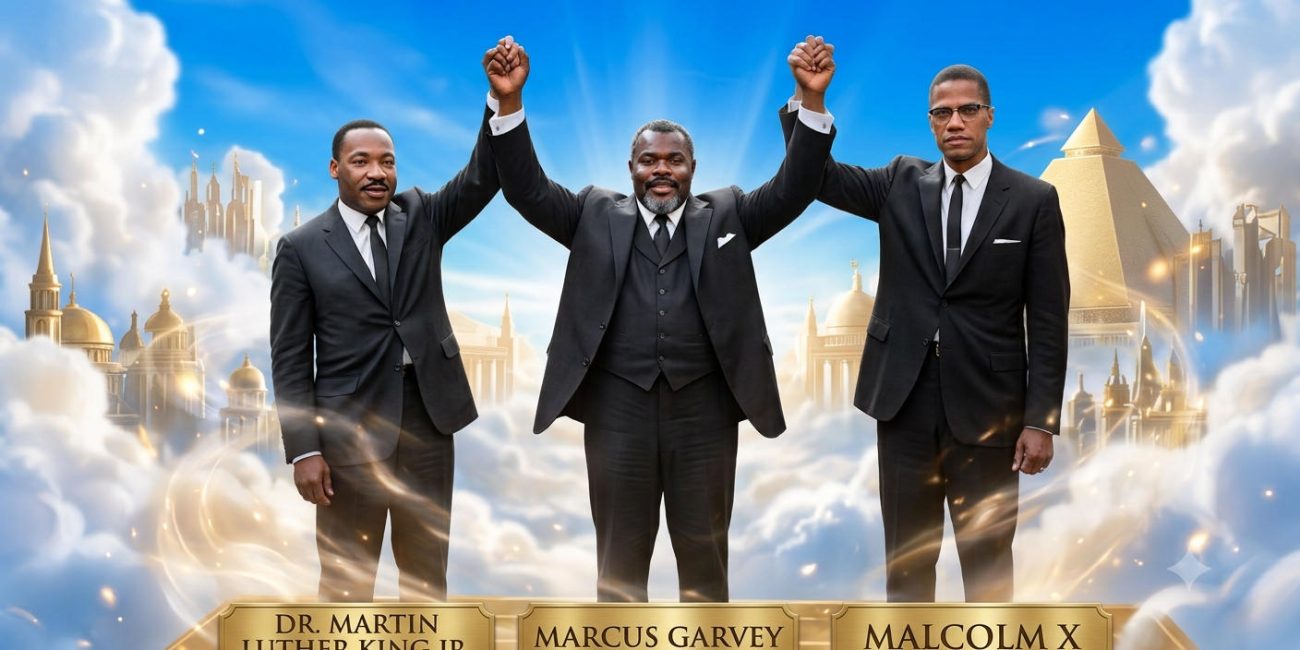
- Marcus Garvey: Born in Jamaica, Garvey founded the Universal Negro Improvement Association (UNIA), promoting economic independence and Pan-African self-reliance. Recognized as a threat to white global hegemony, he was targeted by US authorities, imprisoned on questionable mail fraud charges, and ultimately deported.
Policing in America: From Slave Patrols to the KKK Connection
The institutional roots of American policing are directly tied to the enforcement of racial hierarchy, which explains the deep historical distrust between Black communities and law enforcement.
[1700s–1860s: Slave Patrols] ──>
[1865–1960s: Black Codes & Jim Crow]
Capture escaped slaves
[19th/20th Century: KKK Infiltration]
Enforce segregation & labor laws
Overlapping police & Klan membership
- Origins in Slave Patrols: In the Southern US, early police forces evolved directly from 18th-century “slave patrols”—armed groups authorized to search Black homes, disrupt gatherings, and capture runaways.
- Post-Civil War Enforcement: After emancipation, Southern states enacted “Black Codes” to arrest Black people for minor infractions like vagrancy, funneling them into forced labor via convict leasing. Police officers were the primary agents executing this system.
- Overlapping Membership with the KKK: During the Reconstruction and Jim Crow eras, local police forces frequently overlapped with Ku Klux Klan terror groups. In many Southern towns, officers wore police uniforms by day and Klan robes by night, enabling lynchings and racial violence with total immunity.
- Modern Echoes: A 2006 FBI intelligence assessment warned of the “active strategizing” by white supremacist groups to infiltrate local law enforcement agencies, a pattern documented in investigations across multiple US police departments in recent decades.
“The Talk”: A Dual Reality of Parenting
This historical continuity directly shapes how parents raise their children today.
| Black Parents’ Conversation (“The Talk”) | White Parents’ Typical Conversation |
| Focuses on survival and navigating a system that may view their child as an inherent threat. | Focuses on safety, viewing police officers as approachable helpers. |
| Key Directives: Keep hands visible at all times; do not make sudden moves; answer politely even if disrespected; never argue or assert rights on the street. | Key Directives: Call 911 in an emergency; cooperate with officers; trust law enforcement to resolve disputes fairly. |
| Underlying Fear: That a minor traffic stop or misunderstanding could escalate into a lethal interaction. | Underlying Fear: That their child might get into trouble or face legal consequences for breaking a rule. |
Documented Cases of Excessive Force
The persistent reality of police violence is evidenced by numerous high-profile cases where Black men and women lost their lives under circumstances where lethal force was uncalled for:
- George Floyd (2020): Died in Minneapolis after an officer kneeled on his neck for 9 minutes and 29 seconds over a suspected counterfeit $20 bill, sparking worldwide protests against systemic racism.
- Breonna Taylor (2020): Shot and killed in her home in Louisville, Kentucky, during a plainclothes police raid executed via a controversial “no-knock” warrant.
- Philando Castile (2016): Shot during a routine traffic stop in Minnesota after calmly informing the officer that he was legally armed and reaching for his identification as requested.
- Tamir Rice (2014): A 12-year-old boy shot and killed within two seconds of police arriving at a park in Cleveland, Ohio, while playing with a toy airsoft gun.
- Eric Garner (2014): Died in Staten Island, New York, after being placed in a banned chokehold by an officer while being arrested for allegedly selling single, untaxed cigarettes. His last words, “I can’t breathe,” became a global rallying cry.
Both Eric Garner and George Floyd uttered the words “I can’t breathe” shortly before they lost consciousness and died in police custody.
Because of bystander footage capturing both incidents, the phrase “I can’t breathe” became a central slogan and global rallying cry for the Black Lives Matter movement and broader protests against police brutality.
Eric Garner (July 17, 2014 — Staten Island, New York)
- Context: NYPD officers approached Eric Garner on suspicion of selling single untaxed cigarettes. During the encounter, Officer Daniel Pantaleo placed Garner in a chokehold (a practice prohibited by NYPD policy) and wrestled him face-down to the sidewalk.
- The Words: While being pinned down by multiple officers, Garner gasped the phrase “I can’t breathe” 11 times before losing consciousness.
- Impact: Garner’s death and the subsequent grand jury decision not to indict the officer popularized “I can’t breathe” as a national protest chant and symbol of systemic police misconduct.
George Floyd (May 25, 2020 — Minneapolis, Minnesota)
- Context: Minneapolis police officers arrested George Floyd over an alleged counterfeit $20 bill. Officer Derek Chauvin knelt on the back of Floyd’s neck for over nine minutes while Floyd was handcuffed and lying face-down in the street.
- The Words: Floyd repeatedly told officers “I can’t breathe,” along with pleas like “I can’t move,” “My neck hurts,” and calling out for his mother.
- Impact: Hearing those exact words repeated six years after Garner’s death sparked a massive wave of worldwide demonstrations.
An investigation by The New York Times in 2020 revealed that over 70 people had died in law enforcement custody across the United States after uttering the phrase “I can’t breathe” or similar variations. The phrase remains a tragic reminder of the shared physical reality experienced during instances of excessive force and positional asphyxiation.
These cases illustrate why many Black communities view systemic oppression not as a relic of the past, but as an ongoing structural challenge requiring continuous advocacy, legal reform, and institutional accountability.
Do Not Forget, Amidst the Noise and Distractions
Modern media systems—from broadcast television to algorithmic social networks—frequently reshape public memory, history, and social representation.
By design, modern media operates on a cycle of ephemerality, speed, and immediate emotional engagement. This structural reality contributes to historical amnesia in three primary ways:
- Information Velocity and Hyper-Presentism: Social media algorithms prioritize content that generates immediate reactions (clicks, outrage, shares). Long-term historical context requires slow, reflective engagement. When news cycles refresh every few hours, past atrocities, political movements, and structural origins are flattened into fleeting “trends” that disappear from public consciousness once the next viral event occurs.
- Reductionism and Commercial Packaging: Broadcast media, operating under time constraints and corporate advertising demands, relies on simplified narratives. Complex historical developments—such as the century-long transition from chattel slavery to modern disenfranchisement—are often condensed into sanitized, easily digestible soundbites that strip away structural critiques.
- The “Infinite Scroll” Effect: When historical tragedies are placed in the same algorithmic feed as viral dances, consumer advertisements, and entertainment commentary, the gravity of historical memory is diluted. Deep historical understanding is replaced by passive consumption.
Institutional “Box-Ticking” and the Intersection of Identity
In corporate entertainment, character development is often shaped by demographic metrics, corporate diversity mandates, and risk-averse writing formulas.
When television networks attempt to demonstrate inclusivity efficiently, writers rooms sometimes combine multiple underrepresented attributes into single characters. This phenomenon—often referred to in media critique as demographic bundling or “box-ticking”—frequently merges:
- Gender: Female lead/strong character
- Race: Black, Brown, or minority heritage
- Sexual Orientation: LGBTQ+ identity
When corporate networks use this as a shorthand formula, it can result in archetypes that feel manufactured rather than organically developed.
This writing pattern can be observed across several major network crime procedural franchises:
NCIS (CBS)
- Kasie Hines (Diona Reasonover): Introduced as the lead forensic scientist replacing Abby Sciuto, Kasie is depicted as an exceptionally intelligent, quirky African American woman who is also openly queer. While her character is central to the team’s technical operations, critics point to her design as a classic example of bundling multiple identities into the show’s “tech genius” archetype.
The Equalizer (CBS / Universal)
- Robyn McCall (Queen Latifah): A reboot centering a powerful Black female vigilante and former CIA operative fighting for the oppressed.
- Aunt Vi (Viola Marsette, played by Lorraine Toussaint) in The Equalizer is portrayed as queer, rekindling her relationship with her ex-girlfriend Trish (played by Gloria Reuben).
Law & Order: Organized Crime & FBI Spin-offs
- Networks frequently utilize similar tropes for non-traditional authority figures—such as tech specialists, elite agents, or forensic experts (e.g., Ayanna Bell in Law & Order: Organized Crime, an openly gay Black female NYPD detective leading the task force).
When these characters are written strictly to satisfy network checklists rather than explore the distinct, grounded historical realities of their background, the representation risks becoming performative.
Conflating Distinct Human Rights Struggles
A major consequence of corporate media bundling is the flattening of distinct historical struggles into a single, generic “civil rights” umbrella.
While civil rights and women’s liberation share moral commitments to human dignity and equal protection under the law, they have distinct historical origins, material realities, and institutional dynamics:
| Movement | Historical Origin & Distinct Material Reality | Media Flattening Risk |
| Black Civil Rights | Rooted in chattel slavery, forced displacement, Jim Crow segregation, state-sanctioned racial violence, and systemic economic denial based on unalterable physical characteristics. | Framed merely as a generic “struggle for acceptance,” stripping away the economic and legal specifics of post-colonial and anti-Black racism. |
| LGBTQ+ Rights | Rooted in the struggle against legal criminalization, social ostracization, pathologization, and the denial of marital/relational rights based on personal choices and environmental factors. | Used interchangeably with racial identity in television dialogue, treating physical racial inheritance and sexual identity as identical socio-political experiences. |
| Women’s Rights | Rooted in resisting patriarchal legal structures, voting disenfranchisement, property denial, and bodily autonomy constraints. | Conflated into a universal “underdog” trope that ignores how race, class, and geography historically separated white women’s suffrage from Black women’s struggles. |
When entertainment media conflates these distinct histories into a single, generic “message of tolerance,” it risks erasing the unique historical mechanics of each movement.
When a television procedural uses a bundled character to deliver a speech that equates the centuries-long legacy of transatlantic chattel slavery directly with modern interpersonal acceptance issues without nuance, it flattens history. It replaces the deep, rigorous memory of specific historical struggles with a sanitized, corporate version of “progress” that avoids confronting the real-world economic and structural systems that remain unaddressed.
Reparations and the Future
The demand for reparations for transatlantic chattel slavery is fundamentally an issue of moral reckoning, economic truth, and historical justice. It is not a call for charity or an attempt to dwell endlessly on the past, but a structured framework to address one of the most devastating crimes against humanity in recorded history.
Reparations as a Recognition of a Systemic Wrong
At its core, the movement for reparations asserts that transatlantic chattel slavery was an institutionalized system that stole generations of life, labor, and sovereignty from millions of people and dozens of sovereign nations.
- A Crime Against Humanity: Between the 16th and 19th centuries, tens of millions of Africans were uprooted, subjected to brutal displacement, and stripped of their legal personhood.
- Extraction of Wealth vs. Inherited Underdevelopment: Former colonial powers built vast industrial, financial, and infrastructural empires on the profits of uncompensated labor and colonial extraction. Conversely, when Caribbean and Latin American nations gained independence, they inherited bankrupt economies, zero financial reserves, and profound structural debts.
- A Moral Reckoning: Financial compensation, policy reform, debt relief, and public health/educational investments are mechanisms to repair the ongoing structural damage—often referred to by regional organizations like CARICOM as a “reparative justice plan” rather than a simple transaction.
Prime Minister of Barbados, Mia Mottley, has emerged as a leading voice on global reparative justice. Her responses to dismissive claims from British political figures illustrate the moral and economic clarity of the Caribbean movement.
Dismissive Claim: "Former colonies should repay Britain for its past investments."
Mottley's Response: "Asinine... The Caribbean does not owe Britain for slavery or colonial extraction."
“I cannot believe we are being asked to respond to the suggestion that the descendants of the enslaved should pay for the machinery that oppressed them… The Caribbean does not owe Britain for slavery, for colonial extraction, or for laws that treated African people as chattel. We are not asking for charity. We are asking for justice, and history itself has already told the truth.”
Mottley’s response highlights two fundamental realities:
- Addressing the “Compensation” Double Standard: When Britain abolished slavery in 1833, the UK government paid £20 million (equivalent to billions today) not to the enslaved, but to the slave owners as compensation for lost “property.”
- First an Apology, Then Repair: Mottley consistently notes that true reconciliation cannot occur without a formal acknowledgement of the wrong, followed by joint negotiation to repair systemic gaps in education, healthcare, and capital access.
One Human Race, One Shared Future
Addressing historical injustices is not meant to foster perpetual division; rather, it is the necessary foundation for true global unity.
Truth & Acknowledgement ──> Reparative Justice ──> True Reconciliation ──> Shared Human ProgressWe cannot achieve meaningful global solidarity by sweeping history under the rug or claiming to be “colorblind” to structural legacies. True unity requires recognizing that humanity is one single species—sharing a single planet and an interconnected fate—while being honest about the historical systems that created artificial hierarchies.
When all nations and people reject racism and acknowledge our shared humanity, global cooperation becomes possible on the existential issues facing current and future generations:
- Climate Justice: Island nations facing severe climate impacts—often the same regions devastated by colonialism—require global partnerships to build resilient infrastructure.
- Economic Equity: Dismantling predatory debt systems allows developing nations to invest in their people’s health, education, and technological progress.
- Eliminating the Threat of Repeat Horrors: By codifying historical truths into our global consciousness, we construct an unshakeable moral barrier against any future attempts to dehumanize, exploit, or subjugate any group of people based on race and origin.
Recognizing that we are one human family allows us to transform painful historical truths from points of conflict into catalysts for justice, dignity, and a better world for everyone.

Other Articles