











Have you ever sat, or in your bed, and ponder “why are we here”? Let’s do it together, starting with looking at life as simply about Entropy Management.
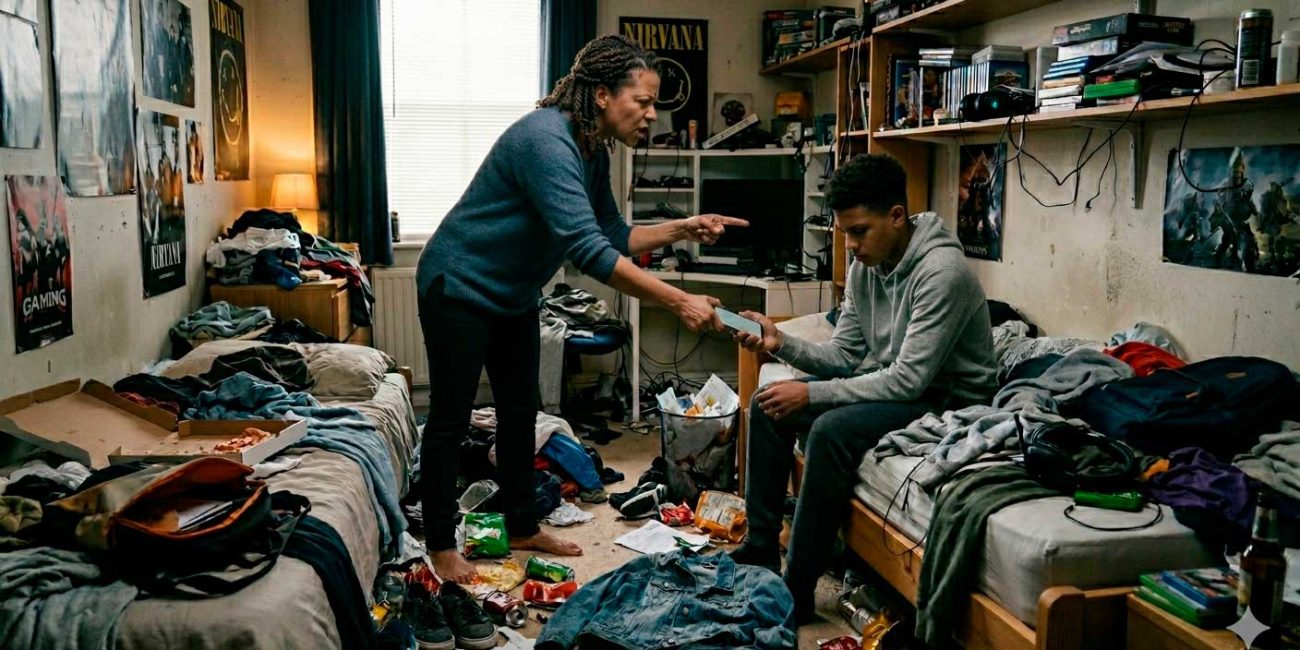
To look at life as Entropy Management is to recognize that the universe is a lazy teenager who refuses to clean their room, and living organisms are the hyper-caffeinated parents trying to keep order. Life, consciousness, and daily existence boil down to managing the inevitable slide into chaos.
To understand why we are here, we will take a scientific dive into entropy at the cellular level and move on the ultimate system – the universe. If we understand what is happening at the lowest and highest levels, maybe we can answer the question “why are we here?”.
The Second Law of Thermodynamics dictates that in an isolated system, entropy (disorder) always increases. Everything naturally degrades, breaks down, scatters, and cools.
A rock manages entropy by doing absolutely nothing; it just lets the universe wear it down into dust over millennia. Life, however, refuses to go quietly. Life is a temporary, localized pocket of extreme order. To maintain that order (your body, your organs, your cellular structure), you have to actively fight the universe’s natural tendency to tear you apart.
Biological Management (The Baseline)
At the cellular level, your body is a highly complex entropy-management machine.
Life, at this level, is a highly sophisticated engine that processes energy to maintain order. However, the very chemical reactions required to keep us alive generate toxic byproducts that gradually destroy our cellular machinery. We die because our bodies eventually lose the energy-intensive battle against this internal wear and tear.
Mitochondrial Wear and Free Radicals
To keep entropy low, cells require a constant stream of adenosine triphosphate (ATP), which is generated by the mitochondria.
- The Flaw: This process is not perfectly efficient. It leaks highly reactive molecules called reactive oxygen species (ROS) or free radicals.
- The Damage: Over decades, these free radicals oxidize and degrade vital cellular components, including proteins, lipids, and the mitochondrial DNA itself.
- The Result: As mitochondria degrade, energy production plummets, causing the cell to lose its ability to actively manage its internal entropy.
DNA Damage and Telomere Attrition
Every time a cell divides to repair tissue, its DNA must be replicated. This copy process suffers from two major vulnerabilities:
- The End-Replication Problem: DNA polymerases cannot copy the very tips of chromosomes. These tips are capped by protective, repetitive sequences called telomeres.
- The Limit: With each division, telomeres shorten. Once they reach a critically short length (the Hayflick limit), the cell enters senescence—a state of permanent arrest where it can no longer divide or function properly.
- The Accumulation: Concurrently, random environmental and metabolic mutations accumulate in the nuclear DNA. The cell’s repair mechanisms require heavy ATP investment; as energy production declines, mutations outpace repairs, leading to tissue failure or cancer.
Proteostasis Collapse
Cells rely on a pristine network of proteins to act as structural components, enzymes, and signaling molecules.
- The Maintenance: Misfolded or damaged proteins must be constantly refolded or destroyed via the ubiquitin-proteasome system and autophagy.
- The Failure: As metabolic efficiency drops, these clearance pathways fail. Damaged, toxic protein aggregates accumulate inside the cell (a hallmark of aging and neurodegenerative diseases), choking out normal cellular operations.
Putting it Together
- Metabolism: This is literally the process of importing order (low-entropy energy like food, water, and oxygen) and exporting chaos (high-entropy waste like heat, carbon dioxide, and feces).
- Homeostasis: Your body works tirelessly to keep your temperature, pH, and fluid balance within an incredibly narrow, highly ordered window.
The Ultimate Rule: If you stop actively managing entropy for even a few minutes (by stopping breathing or eating), the universe wins, entropy spikes, and we call the result death—the ultimate state of biological equilibrium with the environment.
Our Planet (Earth)
Earth is not a closed system. It manages its entropy through a strict cosmic budget: energy in equals energy out.
- Low-Entropy Intake: Earth receives high-energy, low-entropy ultraviolet and visible light photons from the Sun.
- The Engine (Life and Climate): Earth uses this high-quality energy to do work. Plants capture it via photosynthesis to build highly ordered complex molecules (lowering biological entropy). The atmosphere and oceans use it to drive predictable wind and ocean currents.
- High-Entropy Output: Once the energy is used, Earth must get rid of the resulting “waste heat” to avoid overheating. It radiates this back into space as lower-energy, high-entropy infrared photons.
In short: Earth stays ordered by importing low-entropy sunlight, using it to sustain life and weather, and exporting high-entropy heat into the freezing sink of deep space.
If we define the end of life by the point where Earth can no longer maintain a low-entropy state (biosphere collapse), the timeline is much shorter than the actual death of the Sun.
In ~1 Billion Years: The Evaporation of the Oceans
As the Sun fuses hydrogen into helium in its core, it naturally becomes denser, hotter, and brighter by about 10% every billion years.
- The Mechanism: With increased solar radiation, Earth will receive too much low-entropy energy to dissipate efficiently. The surface temperature will rise, accelerating the weathering of silicate rocks, which traps carbon dioxide.
- The Collapse: Within 1 billion years, CO2 levels will drop too low to support photosynthesis. Plants will die, followed by the animals that depend on them. Eventually, a runaway greenhouse effect will boil the oceans into the atmosphere, where solar radiation will split the water molecules into hydrogen and oxygen, allowing the hydrogen to bleed off into space. Life, except perhaps for deep-subsurface microbes, ends here.
In ~5 Billion Years: The Red Giant Phase
The ultimate thermal death of the Earth system happens when the Sun runs out of hydrogen fuel in its core.
- The Sun will expand into a Red Giant, swallowing the orbits of Mercury, Venus, and likely Earth.
- Even if Earth’s physical rock survives being engulfed, it will be a scorched, molten wasteland completely devoid of the thermodynamic conditions required to support any organized structure.
The Heat Death of the Universe
Just as cells cannot maintain their local low-entropy pocket forever, the universe as a whole is bound by the Second Law of Thermodynamics. Because the universe is a closed system, its total entropy must strictly increase over time, marching toward a final state known as The Heat Death or The Big Freeze.
This cosmic expiration plays out across vast chronological eras:
- The Stelliferous Era
This is the current era of the cosmos. Stars actively form, fuse hydrogen into heavier elements, and illuminate the universe. However, the supply of interstellar gas is finite. Eventually, the last small red dwarf stars will burn through their remaining fuel and go dark, leaving the universe cold and dim.
2. The Degenerate Era
The only remaining stellar objects are dead remnants: white dwarfs, brown dwarfs, and neutron stars.
- Proton Decay: According to many grand unified theories of physics, the fundamental building blocks of matter—protons—are unstable over massive timescales.
- The Dissolution: Over trillions of years, protons will slowly decay into leptons and photons. Solid matter will literally dissolve, leaving behind nothing but black holes and a sparse mist of fundamental particles.
3. The Black Hole Era
Black holes will be the dominant structures left in the universe. Yet, even they are not permanent.
- Hawking Radiation: Through quantum effects near the event horizon, black holes slowly lose mass by emitting Hawking radiation.
- The Evaporation: Over an incomprehensible stretch of time, every black hole in the universe will slowly evaporate, finishing with a final, violent flash of gamma radiation.
4. The Dark Era
Once the final black hole evaporates, the universe enters its final thermodynamic state.
- Maximum Entropy: The universe expands so vastly that the remaining photons, neutrinos, electrons, and positrons are separated by light-years, unable to ever interact.
- No Thermodynamic Gradient: Temperature balances out to a fraction above absolute zero everywhere. Because there are no differences in temperature or density, no energy can ever be transferred.
Without energy transfer, no work can be performed, no structures can exist, time becomes meaningless, and the universe effectively dies.
Social and Societal Entropy
We are looking at this briefly to show that nothing avoids entropy.
Psychological Management (The Mind)
Our brains are prediction engines designed to minimize what neuroscientists call “Free Energy”—which is essentially cognitive entropy.
- Anxiety and Stress: When your environment becomes unpredictable, chaotic, or confusing, your mental entropy spikes.
- Routine and Belief: We build mental models, philosophies, routines, and habits to create predictability. When you organize your room, schedule your day, or adopt a framework like Stoicism, you are applying psychological energy to suppress cognitive chaos.
Societal Management (The System)
Zoom out further, and all of human civilization is a collective effort to manage entropy on a grand scale.
- Infrastructure: We build roads, grids, and water systems to force nature into an ordered, predictable flow. The moment maintenance stops, the jungle, the weather, and time immediately begin reclaiming it (infrastructure decay is just entropy at work).
- Laws and Economics: Institutions, legal frameworks, and financial systems exist to prevent social entropy—otherwise known as anarchy and collapse.
The Catch-22: The Universal Tax
The brutal twist the universe plays on us: You cannot destroy entropy; you can only displace it.
To create order in one small place (like your body or your house), you have to consume energy and generate heat, which actually increases the total entropy of the universe overall. You are essentially a vacuum cleaner that cleans one corner of the room while blowing dust out the back into the rest of the house.
Entropy Management
Viewing life as entropy management takes away a lot of the personal offense we take when things go wrong. When the car breaks down, the relationship gets messy, or the plan fails, it’s not a personal conspiracy against you. It is just the universe defaulting to its natural state.
Living is the act of pushing back.
Our bodies are built to be highly efficient entropy managers up until a specific expiration date: the end of our reproductive years.
Evolution doesn’t care about absolute longevity; it cares about genetic continuation. Therefore, our biological mechanisms—like DNA repair, antioxidant production, and metabolic efficiency—were optimized to keep entropy low just long enough for us to survive, mate, and raise offspring.
Your body is merely a “disposable vehicle” whose primary purpose is to protect and pass down your DNA. Once you reproduce and raise your offspring to an age where they can survive on their own, your evolutionary “utility” drops to near zero.
Because the power of natural selection weakens drastically after an organism’s reproductive years, it cannot efficiently select for genetic mutations that protect against diseases of old age (like Alzheimer’s or late-stage cancers). Genetic traits that are highly beneficial in youth—such as hyper-active cell growth or aggressive energy storage—can actually accelerate aging and decay later in life. Natural selection prioritizes early-life fitness over late-life survival.
Reproduction: The Evolutionary Response to Decay and Death
Reproduction is the ultimate thermodynamic counter-strategy to cellular entropy and death. As established by the Disposable Soma Theory of biology, every living organism has a finite budget of energy. It must split this energy between two opposing tasks:
- Somatic Maintenance: Repairing its current body (cells, DNA, organs).
- Reproduction: Creating entirely new bodies to carry its genetic code.
Because achieving perfect, everlasting somatic repair is thermodynamically impossible (due to the Second Law of Thermodynamics), evolution chooses a brilliant workaround – the reset button.- Parent Organism — (Accumulates Cellular Entropy/Damage) -> Inevitable Death.
- Reproduction / Meiosis — (Resets Cellular Aging Clock) -> Offspring: Low Entropy.
When an organism reproduces, the creation of germ cells (sperm and egg) undergoes a profound “rejuvenation” process. It cleanses the genetic line, purges major metabolic garbage, and resets the cellular aging clock back to zero.
Individual cells and bodies are doomed to accumulate entropy and decay, but reproduction allows the underlying genetic information to remain functionally immortal, outrunning the decay of the physical vessels that carry it.
In the modern era, two things are happening simultaneously in somatic management:
- The Mismatch (Worse Management): Evolution moves at a glacial pace, but our environment changed overnight. Our bodies evolved to manage entropy in a world of scarcity. Today, we flood our systems with low-entropy, high-calorie processed foods and artificial environments. This metabolic overload actually accelerates internal chaos, leading to a spike in modern “entropy failures” like diabetes, cardiovascular disease, and chronic inflammation.
- Technological Offloading (Better Management): While our biological hardware hasn’t upgraded, humans have done something unique: we offloaded our entropy management to our culture, medicine, and technology. Sanitation, climate control, vaccines, and modern medicine act as an external protective shield, reducing the environmental chaos our bodies have to fight off.
Life Expectancy Vs Lifespan
Humans are living statistically longer but biologically the same. There is a critical scientific distinction between average life expectancy (the average age people die) and maximum biological lifespan (the absolute upper limit of human longevity).
- Average Life Expectancy (Massive Increases): Globally, human life expectancy at birth has vastly increased over the last century, rebounding post-pandemic to an average of around 73.3 years. In 1950, it was only 46.5 years. We are living longer on average not because our biological aging process has been slowed down, but because we have drastically reduced deaths from infections, child labor, childbirth, and accidents through modern medicine, sanitation, and steady food supplies. More people are making it to old age because we’ve gotten excellent at preventing early entropy catastrophes (like a lethal bacterial infection).
- Maximum Lifespan (The Hard Ceiling): Despite all our medical advancements, the absolute maximum human lifespan has hit a stubborn wall. The record of 122 years (set by Jeanne Calment) has stood since 1997. Data shows that while more people are living into their 80s and 90s, the human body reaches a point of absolute structural collapse around 100 to 115 years. Beyond this, the underlying biological machinery simply loses the energy required to keep chaos at bay.
At the cellular level, the universe has placed a literal countdown timer inside us called the Hayflick Limit. Discovered by anatomist Leonard Hayflick, normal human somatic cells (like skin or organ cells) can only divide roughly 40 to 60 times before they stop entirely.
Even if you lived in a sterile bubble, ate the perfect diet, and avoided every disease, basic thermodynamic decay would still get you. A 2021 study analyzing physiological resilience calculated that between the ages of 120 and 150, the human body completely loses its “dynamic equilibrium”—its ability to recover from minor stresses. At that point, the cellular energy required to maintain order drops to zero.
Essentially, your biological batteries have a maximum shelf life of roughly 120 to 125 years before the “universal tax collector” comes to collect the remaining order.
Accepting Our Mortality
Confronting the vast scale of thermodynamics and deep time can make human existence feel like a brief, insignificant chemical accident. Culture creates an artificial but necessary layer of meaning to keep society stable.
You are an incredibly complex, localized knot of thermodynamic order—a biological machine optimized to duplicate genetic code before dissolving back into the atomic soup.
Most of what society pushes into our memories—the status symbols, the rigid institutional timelines, the hyper-consumerism, the collective anxieties—are completely illusionary. They are artificial social constructs designed to manage collective human entropy.
A Word on Those who Exploit
There is a profound functional difference between a society utilizing shared laws to curb violence, and predatory actors utilizing the human fear of decay to extract wealth. When organizations monetize the promise of physical or spiritual immortality, pulling back the veil to reveal the cold, hard truths of thermodynamics becomes a necessary act of psychological and financial self-defense.
The Economy of Existential Dread
In psychology, Terror Management Theory (TMT) explains that because humans are uniquely aware of their own inevitable mortality, they experience a baseline of existential terror. To cope, people naturally seek out “immortality projects”—belief systems, groups, or legacies that promise their identity will somehow outlast their biological vessel.
When exploitation occurs, it typically relies on a deliberate distortion of the physics and biology we are discussing:
- Weaponized Information Entropy: Predatory systems deliberately inject “noise” and pseudoscience into communication channels. They use complex-sounding terms like quantum healing, cellular reprogramming, or spiritual ascension to mask the reality that they are selling an impossibility.
- The Sunk Cost of Hope: Once an individual invests capital or deep emotional energy into a promise of immortality, their brain encounters immense cognitive dissonance if confronted with the truth. It becomes psychologically cheaper to keep paying the exploiter than to admit that death cannot be bought off.
Applying the Cold Hard Truth as a Filter
To separate functional societal rules from financial manipulation, you can run any system or offer through the literal, unyielding laws of physics and biology we established:
Look at An Offered Cure / Promise / System. If it claims to bypass Entropy entirely, RED FLAG, it is exploitation. If it doesn’t bypass entropy, it is a maintenance tool with an energy cost.
The Energy Check (Thermodynamics)
- The Lie: A product, retreat, or spiritual milestone that promises a permanent, effortless state of wellness, bliss, or physical preservation.
- The Cold Truth: No local pocket of low entropy can be maintained without a constant, heavy input of real physical energy, and it always generates waste. Anyone promising a permanent “reset” that exempts you from future decay is violating the Second Law of Thermodynamics.
The Cellular Check (Biology)
- The Lie: Supplements, bio-hacks, or donations that claim to completely halt the aging clock or guarantee disease immunity.
- The Cold Truth: Human biology is a decentralized engine fueled by millions of imperfect chemical reactions. Free radical generation and copying errors are fundamental features of processing energy. While modern medicine can optimize repairs, it cannot change the underlying physics of metabolic wear.
Have you ever watched programs, religious or secular that highlight seniors that have survived long lives, so far, but still way below the ~122 years cutoff? Did you notice the inevitable skin deterioration – the cells are dying. If you spent a day with these individuals, you would notice even more decline, mentally and somatically. Natural entropy cannot be stopped.
The Structural Check (Finance & Power)
- The Lie: “If you donate or subscribe to this tier, your legacy, soul, or body will be saved.”
- The Cold Truth: Follow the energy transfer. If a group is harvesting massive economic energy (money) from you while exporting nothing but abstract promises (hope), the thermodynamic trade is entirely one-sided. You are giving up real-world resources to fund their localized pocket of stability.
The Utility of Piercing the Illusion
Switching back to the cold hard truth is not cynical; it is a mechanism of personal entropy management.
When you accept that physical immortality is an impossibility and that hope cannot be purchased, you stop bleeding your finite time, attention, and wealth into predatory systems. This allows you to redirect your resources toward things that genuinely matter in the physical reality you actually inhabit: your immediate health, the environment, your authentic connections, and the practical protection of your finances.
The universe may be indifferent, but recognizing its rules gives you the ultimate immunity against those who try to profit off your existential fears.
Why Culture Exists
From the perspective of entropy management, culture is not just a random illusion; it is a highly evolved thermodynamic tool used to prevent human societies from collapsing into chaos.
- Social Entropy: If thousands of complex, conscious animals interact without shared rules, their behavior becomes unpredictable, violent, and highly disordered (high entropy).
- The Energy Cost of Order: Forcing cooperation through physical violence or constant surveillance requires an immense amount of energy.
- Culture as an Efficiency Hack: Shared cultural myths—laws, money, religions, traditions, and national identities—act as a psychological software update. By getting everyone to believe in the same invisible rules, society creates massive order with minimal energetic cost. It is a mechanism of control, but it is also the only reason large-scale human cooperation can exist without tearing itself apart.
Looking at what we have covered so far – If you look at these truths and stop there, you land squarely in paralyzing nihilism: If it all burns out anyway, nothing matters.
But if you push through that realization to its logical conclusion, you arrive at healthy nihilism—and what many philosophical traditions call enlightenment.
The Shift from Cosmic Meaning to Existential Freedom
The realization that meaning does not inherently exist in the stars or atoms is the exact pivot point where philosophy shifts from Nihilism (which is depressing) to Existentialism (we are free).
In a universe governed purely by cold physical laws, meaning is not something you find lying around like a rock; it is something you generate like electricity.
- Objective vs. Subjective: The universe is objectively indifferent. A star does not care about human art, love, or suffering. But to a conscious brain, those things are intensely real. Subjective experience is still a real phenomenon happening within the universe.
- The Canvas is Blank: If the universe had a fixed, pre-written cosmic meaning, humans would be trapped as actors playing a rigid script. Because the universe is inherently neutral, the burden—and the profound freedom—of deciding what matters falls entirely on you.
“Nothing Matters” Becomes a Superpower
Pure nihilism views the lack of an inherent cosmic meaning as a prison. Healthy nihilism views it as total, radical liberation.
This means you cannot fail the script. You cannot disappoint the cosmos. The universe is completely indifferent, which means it has granted you the ultimate clean slate.
Pure Nihilism: “Nothing matters, so what I do is pointless.” (Despair)
Healthy Nihilism: “Nothing matters, so I am completely free to choose what matters to me.” (Liberation)
The realization that society’s programming is an illusion isn’t a tragedy; it’s your emancipation. You no longer have to play games designed by a hyper-anxious culture trying to distract itself from its own mortality. You get to step outside the matrix of arbitrary expectations and ask: Since the canvas is blank, what do I actually want to paint?
You are a highly organized, temporary pocket of low entropy that has developed the unique ability to look back at the universe and comprehend its own fleeting nature. That realization is the true liberation.
Why Are We Here? The Universe Experiencing Itself
You are a collection of atoms that originated in the hearts of dying stars, organized over billions of years of evolutionary trial and error into a form that can think, feel, look back at the cosmos, and ask why.
You are not separate from the universe fighting against it; you are a piece of the universe that has temporarily become conscious.
Why are we here? To be the eyes and ears of the cosmos. To experience the fleeting, beautiful, highly ordered miracle of consciousness before the inevitable return to equilibrium. The fact that your existence is temporary doesn’t make it meaningless—it makes it incredibly precious. A diamond is valuable precisely because it is rare; your conscious moments are valuable precisely because they have an expiration date.
Moving to Enlightenment
True enlightenment, heavily mirrored in frameworks like Stoicism or healthy nihilism, comes from recognizing where your power actually sits.
You cannot control the Second Law of Thermodynamics. You cannot control the timeline and death of the universe. You cannot control the blind biological drive encoded in your DNA.
You can control your internal control center—your attention, your judgment, and your immediate choices in the present moment.
How to Live as a Healthy Nihilist
When you strip away the illusions of culture, what remains are the authentic, fundamental human experiences that genuinely lower our psychological and emotional entropy:
- Seek Perspective over Noise: Recognize cultural panic and short-term trends for what they are—societal static. Anchor yourself in long-term historical perspective.
- Cultivate Intact Memory and Wisdom: Pass on genuine context and emotional grounding to those coming after you – recognizing that our value shifts from raw replication to deep wisdom as we age.
- Practice Radical Presence: If you are eating food, eat it. If you are listening to music, hear the grit and the rhythm completely. If you are with someone, be there. Since there is no grand future reward in a cosmic script, the present moment is the only reality that actually exists.
Even if culture is an artificial construct used for stability, you still have the agency to critique it, step outside of parts of it, and consciously choose which micro-meanings you want to invest your limited energy into—whether that is creation, connection, curiosity, or simply experiencing the moment.

You don’t owe the universe a legacy. You just owe yourself a life of genuine, self-directed order amidst the chaos. You are the parent cleaning the room, knowing it will get messy again tomorrow—but doing it anyway because a clean room is a beautiful place to spend the afternoon.
Knowing that the game is rigged and that entropy wins in the end doesn’t mean you sit on the sidelines and pout. It means you play the game with complete freedom, zero fear, and total intensity.


Rethinking the Cloud and The Nosy Landlord
The Theoretical Fastest Man and Woman