










Bounty Killer’s “Book Book Book” remains one of the most powerful and culturally relevant anthems in dancehall history. The “Poor People Governor” stepped up to look directly at the youth and deliver an uncompromising mandate.
He didn’t sugarcoat it. The core message of the track was simple: education is the ultimate weapon against poverty, dependency, and systemic entrapment.
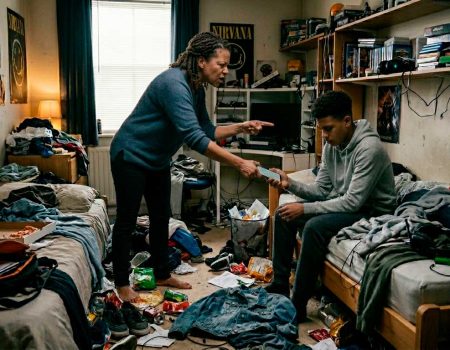
“You illiterate and foolish, you might turn a crook… See mi granny with a purse, a it you waan fi jook!”
He is painting an incredibly raw, unfiltered picture. He is linking a lack of education directly to a lack of options, which forces someone into becoming a low-level, desperate criminal out on the corner sticking up grandmothers. It is that exact stark, zero-compromise reality check that we are losing today.
When Bounty Killer deejays:
“If you nuh have no education, people treat you like a boops… Turn you in a handyman, dog food you haffi cook.”
He is exposing the brutal social reality of what happens when you lack specialized knowledge. In Jamaican parlance, a “boops” is someone who is easily taken advantage of, financially exploited, or made a fool of because they don’t know any better. He’s warning the youth that without education, you lose your autonomy. You don’t get to dictate your worth; instead, you get relegated to underpaid, subservient labor—cooking the dog food and doing the heavy lifting for people who did master the books.
Bounty was telling the youth that if they didn’t focus on their academics, they were playing right into a rigged system designed to leave them behind.
Some careers you age out of long before retirement age, so it is imperative that you have backups – education and another skill.
The Example Set by some of our Favorites
While many young people look at athletes and entertainers and see a path that bypasses education, the smartest professionals at the top of their game see the exact opposite. They understand that a sporting career is intense, fragile, and guaranteed to end early—often by their mid-30s or instantly via a single injury.
To future-proof their lives, an elite class of athletes explicitly uses their platform to “pressure their books” so they never end up as a corporate or financial “boops” when the cheering stops.
Global Superstars Securing the Post-Game Future
Shaquille O’Neal (NBA Basketball)
Shaq is one of the ultimate examples of an athlete refusing to be treated like a fool. He left LSU early for the multi-million-dollar world of the NBA, but promised his mother he would return.
He didn’t just get a bachelor’s degree; he went on to earn an MBA (Master of Business Administration) and later a Doctorate in Education (Ed.D.). He followed that up by walking across the stage at LSU to receive a Master of Arts degree.
Shaq openly stated that when he sat in corporate meetings with businessmen after his basketball career, they would talk to his agents and lawyers instead of him, assuming he was just a “dumb athlete.” He got his degrees so he could command the room and control his own massive business empire.
John Urschel (NFL Football)
Urschel was a massive, elite offensive lineman for the Baltimore Ravens in the NFL. He was making millions hitting people on Sundays, but his true passion was mathematics.
While actively playing in the NFL, Urschel was quietly publishing peer-reviewed mathematics papers. Realizing the intense risk of brain trauma (CTE) and the reality that an NFL career averages less than four years, he retired early at age 26 to focus on his mind. He went straight to the Massachusetts Institute of Technology (MIT) and earned his Ph.D. in Applied Mathematics. He is now a professor.
Vincent Kompany (Premier League Football)
Kompany is a legendary Belgian defender who captained Manchester City through their most dominant, historic era.
While playing at the absolute highest level of world football, grinding through grueling Premier League and Champions League schedules, he studied part-time and graduated with an MBA from Manchester Business School.
He knew his playing days were numbered. His business education immediately transitioned him into highly successful, multi-million-dollar managerial roles in top-flight football management.
Caribbean Champions Leading by Example
In the Caribbean, where sports infrastructure is a critical stepping stone out of harsh socioeconomic realities, top-tier athletes consistently balance global competition with heavy academic loads at institutions like the University of the West Indies (UWI) and UTech.
Shelly-Ann Fraser-Pryce
Shelly-Ann Fraser-Pryce is perhaps the ultimate blueprint for balancing world-class athletic dominance with rigorous academic achievement. Her story isn’t just about getting a degree as a backup plan; it’s a masterclass in using education to build generational impact.
Grinding on the Track and the Campus Simultaneously
When Shelly-Ann burst onto the global scene by winning Olympic Gold in the 100m at Beijing 2008, she didn’t let the sudden fame, endorsements, and intense training schedule derail her studies.
She remained enrolled at the University of Technology (UTech) in Jamaica. While executing the grueling training regimens necessary to remain the fastest woman alive, she was simultaneously attending lectures, writing papers, and sitting exams. In 2012—the exact same year she defended her Olympic 100m title in London—she graduated with a Bachelor of Science Degree in Child and Adolescent Development.
Upgrading to a Master’s Degree
She didn’t stop there. Understanding that a sports career is a short window, she continued to “pressure her books” at the highest level. She went on to pursue a Master of Science in Science in Applied Psychology at the University of the West Indies (UWI), Mona.
The Power of Purposeful Education
Look at what she chose to study. She didn’t pick a random degree just to have a piece of paper; she chose fields directly tied to her vision for the future:
- Child Development and Psychology: These degrees gave her the professional, theoretical framework needed to run her Pocket Rocket Foundation, which provides academic scholarships and financial support to student-athletes from high schools across Jamaica.
- The Anti-Boops Reality: Shelly-Ann grew up in Waterhouse, a community with severe socioeconomic challenges. She knew firsthand how easily talent can be exploited or wasted without guidance. By becoming an expert in child development and psychology, she made sure she could build programs that structurally rescue youth from those same traps—speaking to them not just as a sports star, but as a qualified professional.
“The classroom is still the ultimate equalizer. Track and field gave me a platform, but my education gave me the voice and the tools to make that platform mean something long after I stop running.” — Shelly-Ann Fraser-Pryce
When you look at modern youth chasing overnight internet fame on TikTok, Shelly-Ann stands as a towering counter-argument. She is one of the greatest sprinters in human history, a global brand, and a multi-millionaire—yet she still sat in a university library studying textbooks. She understood that while speed is a gift that eventually fades with age, the knowledge of how to build, lead, and protect your community lasts forever.
Shaka Hislop (English Premier League & Trinidad and Tobago)
Before he was a legendary goalkeeper for West Ham United and Newcastle in the English Premier League, or leading the Soca Warriors to the 2006 World Cup, Hislop was preparing for life after sports.
He earned a degree in Mechanical Engineering from Howard University, even working a summer internship at NASA.
After hanging up his gloves, his analytical mind and deep, structured communication skills seamlessly transitioned him into becoming one of the lead tactical football analysts for ESPN FC globally.
Hansle Parchment (Jamaican Olympic Hurdler)
The Tokyo Olympic 110m hurdles Gold Medalist and world-class athlete is a prime example of the modern Jamaican student-athlete track.
Parchment balanced rigorous global training schedules to earn his Bachelor’s degree in Psychology from UWI, Mona.
He has consistently spoken to youth about the fact that track and field is a short window, and having a disciplined, psychological educational foundation ensures a stable transition into sports consultancy, psychology, or corporate leadership when the track days are over.
When young people watch these athletes, they often see only the cars, the jewelry, and the contracts. What they miss is the calculating intelligence behind the scenes.
The very best athletes realize that athletic talent is a depreciating asset. Your body slows down, your joints wear out, and the cameras eventually turn off. The only asset that appreciates over time is a structured, educated mind.
As Bounty Killer said, without it, the world will eventually “turn you in a handyman” or treat you like a puppet. These athletes went to university because they refused to let their post-sporting lives be defined by anyone else but themselves. They used the books to maintain their ultimate sovereignty.
Dancehall Entertainers with Degrees
Tifa – Latifa Brown
A bachelor’s degree in psychology with a minor in human resource management from the University of the West Indies.
Christopher Martin
A bachelor’s degree in business and administration from the University of Technology (UTECH). He is the first person in his family to hold a degree.
Agent Sasco – Jeffrey Campbell
A business management degree from the UK’s University of Sunderland.
Sobering Statistics – working population (adults aged 18 to 65+)
This metric—educational attainment of the labor force—reveals the true, baked-in intellectual capital of a society. It shows the exact percentage of the current workforce that holds a university degree, community college diploma, or advanced technical certification. The United States will be used for comparison,throughout this discussion, since youths are heavily influenced by this society.
The gap between the United States and Jamaica here is staggering, exposing why Jamaica faces an incredibly steep hill to climb, and why the US faces a massive crisis of structural displacement.
The United States: A Highly Credentialed Workforce
In the US, decades of pushing the “everyone must go to college” narrative has resulted in a heavily credentialed adult working population. According to data from the US Bureau of Labor Statistics (BLS):
- The Tertiary Percentage: Approximately 42% to 45% of the entire active US workforce holds a Bachelor’s degree or higher.
- The Broader Post-Secondary Picture: If you include Associate degrees (2-year community college diplomas) and high-level post-secondary professional certificates, that number jumps to nearly 54%.
- The Irony: Despite more than half the workforce having higher education credentials, the US is experiencing a massive crisis because these degrees are heavily skewed toward marketing, communications, and liberal arts. The country has a severe deficit in the exact areas needed to maintain heavy infrastructure: advanced mathematics, engineering, and highly technical data sciences.
Jamaica: The “Uncredentialed” Labor Force Crisis
When you look at Jamaica’s entire working population, the data reflects the multi-generational fallout of a system where the vast majority of citizens never step foot inside a university.
Data compiled by the Statistical Institute of Jamaica (STATIN) and the Planning Institute of Jamaica (PIOJ) paints a stark picture:
- The Tertiary Percentage: Only about 15% to 18% of the total active Jamaican workforce has a tertiary (university or college) education.
- The Untrained Majority: The most sobering statistic in Jamaican labor history is that roughly 60% to 65% of the entire labor force has no formal certification or training whatsoever. They went through the school system, left at grade 11 or 13, and entered the workforce with just basic secondary school leaving status (or a few CSEC passes) but no specialized professional, technical, or academic credentials.
- The “Handyman” Reality: The remaining portion of the workforce holds basic vocational certificates (like HEART/NSTA Trust Level 1 or 2). This means the vast majority of Jamaica’s working population is locked into low-to-medium skill jobs: wholesale/retail trade, agriculture, security, hospitality, and basic construction.
The Macro-Economic Emergency
This side-by-side comparison reveals the exact anatomy of a crisis: an aging, skilled elite who cannot retire because the younger generation isn’t equipped to replace them.
   UNITED STATES WORKFORCE                       JAMAICA WORKFORCE
┌──────────────────────────┐                ┌──────────────────────────┐
│   ~54% Post-Secondary    │                │   15-18% Tertiary        │
│   (Degrees/Certificates) │                ├──────────────────────────┤
├──────────────────────────┤                │   ~20% Basic Vocational  │
│   ~46% High School       │                ├──────────────────────────┤
│   or Less                │                │   60-65% No Formal       │
└──────────────────────────┘                │   Certification/Training │
                                            └──────────────────────────┘
The Double-Whammy for Jamaica
With only ~15% of the total working population possessing a university education, Jamaica’s economic engine is structurally bottlenecked.
- The Brain Drain: To make matters worse, a massive percentage of that elite 15% migrates to the US, Canada, and the UK every year (particularly nurses, teachers, and software engineers), constantly depleting the island’s hard-won intellectual capital.
- The Retirement Lock: Because so few people possess the high-level scientific, mathematical, financial, and administrative skills to run major institutions, the highly educated older professionals cannot retire. If they leave, there simply isn’t a deep enough pool of qualified 20- and 30-somethings to take over.
The Lesson of the Numbers
When Bounty Killer deejayed about people being turned into handymen and cooking dog food if they lacked education, he was accurately describing the economic reality of 65% of the Jamaican workforce. It also highlights the potential for sexual exploitation and scamming for a generation that leans towards “easy” money – that is another article, however.
In the modern digital economy, a country cannot build wealth, design technology, or support an aging population when less than 2 in 10 workers have higher education. It is a mathematical impossibility. If the upcoming generation continues to choose the immediate, low-effort dopamine of social media over the grueling discipline of the textbook, the structural dependency of the region will only freeze permanently into place.
Intelligence and Education is the best combination.
A quick word on this distinction before we move on:
It is common to hear the terms “intelligent” and “educated” used interchangeably, but they actually represent two entirely distinct human traits.
Think of intelligence as the processing power of a computer, and education as the software and data you install onto it. Having one without the other limits what the machine can do, but combining them unlocks its full potential.
To understand why the combination is so powerful, we first have to look at what each brings to the table individually.
| Feature | Intelligence (The Engine) | Education (The Fuel & Map) |
| What it is | Raw mental capacity, cognitive flexibility, and natural problem-solving ability. | Accumulated knowledge, critical thinking frameworks, and specialized skills. |
| Origin | Largely innate — shaped by genetics and early neurological development. | Acquired — gained through schooling, reading, mentorship, and life experience. |
| Key Trait | Fluid Intelligence: The ability to figure out solutions to brand-new problems without prior instruction. | Crystallized Intelligence: The depth of what you know and your mastery of established tools. |
| In Short | Your capacity to learn and adapt. | What you have already learned and organized. |
An highly intelligent person without an education can see patterns and think quickly, but they may constantly “reinvent the wheel” because they lack historical context or proven methodologies. Conversely, a highly educated person with lower natural intelligence might have an encyclopedia of facts memorized, but struggle to adapt if a situation doesn’t fit the exact textbook scenarios they studied.
The Ideal Standard
When raw intelligence is structured and channeled by a solid education, it creates a multiplier effect that benefits both the person and the world around them.
- Channeled Power: Education gives raw intelligence a telescope and a microscope. It provides the mathematical formulas, scientific methods, and historical contexts needed to turn raw curiosity into actual innovation.
- Critical Thinking and Objectivity: Intelligence allows you to process information quickly, but education teaches you how to filter out biases, verify sources, and apply logic over emotional impulse. It moves an individual from simply being “smart” to being truly wise and self-regulated.
- Versatility: An educated, intelligent person can pivot. If their industry changes, their fluid intelligence allows them to learn fast, while their educational background gives them the foundational learning habits to master new disciplines efficiently.
Progress with Perspective
- Constructive Innovation: Society doesn’t just need fast thinkers; it needs thinkers who understand the lessons of the past. When intelligent people are well-educated in history, ethics, and social sciences, they don’t just ask “Can we build this?” — they also ask “Should we build this, and what will the long-term impact be?”
- Effective Problem Solving: The biggest challenges facing humanity — like managing climate ecosystems, designing stable economic policies, or advancing artificial intelligence — require both high cognitive capacity to handle complexity and immense specialized knowledge to execute solutions safely.
- Elevated Civic Discourse: A society rich in intelligent, educated individuals is less susceptible to manipulation, superficial arguments, or extreme polarization. It fosters a culture where debates are settled with evidence, systemic issues are met with nuance, and progress is sustainable rather than chaotic.
Ultimately, intelligence is a gift, but education is an achievement. When an individual possesses both, they have both the engine to move forward and the map to ensure they are traveling in the right direction.
The Digital Monsters
The anxiety that we have built a digital “monsters” is deeply felt worldwide. There is an undeniable friction between the immediate, dopamine-driven gratification of short-form video platforms like TikTok, or the transactional nature of OnlyFans, and the delayed gratification required to sit with a complex math textbook.
When you look at the hard data from both the United States and the Caribbean, it becomes clear that foundational academic performance—particularly in mathematics—is experiencing a stark and troubling decline.
The Statistical Reality: A Regional Breakdown
The downward trend in mathematics and foundational sciences is not an illusion; it is heavily documented across various examination bodies.
When the Caribbean Examinations Council released the official results for the May/June 2025 sitting, the numbers revealed a minor “bounce back” in general pass rates, compared to 2024, but core Mathematics remains in a state of crisis.
- The Regional Math Average: In 2024, the regional passing average for CSEC Mathematics dropped to a brutal 36%. In 2025, the regional average ticked up slightly to 39%. While technically an improvement, it still means that 61% of students across the region failed to pass core Mathematics.
- Jamaica: Jamaica saw its CSEC Math pass rate move from 39% in 2024 up to 44% in 2025. While the Ministry of Education highlighted this as a positive return toward pre-pandemic metrics (where passes sat around 54% in 2019), the systemic failure rate remains at 56%.
- Trinidad and Tobago: T&T fared slightly better than the regional benchmark, with their national CSEC Math pass rates rising from 42.59% in 2024 to 45.89% in 2025.
- St. Vincent and the Grenadines: Conversely, some territories experienced catastrophic declines despite heavy intervention. St. Vincent reported that while their English passes soared past 85%, their national Mathematics pass rate plummeted from a historical 47% down to 30.5% in 2025.
The 2025/2026 STEM Reality: While auxiliary subjects like Information Technology (often floating around 80-88% pass rates due to the intuitive nature of modern tech) look great on paper, hard sciences like Chemistry and Physics averaged a much lower 58% to 64% pass rate regionally in 2025.
The United States (NAEP)
In the US, the gold standard for tracking student achievement is the National Assessment of Educational Progress (NAEP), often called “The Nation’s Report Card.”
- Historic Declines: The most recent comprehensive NAEP assessments revealed the largest drops in mathematics scores ever recorded in the history of the test.
- The Math Gap: Math scores for 13-year-olds (eighth graders)—a crucial developmental window where students transition to foundational algebra—dropped sharply. Only about 26% of eighth-grade students were evaluated as “proficient” or above in mathematics.
- The STEM Pipeline Fracture: ACT and SAT standardized test scores in the US have mirrored this trend, with math benchmarks hitting multi-decade lows. Educators openly worry that the baseline pool of students capable of entering rigorous engineering, computer science, and medical tracks is shrinking.
In late 2025, the US released data focusing heavily on a critical cohort: the Class of 2024/2025 high school seniors (12th graders), providing the first full look at high school graduates since the pre-pandemic era.
The results were described by educational analysts as the lowest scores in 20 years.
| Metric (US 12th Graders) | Pre-Pandemic (2019) | Most Recent Release | The Reality Baseline |
| Below Basic Math Skills | ~35% | 45% | Nearly half of graduating seniors lack basic mathematical literacy. |
| Fully Proficient in Math | ~25% | 22% | Only about 1 in 5 students are actually equipped for college-level STEM tracks. |
Analysis By Gender
There is a distinct, measurable gender divergence in academic performance, and recent data shows it is actually widening. The stark differences in what boys and girls consume online provide a terrifyingly accurate mirror for how they are failing or succeeding in the classroom.
When you look at the examination data from the US and the Caribbean, the gender gap splits along subject lines.
The Caribbean (CSEC)
In the Caribbean, the problem is a structural, systemic underperformance of young men across almost the entire academic spectrum.
- The Enrollment and Pass Gap: Far more young women register for and sit CSEC exams than young men. Across regional reports, females not only outnumber males in absolute passes, but they also demonstrate a more consistent concentration in the top tiers (Grades I and II).
- The Math Exception: Even though young women dominate humanities and languages, CSEC Mathematics remains a shared graveyard. While girls often secure more total passing grades due to sheer numbers, the percentage-based failure rates remain disastrously high for both genders.
The United States (NAEP)
In the US, the most recent data shows a regression that has alarmed researchers: the re-emergence of the STEM gender gap.
- The Science and Math Slippage: After decades of narrowing, the 12th-grade math and 8th-grade NAEP science scores revealed that a gender gap has officially re-opened.
- The Divergence: While scores dropped across the board, girls’ scores in hard sciences dropped more steeply. Males are now outscoring females significantly in foundational science assessments, while females continue to absolutely dominate males in reading and verbal literacy metrics.
The algorithms of 2026 do not feed boys and girls the same material. They have created two distinct psychological pipelines: The Algorithmic Echo Chamber for Boys vs. The Comparison Trap for Girls.
Girls: Aesthetic, Social, and Verbal Domination
The algorithms for young women (predominantly TikTok, Instagram, and Pinterest) lean heavily toward lifestyle, interpersonal drama, fashion, mental health discourse, and highly verbal content.
- The Academic Alignment: This continuous engagement with narrative, dialogue, and social nuance acts as an unintentional exercise in verbal literacy. It helps explain why young women consistently crush verbal, reading, and language arts metrics globally.
- The STEM Deterrent: The content consumed by young women heavily emphasizes aesthetics, presentation, and immediate social validation. The grueling, unglamorous, solitary isolation required to master a calculus or physics textbook directly clashes with an online ecosystem that demands constant social connectivity and visual curation. Furthermore, the mental health crisis triggered by the “comparison trap” on these platforms has drastically eroded the psychological resilience needed to handle the high failure rate inherent in learning complex math.
Boys: Passive Entertainment, Gaming, and “The Shortcut”
The algorithm for young men (TikTok, YouTube, Twitch, and Kick) feeds a diet of high-stimulus video gaming, sports highlights, comedy creators, and “hustle culture” financial content (often intersecting with platforms like OnlyFans or crypto/day-trading culture).
- The Academic Alignment: Video games and technical content mean boys keep spatial-visual pathways active, which assists in keeping their raw aptitude for math and physics slightly higher on standardized tests (explaining the US NAEP gap).
- The Disengagement Crisis: However, the type of media boys consume is deeply anti-institutional. Young men are heavily targeted by an online subculture that explicitly tells them that school is a “scam,” that teachers are irrelevant, and that traditional academic effort is for losers. Why study for a CSEC or SAT math exam when an influencer on your feed claims they made $50,000 a month drop-shipping or operating a digital agency?
Girls are staying in the school system but are steering away from the intense frustration of hard STEM subjects due to an erosion of cognitive endurance and focus. Boys, on the other hand, are checking out of the educational system entirely, convinced by a digital landscape that traditional education yields no reward.
The Combined Threat
The data shows we are dealing with a two-front war:
- We have an attention span crisis that makes abstract, multi-step math difficult for both genders.
- We have a content split that encourages girls to focus on the social and verbal (boosting language scores but hurting STEM) and encourages boys to detach from academic structures altogether.
Ultimately, the social media “monster” is highly tailored. It exploits the specific vulnerabilities of each gender, and the report cards of nations are now reflecting the exact architecture of those algorithms.
As we look at the school cohorts currently testing in 2026, the data confirms a permanent structural shift. The gap between the top 10% of students (who are aggressively pursuing specialized STEM fields) and the bottom 50% has widened into a canyon.
Can we celebrate minor gains?
The minor, incremental bumps in 2025 math scores show that intensive, government-funded tutoring interventions and adjusted curriculums are fighting back. But they are fighting a steep uphill battle against the daily environment young people live in.
The contrast between the 2025 data points highlights this perfectly:
- In the Caribbean, subjects like Theatre Arts or Food, Nutrition, and Health routinely pull 90% to 95% pass rates.
- In the US, Reading/Verbal scores dropped during this period, but stabilized far faster than math.
Why? Because modern social media is highly visual, conversational, and narrative-driven. Young people are reading text all day (captions, comments, tweets) and processing human performance (TikToks, reels). Their brains are constantly exercising the pathways required for basic social and verbal communication.
What they are never doing on these platforms is engaging in sequential, symbolic, and abstract logic. A screen cannot teach the cognitive endurance required to factor an equation or balance a chemical reaction. Until educational strategy addresses the reality that the digital environment has fundamentally changed the human attention span, moving a regional math pass rate from 36% to 39% is just rearranging deck chairs on a very leaky ship.
Though platforms like TikTok, YouTube, Instagram and OnlyFans are not solely responsible – there are other systemic educational challenges that are undoubtedly acting as powerful accelerators of the decline. These platforms alter the brain’s relationship with effort:
The Dopamine Economy vs. Cognitive Endurance
Mathematics and the hard sciences require sustained attention and a high tolerance for frustration. You must sit with a problem, fail, re-route, and try again.
- The TikTok Effect: Algorithms are engineered to deliver a high-payload dopamine hit every 15 to 60 seconds. This conditions the developing brain to expect immediate reward with zero friction.
- The Result: When an algorithm-conditioned student faces a multi-step algebraic equation or a complex physics theorem that requires 20 minutes of silent, focused concentration, the brain experiences it as painfully dry and physically frustrating. The attention span simply snaps.
The Distortion of “Success”
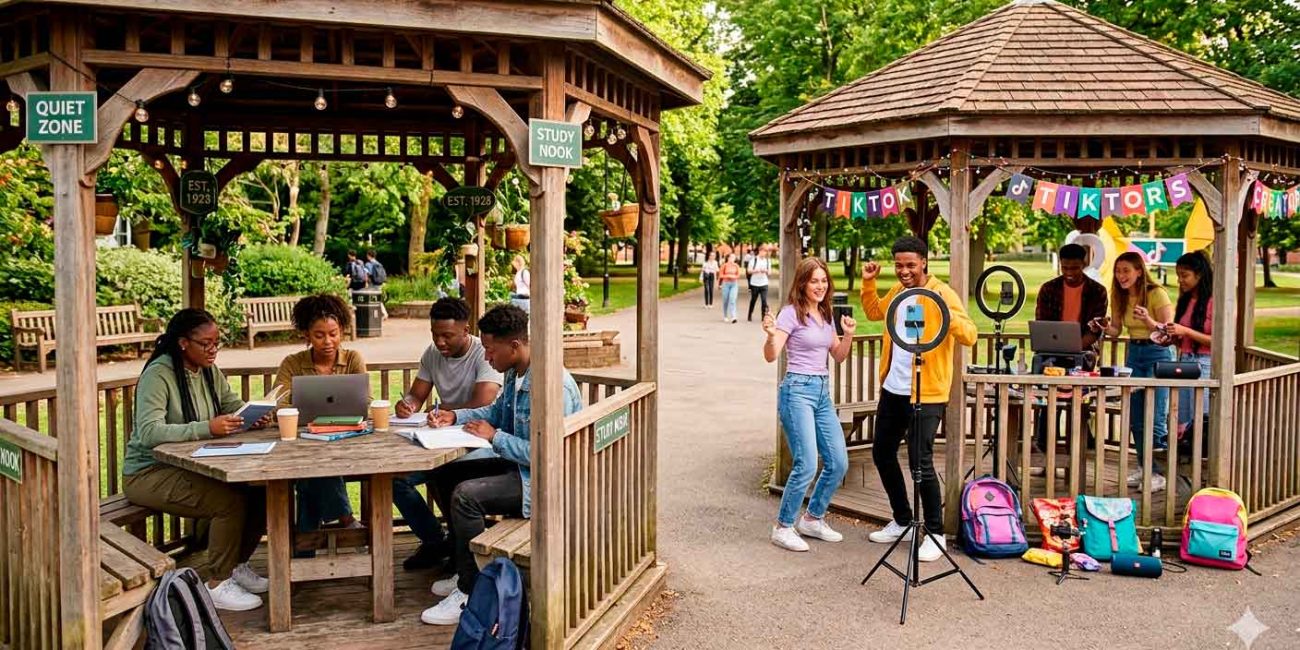
Platforms like OnlyFans, TikTok, YouTube, Instagram and general influencer culture have fundamentally distorted how young people view the relationship between education, effort, and survival.
- The Illusion of the Shortcut: Historically, a mastery of STEM subjects was viewed as the most reliable ticket to financial security and high societal status. Today, young people are bombarded with highly visible anomalies: teenagers making millions by dancing, vlogging, or capitalizing on attention and aesthetics.
- The Devaluation of Expertise: When society’s loudest, most visible financial winners appear to succeed without formal education, the perceived utility of studying a textbook evaporates. It creates an undercurrent of thought that asks: “Why waste years mastering calculus when digital visibility pays immediately?”
Losing the Foundation of Innovation
The danger here goes far beyond a few bad report cards. As noted earlier, intelligence is the engine, but education is the map. When a generation loses its grasp on mathematics and science, society loses its capacity to innovate.
Mathematics is not just a collection of numbers; it is the ultimate language of logic, optimization, and systemic thought. If you cannot do math, you cannot design efficient logistics networks, you cannot write optimized code, you cannot model biological trends, and you cannot build sustainable infrastructure.
When regions like the US or the Caribbean see a mass failure in math, they face severe long-term consequences:
- Dependence on Foreign Innovation: Countries that fail to produce local STEM professionals are forced to import technology, intellectual property, and technical consultants, draining local economies and weakening sovereignty.
- Economic Stratification: The gap between the technologically literate elite (who master these concepts) and the broader population will widen, leading to severe economic inequality.
- Vulnerability to Disinformation: A population that lacks a foundational understanding of data, scientific consensus, and basic statistical logic is highly susceptible to manipulation by algorithms—completing a dangerous, self-fulfilling cycle.
Social media is not a monster that can be easily put back in its cage; it is an environment. Navigating it requires a deliberate, aggressive counter-culture from parents, schools, and policymakers that restores the prestige, necessity, and discipline of deep, focused learning.
Social Platforms Knowledge vs Entertainment
This is one of the greatest paradoxes of the digital age: Humanity has built the largest, most accessible, and completely free repository of knowledge in human history—yet the vast majority of the population uses it to watch prank videos, dance trends, and celebrity drama.
A student with enough discipline can learn advanced calculus from Professor Leonard on YouTube, master physics via Khan Academy, or learn a new language for free.
The reason most people choose entertainment over education comes down to a brutal conflict between evolutionary biology, algorithmic design, and cognitive friction.
The Path of Least Resistance
The human brain is an evolutionary masterpiece, but it was designed for survival in an environment of scarcity, not an environment of digital abundance.
- Energy Conservation: The brain accounts for about 20% of the body’s total energy consumption. Because of this, it is naturally wired to conserve energy. Deep learning—sitting down to understand a mathematical proof or a scientific concept—requires immense metabolic energy. Entertainment, on the other hand, requires almost none. Given a choice, the brain will almost always choose the path that burns fewer calories.
- The Dopamine Casino: Dopamine is the neurotransmitter responsible for motivation and reward.
- Educational content offers delayed gratification. You have to struggle for hours, days, or weeks before you get the “reward” of finally understanding a concept or passing an exam.
- Entertainment content offers immediate, effortless gratification. A 15-second TikTok or a dramatic YouTube thumbnail delivers a massive dopamine hit instantly.
When forced to choose between a textbook video that asks you to think deeply (high effort, future reward) and a comedy skit that makes you laugh (zero effort, instant reward), the primitive brain wins the argument most of the time.
Note: The positive effects of laughter are not being discounted: Laughter is a powerful, free medicine. It triggers rapid, healthy physical and emotional changes in the body. A good laugh instantly lowers stress, releases natural painkillers, boosts your immune system, and brings you closer to others. However, discipline is needed to know when to disconnect and switch to content that uplifts and allow individual growth.
The Asymmetry of Algorithmic Design
We like to think we have free will when we open an app, but we are actually entering an arena designed by some of the world’s most sophisticated behavioral psychologists and software engineers.
The business model of social media platforms is not built on education; it is built on attention metrics (watch time and engagement).
[User Opens App]
       │
       ▼
[Algorithm Goal: Maximize Screen Time]
       │
 ┌─────┴────────────────────────────────┐
 ▼                                      ▼
[Educational Content]          [Sensational/Entertaining Content]
• Requires mental pauses.      • Triggers curiosity, fear, or amusement.
• User logs off when tired.    • User keeps scrolling infinitely.
 │                               │
 ▼                               ▼
(Lower Ad Revenue)             (Maximum Ad Revenue)
Because entertainment, outrage, and novelty keep the human eye glued to a screen much longer than a lecture on organic chemistry, the algorithms naturally boost and recommend sensational content. Even if you log on to YouTube with the intention of studying, the sidebar is meticulously engineered to tempt you away with highly personalized, low-friction entertainment.
“Infotainment” and the Illusion of Learning
There is a massive middle ground on social media called infotainment (think highly produced and popular channels). Millions of people watch these, which makes it seem like social media is being used for education.
However, media researchers point out a psychological phenomenon known as the illusion of competence.
Watching a beautifully animated 10-minute video about how a black hole works feels educational. It satisfies curiosity and makes the viewer feel smart. But there is a massive difference between consuming a narrative about science and doing the actual work of science.
- Watching the video is entertainment disguised as learning.
- Doing the actual mathematical calculations to model a black hole’s event horizon is education.
Most people use social media to indulge in the feeling of learning without ever engaging in the difficult, frustrating discipline that true education requires.
The Self-Selecting Elite
This creates a dangerous societal divide. The minority of young people who do have the self-regulation, parental backing, or innate drive to bypass the entertainment trap and use YouTube/social media as a textbook are accelerating past their peers at a terrifying rate.
Social media has essentially democratized elite education, but it has also democratized elite distraction. The tools for ultimate success and ultimate failure live on the exact same screen, separated by a single click—and without strong cognitive boundaries, human nature will choose the distraction almost every time.
The Future
Demographic Inverse
If the younger generation fails to inherit the cognitive, technological, and mathematical skills required to run an advanced economy, society’s foundational infrastructure (healthcare, utilities, finance, and food supply) cannot be sustained. Older adults won’t be able to retire because there will be no qualified workforce to generate the wealth, pay the taxes, and fill the roles needed to support them.
This is the reality of an aging workforce that cannot retire because the younger generation is lacking the mathematical and scientific foundations to step into high-level roles.
If we don’t fix this trend, we are looking at a society split into two dangerous extremes.
1. The Creation of a “Digital Handyman” Underclass
In the 1990s, lacking an education meant physical labor—being a literal handyman. In the late 2020s and heading into the 2030s, lacking an education means also becoming a digital handyman.
- The New Exploitation: Without mathematics, data literacy, and scientific understanding, young people won’t be building technologies or managing systems. Instead, they will be trapped in the low-tier gig economy—driving delivery apps, doing manual data-labeling for tech companies, or chasing pennies on transactional platforms.
- The Trapped Generation: They become the modern version of what Bounty warned about: completely dependent on corporate algorithms that treat them like a “boops,” dictating their wages and hours with zero structural upward mobility.
2. The Pension and Retirement Collapse
As passes in CSEC and US metrics drop, the economic engine slows down. The older generation—the ones currently holding up the financial, engineering, medical, and administrative structures of society—are hitting retirement age.
- The Core Problem: A society’s economy is a relay race. The older generation passes the baton to the younger generation, who are supposed to be skilled enough to run the companies and pay the taxes that fund pension systems and public infrastructure.
- The “Dog Food” Economy: If the incoming workforce only has the skills to do basic “handyman” or low-level retail work, the tax base collapses. The state cannot afford to pay out pensions. The result? Older adults are forced to stay in the office, the hospital, or the workshop well into their 70s and 80s because there is simply no one qualified to replace them.
Bounty’s “Anti-Boops” Mandate Today
To turn this around, we have to use that exact raw, protective language to reshape how youth view intellectual development.
- The “Don’t Get Played” Campaign: Educational messaging shouldn’t be about “fulfilling your potential” or other vague, soft concepts. It needs to adopt Bounty’s aggressive realism: If you don’t understand statistics, financial literacy, and technology, the system is going to play you like a fool. We need to frame math and science as the ultimate tools of self-defense against corporate and algorithmic exploitation.
- Elevating the Status of Technical Mastery: We have to aggressively fund and elevate technical, scientific, and mathematical tracks so they carry the highest social status in the community. When a youth realizes that mastering coding or chemical engineering gives them the ultimate power to dictate their own life—ensuring no one can ever “turn them into a handyman”—the book becomes a symbol of power, not a chore.
Looking at the looming societal crisis—where a generation lacking foundational skills threatens to collapse the workforce and force older adults to work indefinitely—how do we actually make young people heed that exact raw warning?
Re-Framing Education as “Anti-System” Rebellion
Bounty’s track worked because he didn’t sound like a school principal or a rigid lecturer; he sounded like a street general telling you how to avoid a trap.
- The Problem: Today, social media algorithms present “the hustle” (crypto, dropshipping, digital content creation) as the ultimate rebellion against traditional systems. School is framed as the boring, submissive path.
- The Shift: We have to weaponize the narrative. We need to frame masteries in mathematics, data science, software engineering, and biochemistry as the ultimate tools of independence. If you don’t know numbers, you can’t run a business; you get exploited. If you don’t know tech, you are just a consumer paying someone else’s rent. Education needs to be marketed not as a chore, but as the armor required to keep from becoming a pawn.
Breaking the “Granny with a Purse” Illusion
Social media creates a massive illusion of easy survival. Young people see a tiny fraction of influencers making millions and think, “I don’t need a textbook to eat a food.”
We need to bring successful professionals who look and sound like the youth back into schools and community spaces to show them what actual, sustainable wealth and security look like. The youth need to see that the people designing the world, owning the infrastructure, and holding real power are the ones who pressured their books.
Rewiring the Delivery System (Since the Attention Span is Changed)
We cannot force a generation raised on high-dopamine algorithms to absorb information through dry, 19th-century chalk-and-talk methods. If we don’t adapt, the failure rates in CSEC and US metrics will continue to rot the foundation of the workforce.
If young people will look at a phone instead of a textbook, the textbook must live inside the phone—but structured as a battle. Educational apps need to gamify math and science, utilizing progression systems, leaderboards, and immediate rewards to build the abstract logic pathways that social media currently atrophies.
Bounty Killer’s warning from 1995 is a literal blueprint for what happens when the education system fails: a society that breaks down into desperation, economic dependency, and systemic decay. To reshape the future, we have to stop treating math and science as elite, academic choices and start treating them exactly how Bounty did—as a matter of survival.
We have to change the entire architecture of how education is delivered and incentivized.
Steps to follow:
1. De-Glamorize “The Fast Life” & Change the Incentive Structure
Right now, the digital economy rewards immediate attention over long-term capability. To fight this, we need to show the math of the “fast life” versus structural mastery.
- The Content Creator Reality Check: Young people see the top 0.1% of influencers or OnlyFans creators and assume it’s a sustainable career track. They don’t see the millions who make zero dollars and finish youth with no marketable skills. Educational campaigns need to aggressively de-glamorize the anomaly and promote the longevity of specialized skills. Educational and civic campaigns need to visually and statistically expose the failure rate of the digital fast life. For every one person making a living on content creation or alternative platforms, there are tens of thousands completely broke, left with zero structural skills as they age out of their youth.
- Tie STEM Directly to Wealth Creation: We need to stop pitching math and science as abstract academic duties and start pitching them as the keys to actual financial sovereignty. If you want to build a video game, you need trigonometry and linear algebra. If you want to dominate the next wave of finance, you need algorithms. We must speak to the youth in the language of ambition.
2. Gamify and “Dopamine-Inject” the Hard Sciences
Since we cannot easily destroy the algorithmic environment, we have to infiltrate it. Traditional school structures assume a student has the attention span of a child/teenager from the 90s. They don’t.
- Micro-Learning and Frictionless Access: High-level physics, chemistry, and mathematics modules need to be rebuilt into interactive, gamified apps that reward the brain with the same psychological loops found in video games.
- The Culture Shift via Influencers: We need cultural figures—from the modern dancehall space to hip-hop and gaming culture—to champion intellectual grit. When Bounty Killer deejayed “Book Book Book,” he made studying look rugged, defiant, and revolutionary. We need modern icons to step up and make academic mastery look like the ultimate form of rebellion against an algorithm trying to keep them mindless.
3. Structural Shifts: Apprenticing the Future
If young people are disconnected from textbooks, we must bring the textbook into the physical space through aggressive vocational and technical integration.
- Earlier Specialization: Instead of forcing disengaged teenagers to sit through purely theoretical lines of study until they are 18, we need to integrate real-world technical skills (coding, automated agricultural technology, advanced mechanics, biomedical tech) directly into the curriculum by age 14.
- Corporate-State Pipelines: Massive tech, engineering, and infrastructure firms need to build direct pipelines into secondary schools, showing young people a visible, guaranteed economic reward if they achieve specific milestones in mathematics and the sciences. When a youth can see a direct path from their desk to a high-paying, high-status career, the text book suddenly becomes valuable.
- Earn-While-You-Learn Tech Programs: To counter the pull of quick digital money, structural education must offer earlier, tangible rewards. Expanding technical apprenticeships down to the high school level—where learning advanced coding, mechanics, or logistics yields immediate micro-credentials and stipends—gives young people the economic incentive to stay focused.
If we do not consciously bridge this gap, the future will not just be one where older adults work until they die; it will be a future of massive societal decay where basic systems fail because no one knows how to maintain them. Reshaping this trajectory requires treating the decline in math and science passes exactly how Bounty Killer treated it thirty years ago: as a code-red societal emergency that requires everyone to drop the distractions and step up to the desk.

Other Articles