












The question: Did God Rape Mary?
This is a heavy and complex intersection of ancient cultural norms, modern ethics, and theology. When we apply a modern lens to a 2,000-year-old narrative, the “power dynamics” between a child and a god is stark.
Let’s start with how the virgin story originated:
Young Woman vs Virgin.
In the original Hebrew text of Isaiah, the word used is almah. In 8th-century BCE Hebrew, almah translates to “young woman” or “maiden.” It refers to a woman of marriageable age, with no specific biological claim about her virginity.
Around the 3rd century BCE, Jewish scholars translated the Hebrew Bible into Greek (the Septuagint). They translated almah as parthenos. Parthenos usually means “virgin”.
When the author of the Gospel of Matthew (writing in Greek) sought to show that Jesus fulfilled ancient prophecies, he cited the Septuagint version of Isaiah. By using the word parthenos, the text explicitly framed the birth as a miraculous, biological virgin birth.
The New Testament was written in a Greco-Roman world where stories of divine-human hybrids (like Perseus or Romulus) were common. Framing Jesus as born of a virgin helped elevate his status to a Gentile audience, making him a “Son of God” in a way that the Mediterranean world could easily recognize as “great.”
Interestingly, only two of the four canonical Gospels mention the virgin birth. Each author had a different theological focus, which influenced what they chose to include about Jesus’ origins.
| Gospel | Mentions Virgin Birth? | Description of Jesus’ Origins |
|---|---|---|
| Mark | No | Starts with Jesus as an adult being baptized. There is no mention of his birth or childhood. |
| Matthew | Yes | Focuses on Joseph’s perspective and the fulfillment of Old Testament prophecy. |
| Luke | Yes | Focuses on Mary’s perspective and the announcement by the Angel Gabriel. |
| John | No | Uses a cosmic, philosophical approach, stating Jesus existed from the beginning of time as “the Word.” |
Why the difference?
1. Mark (The Earliest Gospel) Written around 70 CE, Mark is the shortest and most “urgent” Gospel. The author seems less interested in how Jesus entered the world and more interested in his power and suffering. In Mark, Jesus becomes the “Son of God” essentially at his baptism when the Spirit descends on him.
2. Matthew and Luke (The “Infancy Narratives”) Written roughly 10–20 years after Mark, these authors wanted to provide more “backstory.”
- Matthew was writing for a Jewish audience, so he used the “virgin birth” (via the Greek translation of Isaiah) to prove Jesus was the promised Messiah.
- Luke was writing for a Greek/Gentile audience and used the miraculous birth to show that Jesus was a unique, divinely-favored figure from day one.
3. John (The Mystical Gospel) John, the latest Gospel, moves away from the biological details entirely. Instead of a “virgin birth” on Earth, John describes a “divine descent.” He argues that Jesus didn’t “begin” at birth but was the eternal Logos (Word) who took on human flesh.
What does this tell us?
The fact that Mark and John—the earliest and the latest Gospels—don’t mention the virgin birth suggests that it wasn’t the “starting point” for all early Christian beliefs. It also shows that the men who wrote these books were interpreters, not just stenographers. They curated the stories that best supported the specific message they wanted to send to their specific communities.
In Mark’s community, Jesus’ power was found in his deeds; in Matthew’s, it was found in his pedigree; and in John’s, it was found in his eternal nature.
Some modern scholars argue that the “All-Powerful Creator vs. Young Maiden” dynamic is inherently coercive, regardless of her saying “yes.”
To the men who wrote the Gospels (and the culture they lived in), the modern concept of “statutory rape” or even “informed consent” didn’t exist in the way we define it today. So a few theologians put up a few justifications:
- They argue that the “all-knowing being” might not be the one at fault; rather, the patriarchal writers might have projected their own social structures onto the divine.
- The writers used the language of “servitude” (“I am the Lord’s servant”) because, in their world, that was the highest honor a person could have. They likely didn’t anticipate a world where “autonomy” and “consent” would be the primary lenses through which we judge morality, they argue.
The simple question is this: If these texts were inspired by an all-knowing being, why choose a method that would eventually become ethically problematic?
The Power Dynamics and Age
In the historical context of 1st-century Judea, Mary’s age is estimated by scholars to be between 12 and 14 years old. This was the standard age of betrothal in that era.
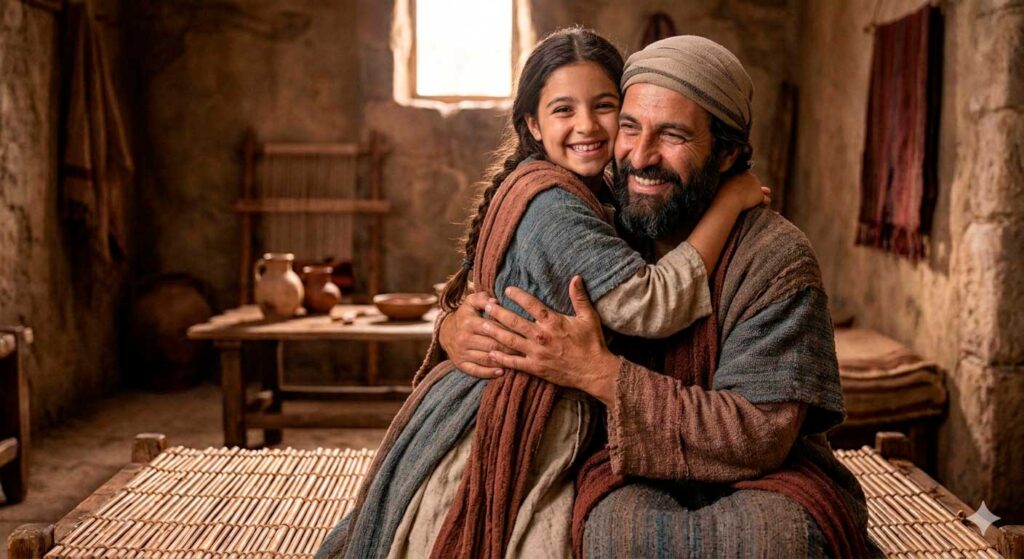
- The Modern Lens: By today’s standards, a sexual or reproductive encounter with a 13-year-old is a severe crime (statutory rape) because a child cannot legally or psychologically consent to an adult, let alone an omnipotent deity.
- The Narrative Intent: It is argued that the Gospel writers (Matthew and Luke) didn’t frame the event as a sexual act. They described it as a non-physical, “miraculous” overshadowing by the Holy Spirit. However, the ethical dilemma of consent remains: Can a mortal truly say “no” to the Creator of the universe?
The Question of Consent: “The Magnificat”
Theologians often point to the “Fiat” (Latin for “let it be done”) in the Gospel of Luke to argue that Mary did give consent.
“I am the Lord’s servant… May your word to me be fulfilled.” (Luke 1:38)
- The “Pro-Consent” Argument: Traditional Christianity views this as the ultimate act of free will. They argue Mary wasn’t a victim but a “co-redemptrix” or a willing participant who chose to risk her life (as being pregnant and unwed carried the death penalty at the time) for a divine mission.
- The “Power Imbalance” Critique: Critics and some feminist theologians argue that “consent” is a murky concept when one party is a child and the other is an all-knowing, all-powerful force. If God knows the future and holds all power, the “choice” can feel more like an irresistible divine decree than a peer-to-peer agreement.
3. The “Virgin Birth” vs. Biological Reality
If we step away from the literal theology and look at the biological and historical possibilities, scholars offer a few different perspectives:
- Parthenogenesis: In biology, “virgin birth” (parthenogenesis) occurs in some sharks, reptiles, and birds, but it has never been naturally documented in mammals. In mammals, “imprinting” (specific chemical markers on DNA from both a sperm and an egg) is required for a fetus to develop.
- A Literary Device: Many historians believe the “Virgin Birth” was a theological claim, not a medical one. In the ancient world, it was common to attribute miraculous births to great figures (like Alexander the Great or Augustus Caesar) to signal their importance.
- The “Panthera” Theory: A very old (and controversial) historical counter-narrative, found in early anti-Christian polemics like those of Celsus, suggested Mary was not a virgin but had been impregnated by a Roman soldier named Panthera, and the “virgin” story was a way to protect her reputation.
Summary of the Tension
The weirdness of this story comes from the clash between Ancient Near Eastern values (where father/husband/God authority was absolute) and Modern Human Rights (which emphasize individual autonomy and age of consent).
Literalism forces these two worlds to collide. Most people who maintain their faith while acknowledging these issues tend to move away from a “biological/literal” view and toward a “symbolic/metaphorical” view of the story.
Most modern scholars and many theologians suggest that inspiration is a “partnership.” In this view, God provides the “spark,” but the human authors provide the “language.” This means the stories are filtered through the cultural limitations of the authors. The authors wrote about a young girl because that’s how marriages worked then; they didn’t have the “moral vocabulary” of 2026 to see the potential for a power-imbalance critique.
Your choice: Was the story a perfect, timeless message that we are just “misinterpreting” today, or was it a product of its time that shows just how much human morality has evolved since then?

Other Articles

Scientists that Believe in God
Humanity from Incest?