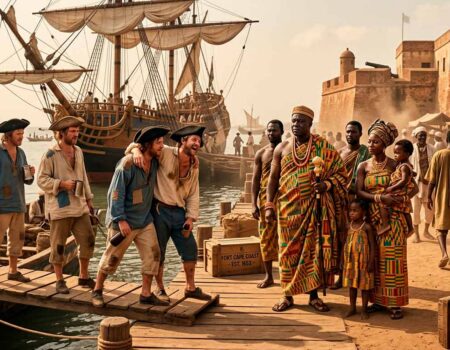











Christianity acted as “kryptonite” to Black radicalism by redefining power. It neutralized the instinct for violent retribution by replacing the ethic of conquest with the ethic of redemption. While this prevented the widespread racial bloodshed that colonial powers constantly feared, it also bounded Black liberation within the limits of moral petitioning, legal reform, and institutional diplomacy—turning what could have been a total economic and political rupture into a long, patient crusade for reparatory justice.
Against the backdrop of Emancipation and Independence celebrations across the African diaspora and the Caribbean, we must explore a profound historical paradox:
How did a religion introduced to enslaved Africans as an instrument of pacification become the primary language of Black liberation, while simultaneously acting as an ideological boundary that curtails revolutionary violence in favor of moral persuasion, patience, and institutional negotiation?
Christianity and Slavery
The historical reality of Christianity’s adoption across the African diaspora—how a Middle Eastern faith, codified and exported through European colonialism, became the dominant spiritual framework for Black populations—is one of the most complex chapters in global history.
Examining this dynamic objectively reveals profound tensions: the same ideological framework that mitigated bloodshed and fostered resilient communities also created deep psychological and structural dependencies.
Moral High Ground and Physical Survival
By adopting a faith that emphasized non-violence, moral rectitude, and human dignity, Black populations systematically disarmed the primary justification used by colonial powers: the myth of the “barbaric savage.”
- Strategic Survival: In brutal slave societies where enslaved people were vastly outgunned by colonial militaries, immediate violent revolt often resulted in total massacre (e.g., the aftermath of the 1831 Baptist War in Jamaica or the 1811 German Coast Uprising in Louisiana).
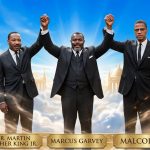
- The Civil Rights Strategy: In the 20th century, leaders like Martin Luther King Jr. used Christian non-violence to highlight the moral illegitimacy of state violence. When peaceful Black protesters were attacked by police, the visual contrast won international sympathy and forced constitutional reform.
Institutional Foundation & Community Resilience
For centuries, the Black Church (and its equivalent institutions across the Caribbean and Latin America) was the only autonomous institution Black people were allowed to own and operate.
- Social Infrastructure: Churches doubled as schools, mutual-aid societies, credit unions, political headquarters, and networks for legal defense.
- Psychological Sanctuary: In societies designed to strip Black people of humanity, the chapel offered a space where an enslaved or disenfranchised person was affirmed as a child of God with inherent worth.
Subversive Theology (Exodus & Liberation)
Enslaved and post-emancipation Black communities did not simply accept white European interpretations of the Bible; they engaged in selective theology. They largely discarded texts commanding slaves to obey their masters and focused instead on the Exodus narrative (God liberating slaves from Pharaoh) and the prophets’ demands for social justice.
Negatives – The Pacifier & The White Gaze
The Psychological Impact of Eurocentric Imagery
For centuries, the physical representation of God, Jesus, angels, and holy figures was depicted exclusively as white/European, while demonic or fallen figures were associated with darkness.
- Subconscious Inferiority: Internalizing a white male image as the supreme authority of the universe created a subtle, deep-seated psychological association between divinity, authority, and whiteness.
- Erosion of Indigenous Identity: Ancient African spiritual systems, languages, and cultural practices were systematically branded as “satanic” or “pagan,” severing historical continuity with pre-colonial heritage.
Deferral of Earthly Justice (Metaphysical Pacification)
The emphasis on heavenly reward over earthly power often led to political quietism.
- Patience over Power: Promising that “the last shall be first” in the afterlife encourages tolerance of systemic oppression in the present. It risks transforming valid outrage into passive endurance.
- Economic Neglect: While energy was focused on spiritual salvation and building places of worship, systemic economic ownership (land, industry, banking) remained almost exclusively in the hands of former colonial elites.
Bounding the Limits of Protest
When faith demands forgiveness and non-violence as absolute moral imperatives, it severely limits the scope of political action. Radical moves—such as aggressive economic redistribution, land re-appropriation, or armed self-defense—are often condemned by the religious establishment itself as un-Christian, leaving communities relying primarily on moral appeals to the very structures that disenfranchise them.
| Dimension | Positive Outcome | Negative Outcome |
| Physical | Prevented mass slaughters; preserved populations through brutal eras. | Inhibited total structural rupture or aggressive re-appropriation of power/wealth. |
| Psychological | Granted inherent self-worth and dignity in the face of racism. | Implanted Eurocentric imagery of the divine, associating whiteness with authority. |
| Institutional | Built the foundational schools, networks, and political platforms for Black society. | Channeled resources into metaphysical salvation rather than broad economic ownership. |
| Ideological | Weaponized moral superiority to win legal and civil rights. | Pacified the instinct for total retribution, shifting focus to long-term moral petitioning. |
Cited Cases That Were Not Really “Uprising”
Was there an uprising against white populations in Zimbabwe and South Africa?
Neither country experienced a racial genocide, white expulsion, or a post-independence violent backlash against white civilians. However, both countries experienced intense, sustained armed liberation struggles aimed at dismantling white-minority rule.
The reality was a political, structural struggle for power and rights.
Zimbabwe (formerly Rhodesia)
The Historical Reality
- The Rhodesian Bush War (1964–1979): The Black majority engaged in a protracted guerrilla war against Ian Smith’s white-minority government. Liberation forces (ZANU/ZANLA and ZAPU/ZIPRA) fought to end colonial land dispossession and secure voting rights.
- Targets of the War: Guerrillas targeted state infrastructure, the Rhodesian military, and white commercial farmers (who occupied vast swathes of prime land while living in isolated rural areas). About 1,300 white civilians died during the 15-year war, alongside tens of thousands of Black civilians and combatants.
- Post-1980 Reconciliation: When Robert Mugabe won independence in 1980, he initially preached reconciliation. White Rhodesians were invited to stay, retain their property, and hold guaranteed parliamentary seats.
- The 2000s Fast-Track Land Reform: Facing intense political pressure 20 years later, Mugabe’s government backed the violent seizure of white-owned commercial farms by “war veterans”. Over 4,000 white farmers were forcibly displaced, and around 20 white farmers were killed. While this was a violent, state-sanctioned land grab targeting white landowners, it was a government-directed political and economic maneuver rather than a spontaneous popular uprising against white people.
The idea that Zimbabwe was a case of Black mobs rising up simply to purge white people is inaccurate. The struggle was rooted in land reform and anti-colonialism. When violent farm seizures occurred in the 2000s, they were orchestrated by a state apparatus to shore up political power, not a unprovoked civilian massacre.
South Africa
The Historical Reality
- The Anti-Apartheid Struggle (1948–1994): The liberation movement—led principally by the African National Congress (ANC) and PAC—fought against Apartheid, an institutionalized system of racial segregation and white minority rule.
- Nature of the Resistance: The anti-apartheid movement was primarily driven by mass civil disobedience, trade union strikes, international boycotts, and township protests. The ANC’s armed wing (uMkhonto we Sizwe) launched guerrilla sabotage against government infrastructure, military outposts, and police facilities.
- Avoidance of Racial War: Though civilian casualties occurred in bombings during the height of the struggle, the ANC explicitly rejected anti-white racial warfare. Its foundational document, the 1955 Freedom Charter, declared that “South Africa belongs to all who live in it, black and white.” White South Africans also served within the ANC and anti-apartheid movements.
- The 1994 Transition: South Africa transitioned to democratic majority rule without a civil war or anti-white retribution. Nelson Mandela prioritized national reconciliation, establishing the Truth and Reconciliation Commission (TRC) rather than pursuing racial retaliation.
In modern discourse, particularly in far-right or white nationalist circles globally, there is a recurring narrative alleging an ongoing “White Genocide” or widespread anti-white racial uprising in post-Apartheid South Africa (often citing high crime rates and farm attacks).
- Fact Check: South Africa does suffer from high rates of violent crime, including murders on farms. However, independent criminological studies and official data show that farm attacks affect both white and Black farmers/farmworkers and are primarily driven by economic desperation and rural isolation rather than a organized racial campaign or widespread uprising.
| Metric | Zimbabwe | South Africa |
| Type of Conflict | Anti-colonial guerrilla war (1964–1979) followed by state-directed land seizures (2000s). | Mass civil movement + strategic armed struggle against Apartheid (1960s–1990s). |
| Target of Resistance | The Rhodesian state, military, and commercial land system. | The Apartheid state, military, and legal system. |
| Was there a popular anti-white uprising? | No. It was an organized liberation war, followed years later by government-backed land reallocation. | No. The anti-apartheid movement rejected racial warfare in favor of non-racial democracy. |
| Core Reality | Armed struggles ended structural white-minority rule, but neither resulted in a general racial slaughter or anti-white mob uprising. |
Black Radical Ambition and Christian Theology
Let’s analyze the tension between Black radical ambition, Christian theology, and the shift from revolutionary upheaval to calls for reparatory justice.
The Master’s Tool and the Prophet’s Fire
Black Christianity has always contained a dual nature:
- The Radical Impulse: From Nat Turner and Sam Sharpe’s 1831 Baptist War in Jamaica to Paul Bogle at Morant Bay, Christian messianism initially sparked some of the most violent, uncompromising anti-colonial revolts. Scriptural themes of Exodus, the fall of Babylon, and divine justice provided the moral legitimacy to shatter oppressive structures.
Yet, as Black societies transitioned through Emancipation and national Independence, the institutional church increasingly favored reconciliation over retribution. Christianity’s core doctrines—forgiveness, divine judgment in the afterlife, the sanctity of human life, and loving one’s enemies—naturally act as an ideological brake on total revolutionary violence or racial reprisal.
The Shift from Retribution to Moral Appeal
The fact that post-emancipation Black populations never initiated sweeping retaliatory violence against former oppressive classes is often viewed through two lenses:
- The Christian Ethical Framework: Christianity shifts the battleground from physical vengeance to moral reckoning. The prevailing belief was that vengeance belongs to God (“Vengeance is mine; I will repay, saith the Lord”). This transformed potential racial conflict into a quest for moral high ground, compelling post-emancipation societies to seek legitimacy through legal, democratic, and moral structures rather than bloodletting.
- The Civil Rights & Non-Violent Model: Figures like Martin Luther King Jr. embedded Black liberation firmly within Christian non-violence. While wildly successful in securing legal rights and moral leverage, it permanently codified “acceptable” Black protest as non-violent, forgiving, and orderly. Radicalism that exceeded these bounds was framed not just as politically dangerous, but as spiritually sinful.
Emancipation & Independence: Celebrations of a Completed Process?
In many majority-Black nations, Emancipation Day and Independence Day celebrations reflect a state-sanctioned narrative of progress.
- Modern post-colonial states inherited both the colonial administrative apparatus and the dominant religious infrastructure.
- National identity was built on stability, constitutionalism, and international respectability—values heavily aligned with Christian civic morality.
- As a result, revolutionary energy was channeled into state-building, civil service, and party politics rather than tearing down the economic hierarchies left behind by colonialism.
Reparatory Justice: The Ultimate Christian Compromise?
The contemporary focus on reparatory justice (reparations through legal frameworks, diplomatic pressure, and international law) represents the ultimate synthesis of this dynamic:
Reparations replace the impulse for violent overthrow or expropriation with a legal and moral claim. It demands that the oppressor nation acknowledge sin, repent, and make restitution—a sequence directly imported from Christian theology.
Critics of this approach argue that relying on international courts and ethical appeals to former colonial powers leaves Black nations in a perpetual state of “petitioning” their former masters. Detractors see this as proof that Christianity rendered Black radicalism incapable of taking power by force, leaving it dependent on moral persuasion.
Proponents, however, view it as the ultimate elevation of justice above primitive vengeance.
There will be No “Uprising”
Sociological data suggests that political radicalization stems from institutional betrayal and economic hopelessness.
- Ideological Hybridity (Cyber-Radicalization): It occurs in decentralized online spaces where political outrage, anti-establishment conspiracy theories, and historical grievances mix. Radicalization today is far more likely to manifest as political extremism or targeted civil unrest.
- Economic Desperation & Civil Unrest: Unresolved historical injustices (like land dispossession or generational wealth gaps) primarily risk destabilizing societies through high crime, civil disobedience, mass protests, and political instability—similar to the urban riots seen historically when peaceful reform stalls.
- State vs. Non-State Pressure: Frustrated populations typically target their energy toward the state—manifesting as political disruptions, strikes, diplomatic boycotts, or radical voting shifts (e.g., electing populist leaders who promise aggressive wealth redistribution).
The Pacifier
Christianity operates as a massive structural brake on basic human instincts for retribution and physical violence.
It achieves this pacification not by accident, but through its core doctrines:
- Subverting the Instinct for Retribution: Base human instinct, when subjected to horrific collective trauma like slavery or colonial exploitation, demands equal physical payback. Christianity directly counters this by commanding believers to “turn the other cheek,” “love your enemies,” and leave judgment to God (“Vengeance is mine”).
- Outsourcing Justice to the Metaphysical: By promising that ultimate justice, reward, and punishment will be dealt out in the afterlife or at the Second Coming, it defers the urgency for immediate, physical payback in the material world.
- Reframing Power as Suffering: In classical human dynamics, power is physical dominance. Christianity radically reframes power as endurance, self-sacrifice, and moral superiority through suffering (symbolized by the Cross).
Historically, this is precisely why slaveholders and colonial authorities—after initially banning the baptism of enslaved people out of fear it would make them demand earthly equality—eventually sanctioned and promoted specific forms of Christian teaching. They recognized that an ideology promising justice in heaven was far less dangerous to their immediate physical safety than a population acting on raw human instincts for earthly revenge.
Whether one views this as a profound moral evolution (elevating humanity above primitive bloodshed) or as the ultimate ideological pacifier (paralyzing the instinct to fight back by force), the practical outcome remains the same: it neutralized the instinct for violent reprisal.

Other Articles

AI Still Lacks Common Sense
Independence in the Face of a Bully