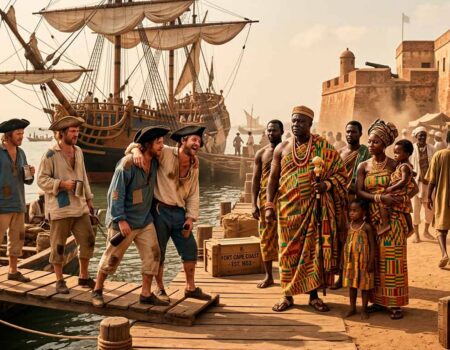











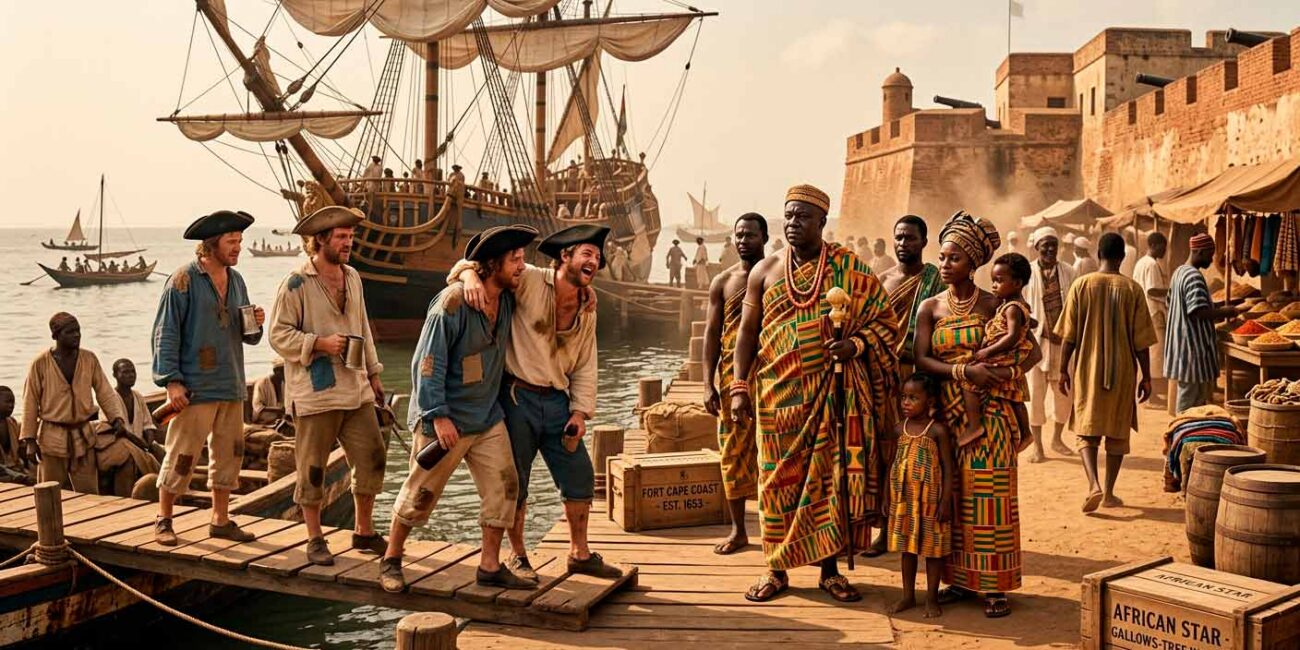
The role of African elites in the transatlantic slave trade is one of the most complex chapters in world history. While European traders were the primary drivers and ultimate beneficiaries of the trade, the operational reality on the ground relied on local networks.
While African elites who sold captives committed acts that are rightfully condemned today, they operated as actors caught in an asymmetric global trap—one engineered and sustained by Western maritime powers.
The argument for reparations based on transatlantic chattel slavery and its lingering aftermath is built on established principles of legal justice, economic science, and historical continuity.
Let us try to cut through the hype, noise and distractions.
African Participation
African participation was widespread along coastal trading hubs, but it operated within a very specific system:
- War Captives, Not “Brothers”: In pre-colonial Africa, people did not view themselves under a unified “African” or “Black” identity. Society was organized by kingdoms, ethnicities, and polities. Captured individuals were viewed as rival foreigners, enemies, criminals, or political captives—never as “their own brothers and sisters.”
- Economic Coercion: European powers introduced massive quantities of firearms into coastal Africa. This created a vicious cycle known as the “gun-slave cycle.” A kingdom needed European firearms to defend itself from neighboring states. To acquire firearms, European merchants demanded human captives in exchange. Kingdoms that refused to trade were easily conquered by rivals who did.
- Not All Participated: Vast inland regions resisted participation, and many states only engaged under intense military or economic pressure.
Leaders Who Fought Back
Several powerful African rulers recognized the devastation of the slave trade and actively fought to stop or restrict it:
- King Afonso I of Kongo (1526): After converting to Christianity and allyship with Portugal, Afonso realized Portuguese merchants were kidnapping his people, including noblemen and relatives. He wrote urgent letters to King João III of Portugal demanding an end to the trade, writing: “It is our will that in these Kingdoms there should not be any trade of slaves nor outlet for them”. Portugal ignored his pleas and undermined his authority.
- Queen Njinga of Ndongo and Matamba (1620s–1650s): In modern-day Angola, Queen Njinga waged a 30-year war against Portuguese forces. She offered sanctuary to runaway captives and allied with rival powers to disrupt Portuguese slave-raiding routes.
- King Agaja Trudo of Dahomey (1720s): Agaja conquered coastal trade ports like Whydah to disrupt European slave posts. He burned slave factories and sent envoys to Britain to propose non-slave commercial trade. However, cut off from firearms and under military threat from the neighboring Oyo Empire, Dahomey was eventually forced back into the trade.
- Imam Abd al-Qadir Kan in Futa Toro (1780s): In modern-day Senegal, al-Qadir passed laws prohibiting the transport of enslaved Muslims through his territory and successfully blocked French slavers for years.
The Ignorance of African Traders
Indigenous forms of servitude in West and Central Africa were largely dynamic: captives were often integrated into families over generations, retained certain legal rights, and were not treated as permanent, inheritable subhuman property.
African rulers had little concept of chattel slavery as practiced in the Americas—where human beings were stripped of all humanity, subjected to life-long forced labor on plantations, and whose status was passed down to their children indefinitely. When captives were handed over to European ships, African traders assumed they were entering a system similar to their own regional captive labor systems. Many coastal rumors even circulated that Europeans were purchasing captives to consume (eat) them, demonstrating how little local populations understood the true economic structure of the American plantation system.
Equal Blame or Structural Asymmetry?
Historians broadly agree that moral responsibility exists on both sides, but the institutional blame is vastly unequal.
| Aspect | European Empires (Spain, Britain, France, Portugal) | African Slavers & Elite Rulers |
| Systemic Control | Created the global market demand, built the shipping networks, and designed chattel slavery law. | Acted as suppliers within a predatory commercial system brought to their shores. |
| Long-Term Profit | Built industrial infrastructure, banking systems, and imperial wealth that lasted centuries. | Received short-term consumer goods (textiles, alcohol, cowrie shells, and weapons that degraded local security). |
| Societal Impact | Expanded global geopolitical dominance. | Suffered massive depopulation, state collapse, prolonged warfare, and centuries of economic instability. |
When analyzing reparations, legal scholars and economists distinguish between individual moral wrongdoing and state-level institutional liability. Distractions often focus on individual actors or historical complexities to derail the conversation. However, the core case for reparations rests on clear structural principles.
1. Uncompensated Wealth Extraction and Human Capital Transfer
Chattel slavery was a legal, government-enforced system that extracted millions of unpaid labor hours to build the foundational wealth of Western empires and nations.
- The Economic Foundation: Unpaid labor fueled the agriculture, shipping, banking, and insurance industries that powered early industrial capitalism.
- Compounded Intergenerational Wealth: Wealth is cumulative. The profits generated from unpaid labor were passed down through generations of plantation owners, commercial institutions, and state treasuries, providing capital for housing, higher education, business ventures, and political influence.
- The Compounded Deficit: Conversely, those who were enslaved were liberated with zero capital, zero property, and no compensation for generations of labor, creating a structural economic deficit at the starting line of emancipation.
2. A Continuous Chain of Institutional Harm
A common distraction is the claim that “slavery ended long ago, so no living person is responsible or affected.” This argument ignores the uninterrupted legal and economic policies that systematically prevented Black wealth accumulation long after the abolition of slavery:
1865: Abolition of Slavery
  └─► Sharecropping & Convict Leasing (Re-enslavement through legal loopholes)
       └─► Jim Crow Laws & Black Codes (Disenfranchisement & wage suppression)
            └─► Federal Redlining & Housing Segregation (Exclusion from home equity growth)
                 └─► GI Bill & Homestead Act Exclusion (Denial of federal wealth transfers)
                      └─► Modern Racial Wealth Gap
Each historic phase actively transferred wealth away from Black communities or blocked them from state-sponsored wealth-building programs that benefited other citizens. The current racial wealth gap is not a mystery of individual choice; it is the direct, calculated result of this historical chain.
3. Legal Precedent and Moral Consistency
Reparations are neither unprecedented nor a novel legal concept. Both international law and national governments frequently mandate restitution when state actions destroy lives, land, or economic capacity:
- The Japanese American Reparations (1988): The U.S. government passed the Civil Liberties Act, providing formal apologies and direct financial restitution to Japanese Americans forcibly incarcerated during World War II.
- German Reparations for the Holocaust (1952–Present): Germany has paid tens of billions of dollars in reparations to Holocaust survivors and the state of Israel to compensate for stolen property, slave labor, and systemic persecution.
- Compensation to Former Slave Owners: When Britain abolished slavery in 1833, the government paid £20 million (equivalent to billions today) in compensation—not to the enslaved, but to the slave owners for loss of “property.” The British public only finished paying off the government loan for this bailout in 2015.
These precedents establish that governments regularly acknowledge corporate and state responsibility across generations.
4. Cutting Through Common Distractions
Opponents of reparations often introduce arguments designed to shift the focus away from institutional accountability:
| Distraction / Argument | The Structural Reality |
| “African elites participated in selling captives.” | Foreign participation in human capture does not absolve Western sovereign states of their legal liability for creating the chattel system, codifying human ownership into law, and profiting from centuries of institutionalized forced labor. |
| “No one alive today owned slaves.” | Reparations are not paid by individuals to individuals; they are paid by governments and institutions (which exist perpetually) to repair structural damage caused by state policies. |
| “It happened too long ago.” | The state policies that created the wealth gap—such as federal redlining, predatory lending, and discriminatory agricultural policy—continued well into the late 20th century, within living memory. |
The Objective of Reparations
Reparations are not merely symbolic gestures or “handouts.” In economic and policy terms, reparations represent a targeted policy framework designed to close systemic disparities through:
- Direct Restitution & Capital Investment: Investments in community infrastructure, housing programs, business grants, and land funds.
- Educational Access: Tuition grants and funding for Historically Black Colleges and Universities (HBCUs).
- Institutional Reform: Undoing structural biases in healthcare, tax policy, and credit markets.
By focusing on institutional accountability, documented economic extraction, and clear legal precedent, the movement for reparations addresses a concrete historical debt rather than abstract debates.
The Future
The history of chattel slavery—and its centuries-long aftermath—cannot be erased, simplified, or brushed aside. Without magic to rewrite the past, humanity is left with a concrete reality: wealth, power, and structural inequality were systematically engineered, and their effects shape the present day.
Acknowledge: Facing Unvarnished Truths
True reconciliation begins with clarity about how the global system operated:
- The Global Asymmetry: Western empires (Spain, Britain, France, and Portugal) designed, legalised, and institutionalised chattel slavery—a system that treated human beings as permanent property. While African elites and coastal polities participated in human trade within an asymmetric, weapon-dominated market, it was European nations that built global industrial wealth on the back of forced labor.
- The Continuous Chain: The harm did not end in 1865. Systems like sharecropping, convict leasing, Jim Crow laws, redlining, and exclusion from federal wealth-building initiatives directly preserved the racial wealth gap into the modern era.
Apologize: Institutional Moral Responsibility
Apologies are not about placing personal guilt on living individuals; they are about state and institutional accountability:
- Sovereign governments, banks, insurance companies, and universities that benefited from the chattel system exist perpetually.
- A formal acknowledgement of wrong by these institutions validates the lived experience of millions and rejects the historical denialism that seeks to downplay the ongoing impact of this history.
Repair: Closing the Structural Gap
Love and unity are empty without justice. Repair—or reparations—is a established legal and economic framework:
- Precedent Exists: From Japanese American internments to German Holocaust restitution, nations regularly use direct capital investments, educational funds, housing grants, and community infrastructure to repair state-sponsored harm.
- Economic Restitution: Reparations aim to close a documented, multi-generational wealth deficit created by state policy, providing a fair starting line for future generations.
The Path to True Unity
Facing climate change, resource scarcity, global instability, and future pandemics requires a genuinely united human race. However, unity built on buried grievances and unaddressed inequality is fragile.
By clearing the debt of historical injustice through acknowledgement, apology, and meaningful repair, humanity removes a massive structural wedge. Resolving these foundational issues allows the world to move forward not as divided groups protecting unearned advantages or bearing inherited deficits, but as an equal, unified species focused on shared survival and progress.

Other Articles

Help us or Our AI is going to Kill You
Will AI kill Off Humans?